
Chemistry Form 3 Notes : CHEMISTRY OF SULPHUR
Chemistry of SulphurA. Sulphur (S)Sulphur is an element in Group VI (Group 16) of the Periodic Table. It has atomic number 16 and electronic configuration

CHEMISTRY Topics Form 1, Form 2, Form 3 & Form 4 (Curriculum Syllabus)
CHEMISTRY Syllabus FORM 1 1. INTRODUCTION TO CHEMISTRY 1. Definition of chemistry and its role in society2. Properties of matter3. States of matter4. Mixtures and
Chemistry Form 1 Notes : WATER AND HYDROGEN
Water and HydrogenA. WaterPure water is a colourless, odorless, tasteless, and neutral liquid. Pure water does not exist naturally but occurs in varying degrees of

Chemistry Form 4 Notes : CHEMISTRY OF METALS
CHEMISTRY OF METALSa) Introduction to metalsThe rationale of studying metals cannot be overemphasized. Since ages, metals like gold and silver have been used worldwide for

UNIT 3 – General Laboratory Procedures (2) – INORGANIC CHEMISTRY PRACTICALS
UNIT 3 – General Laboratory Procedures (2) 1.0 Introduction 2.0 Objectives Main Content Filtration methods Drying methods Recrystallization and purification of solids 4.0 Conclusion 5.0 Summary

Chemistry Form 2 Notes : INTRODUCTION TO ELECTROLYSIS (ELECTROLYTIC CELL)
Chemistry Form Two NotesIntroduction to Electrolysis (Electrolytic Cell)1. Electrolysis is defined as the decomposition of a compound by an electric current or electricity.A compound that

Chemistry Form 2 Notes : PERIODICITY OF CHEMICAL FAMILES/DOWN THE GROUP
C. Periodicity of Chemical Families/Down the GroupThe number of valence electrons and the number of occupied energy levels in an atom of an element determine
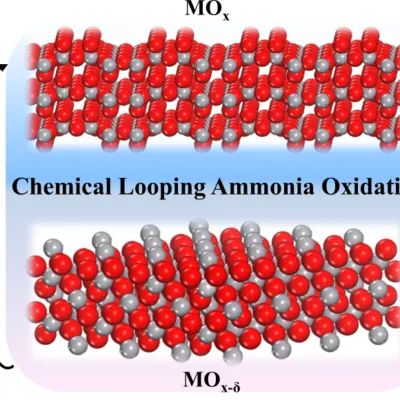
UNIT 5 The Empirical Formula of an Oxide – INORGANIC CHEMISTRY PRACTICALS
UNIT 5 The Empirical Formula of an Oxide 4.0 Introduction 5.0 Objective 6.0 Main Content Theory Concept of the experiment Procedure 4.0 Conclusion 5.0 Summary