

Specific Objectives
By the end of the topic the learner should be able to:
- Find squares of numbers by multiplication.
- Find squares from tables.
- Find square root by factor method.
- Find square root from tables.
Content
- Squares by multiplication.
- Squares from tables.
- Square roots by factorization.
- Square roots from tables.
Introduction
Squares
The square of a number is simply the number multiplied by itself once. For example, the square of 15 is 225, which means 15 × 15 = 225. Squaring a number is a fundamental operation in mathematics and is widely used in various calculations and problem-solving scenarios.
Square from tables
The squares of numbers can be read directly from tables of squares. These tables provide approximate values of the squares to four significant figures. The squares of numbers from 1.000 to 9.999 can be read directly from these tables, making calculations quicker and easier without the need for manual multiplication.
The use of tables is illustrated below.
Example
Find the square of:
- a) 4.25
- b) 42.5
- c) 0.425
Tables
- To read the square of 4.25, look for 4.2 down the column headed x. Move to the right along this row, up to where it intersects with the column headed 5. The number in this position is the square of 4.25.
So 4.25² ≈ 18.06 to four figures.
- The square of 4.25 lies between 4 and 5, and between 1600 and 2500.
Therefore, 4.25² = 18.06 × 100 = 1806.
Similarly, 0.425² = 18.06 × 1/100 = 0.1806.
The square tables have extra columns labeled 1 to 9 to the right of the thick line. The numbers under these columns are called mean differences. To find 3.162², read 3.16 to get 9.986. Then read the number in the position where the row containing 9.986 intersects with the differences column headed 2. The difference is 13, which should be added to the last digits of 9.986:
9.986
+ 0.013
9.999
For numbers with more significant figures, such as 56.129, which has five significant figures, we must round it off to four figures to use the tables effectively.
56.129 rounded to four figures is 56.13.
This can be expressed as (5.613 × 10), which equals 31.50 × 10, and finally 315.0.
Square Roots
Square roots are the inverse operation of squaring a number. For example, since 5 × 5 = 25, we say that 5 is a square root of 25.
Any positive number has two square roots: one positive and one negative. The symbol for the square root of a number is √.
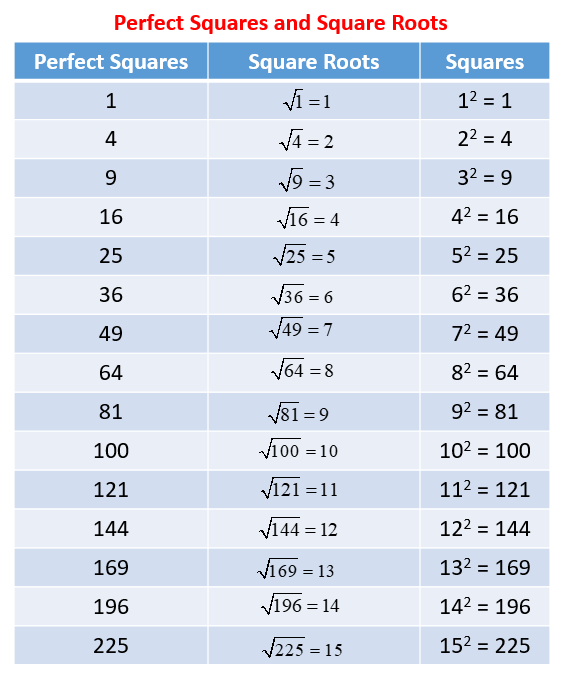
A number whose square root is an integer is called a perfect square. Examples include 1, 4, 9, 25, and 36.
Square roots by Factorization
The square root of a number can also be obtained using the factorization method, which involves breaking down the number into its prime factors and pairing them.
Example
Find the square root of 81 by the factorization method.
Solution
81 = (Find the prime factors of 81)
= (3 × 3) × (3 × 3) (Group the prime factors into two identical numbers)
= 3 × 3 (From the two identical prime factors, choose one and find their product)
= 9
Note:
Pair the prime factors into two identical numbers. For every pair, pick only one number and then obtain the product.
Example
Find by factorization.
Solution
= 2 × 3 × 7
= 42
Example
Find by factorization.
Solution
= 3 × 7
= 21
Square Root from tables
Square roots of numbers from 1.0 to 99.99 are given in tables and can be read directly, providing a quick way to find square roots without manual calculation.
Examples
Use tables to find the square root of:
- 1.86
- 42.57
- 359
- 0.8236
Solution
- To read the square root of 1.86, look for 1.8 in the column headed x, then move to the right along this row to where it intersects with the column headed 6. The number in this position is the square root of 1.86. Thus, √1.86 ≈ 1.364 to four figures.
- Look for 42 in the column headed x and move along the row containing 42 to where it intersects with the column headed 5. Read the number in this position, which is 6.519. The difference for 7 from the difference column along this row is 0.006. The difference is added to 6.519 as shown below:
6.519
+ 0.006
6.525
Thus, to four figures.
For any number outside this range, it is necessary to first express it as the product of a number in this range and an even power of 10.
- 359 = 3.59 × 10²
= 1.895 × 10
= 18.95 (four figures)
- 0.8236 = 82.36 × 10⁻²
= (9.072 + 0.004) × 10⁻¹
= 0.9076 (four figures)
End of topic
Did you understand everything? If not, ask a teacher, friends, or anybody and make sure you understand before going to sleep! |
Past KCSE Questions on the topic
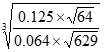
- Evaluate without using tables or calculators
- Evaluate using reciprocals, square and square root tables only.
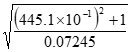
- Using a calculator, evaluate
 (Show your working at each stage)
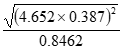 (Show your working at each stage)
- Use tables of reciprocals and square roots to evaluate
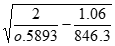
5. Use tables to find:
a) i) 4.9782
ii) The reciprocal of 31.65
b) Hence evaluate to 4 significant figures the value of
4.9782 – 1/31.65
6. Use tables of squares, square roots, and reciprocals to evaluate correct to 4 significant figures:


7. Without using mathematical tables or a calculator, evaluate: 153 × 1.8 giving your answer in standard form and 0.68 × 0.32.


