

Specific Objectives
By the end of the topic the learner should be able to:
- (a) Derive logarithmic relations from index form and vice versa;
- (b) State the laws of logarithms;
- (c) Use logarithmic laws to simplify logarithmic expressions and solve logarithmic equations;
- (d) Apply laws of logarithms for further computations.
Content
- (a) Logarithmic notation (e.g. an = b, loga b = n)
- (b) The laws of logarithms: log (AB) = log A + log B, log (A/B) = log A – log B, and log An = n × log A.
- (c) Simplifications of logarithmic expressions
- (d) Solution of logarithmic equations
- (e) Further computation using logarithmic laws.
If  then we introduce the inverse function logarithm and define
(Read as log base  of
of  equals
  ).
).
| In general |  |
Where Û means “implies and is implied by,” i.e., it works both ways!
Note this means that, going from exponent form to logarithmic form:
 Þ Þ |  |  Þ Þ |  |
 Þ Þ |  |  Þ Þ |  |
 Þ Þ |  |  Þ Þ |  |
And in going from logarithmic form to exponent form:
 Þ Þ |  |  Þ Þ |  |
 Þ Þ |  |  Þ Þ |  |
 Þ Þ |  |  Þ Þ |  |
Laws of logarithms
Product and Quotient Laws of Logarithms:
 The Product Law
 The Quotient Law
Example.


= 2
The Power Law of Logarithms:

Example.
2 log 5 + 2 log 2
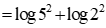


= 2
Logarithm of a Root
 or
or 
Example.


Proof of Properties
| Property | Proof | Reason for Step |
|---|---|---|
| b1 = b ✓ and b0 = 1 ✓ | Definition of logarithms |
2. (product rule) logb xy = logb x + logb y | a. Let logb x = m and logb y = n b. x = bm and y = bn c. xy = bm × bn d. xy = bm + n e. logb xy = m + n f. logb xy = logb x + logb y ✓ | a. Setup b. Rewrite in exponent form c. Multiply together d. Product rule for exponents e. Rewrite in log form f. Substitution |
logb (x/y) = logb x – logb y | a. Let logb x = m and logb y = n b. x = bm and y = bn c. (x/y) = bm / bn d. (x/y) = bm – n e. logb (x/y) = m – n f. logb (x/y) = logb x – logb y ✓ | a. Given: compact form b. Rewrite in exponent form c. Divide d. Quotient rule for exponents e. Rewrite in log form f. Substitution |
logb xn = n logb x | a. Let m = logb x so x = bm b. xn = bmn c. logb xn = mn d. logb xn = n logb x | a. Setup b. Raise both sides to the nth power c. Rewrite as log d. Substitute |
5. Properties used to solve log equations: a. if bx = by, then x = y b. if logb x = logb y, then x = y | a. This follows directly from the properties for exponents. b. i. logb x – logb y = 0 ii. logb (x/y) iii. (x/y) = b0 iv. (x/y) = 1 so x = y | b. i. Subtract from both sides ii. Quotient rule iii. Rewrite in exponent form iv. b0 = 1 |
Solving exponential and logarithmic equations
By taking logarithms, an exponential equation can be converted to a linear equation and solved. We will use the process of taking logarithms of both sides to simplify the solving process.
Example.
a) 


 x = 1.792
Note;
A logarithmic expression is defined only for positive values of the argument. When we solve a logarithmic equation, it is essential to verify that the solution(s) do not result in the logarithm of a negative number. Solutions that would result in the logarithm of a negative number are called extraneous and are not valid solutions.
Example.
Solve for x:

 (the one becomes an exponent:
  )
)


Verify:

 not possible
Solving equations using logs
Examples
(i) Solve the equation 
The definition of logs says if  then
then  or
or 
Hence  (to 5 decimal places)
Check  (to 5 decimal places)
In practice, from  we take logs to base 10 giving

(ii) Solve the equation 

Check  ,
,  , we want
  so the value of
  lies between 3 and 4 or
  which means
  lies between 1.5 and 2. This tells us that
  is roughly correct.
(iii) Solve the equation 

Check  very close!
Note you could combine terms, giving,

(iv) Solve the equation 
Take logs of both sides Expand brackets Collect terms Factorise the left hand side Divide |  |
(Note you get the same answer by using the ln button on your calculator.)
Check  and
and 
Notice that you could combine the log-terms in
 to give
It does not really simplify things here but, in some cases, it can.
(v) Solve the equation 
Take logs of both sides Expand brackets Collect terms Factorize left hand side Simplify Divide |  |
Check
LHS =  (taking
  )
)
RHS =  (taking
  )
)
The values of LHS and RHS are roughly the same. A more exact check could be made using a calculator.
Logarithmic equations and expressions
Consider the following equations.
The value of x in each case is established as follows.
Therefore
X = 4
Example
Solve
Solution
Let t = log x, then t = 2
Introducing logarithm to base 10 on both sides
Therefore
Example
Taking logs on both sides cannot help in getting the value of x, since the terms cannot be combined into a single expression. However, if we let y = log x, then the equation becomes quadratic in y.
Solution
Thus, let y = log x …………….. (1)
Therefore
Substituting for y in equation (1);
Let t = y or let t = log x
There is no real value of x for which the equation holds, hence no solution.
Example
Solve for x in
Solution
Let t = log x
Therefore
Solve the quadratic equation using any method
Substituting for t in the equation (1).
t = x
Note;
End of topic
Did you understand everything? If not, ask a teacher, friends, or anybody and make sure you understand before going to sleep! |
Past KCSE Questions on the topic
- Solve for x: (– ½ = 3/2)
- Find the values of x which satisfy the equation 52x – 6 (5x) + 5 = 0
- Solve the equation log (x + 24) – 2 log 3 = log (9 – 2x)
- Find the value of x in the following equation 49(x+1) + 7(2x) = 350
- Find x if 3 log 5 + log x2 = log 1/125
- Without using logarithm tables, find the value of x in the equation log x3 + log 5x = 5 log 2 – log 2 5
- Given that P = 3y, express the equation 3(2y -1) + 2 × 3(y-1) = 1 in terms of P
- Hence or otherwise find the value of y in the equation: 3(2y-1) + 2 × 3(y-1) = 1


