


1 TOWARDS THE END OF APARTHEID IN SOUTH AFRICA
Carefully study the following sources and then answer all the parts of this question.
SOURCE A
In 1992, an all white referendum endorsed de Klerk’s reform moves by a 70% vote, and negotiations that followed centred on the new constitution and the transitional power arrangement. The proposed new constitution suggested the formation of national and provincial governments, disbanding Bantustans and the adoption of a new Bill of Rights.
Adapted from a book by Zimbabwean historians, published in 1999.
SOURCE B
White extremists such as the African Resistance Movement(AWB) were well armed and fanatical. They were determined to sabotage any forms of democratic South Africa which they saw as a betrayal of the Afrikaaner people by their government. The government was reluctant to try and fail them as many Afrikaaners and the government saw their crimes against black people and the government as heroic.
Adapted from a book by Zimbabwean historians, published in 1993.
SOURCE C
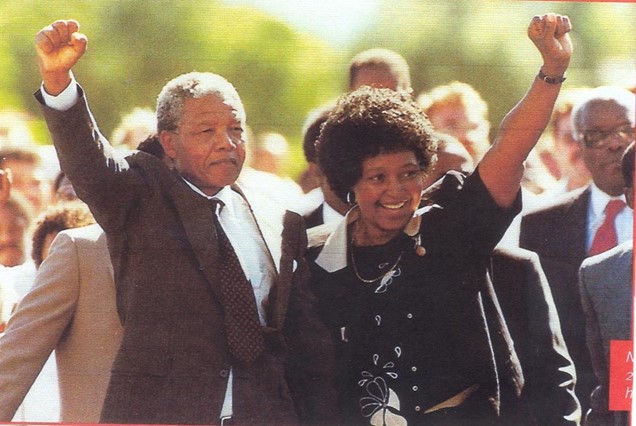
The above photograph shows Nelson Mandela following his release in 1990 after 27 years in jail.
2167/1 N2015
Answer all parts of this question.
(a) Read Source A
How does the source suggest that the whites in South Africa were about
to give up apartheid? [4]
(b) Study Source B
Is this source reliable on the relations between the blacks and the whites in South Africa in the 1990s? Explain your answer. [5]
(c) Study Source C
Why do you think the photograph on the release of Mandela was
published at that time? [5]
(d) Read Source A and study Source B
How do the two sources differ on apartheid in South Africa in the 1990s?
Explain your answer. [5]
(e) Read Source C
What do you think were the feelings of the people of South Africa on the
release of Nelson Mandela from jail? [6]
- (a) Mention any six economic activities of the people of Great Zimbabwe. [6]
- Describe the political and social organisation of Great Zimbabwe. [11]
- To what extent did the political organisation of Great Zimbabwe
contribute to its decline? [8]
- (a) Name any six chiefdoms controlled by the Rozvi during the reign of
Changamire Dombo I. [6]
- Describe the social organisation of the Rozvi State. [11]
- How important was the social organisation in the stability of the Rozvi
state? [8]
2167/1 N2015
[Turn over
- Identify any six crops grown by the people of Northern Nguniland in the late 18th century.
Describe the problems faced by the chiefs in Northern Nguniland in the
late 18th century. [11]
(c) How far did these problems contribute to the rise of Tshaka? [8]
- (a) Identify any six items used to pay tribute to Sebetwane of Bulozi. [6]
- Describe the movement of the Kololo from Trans-Orangia to Bulozi. [11]
- To what extent was the Kololo movement influenced by Mfecane? [8]
- (a) Identify any three items which Africans gave to the early Christian
missionaries and any three items they received from missionaries through
trade between 1850 and 1900. [6]
- Outline the reasons for the African resistance to Christianity between
1850 and 1900. [11]
- Is it true that the missionaries were responsible for the colonisation of
Zimbabwe? Explain your answer. [8]
- (a) Identify any six items exported to the Mutapa state by the Portuguese
from the 15th to the 18th centuries. [6]
- Describe the prazo system introduced by the Portuguese in the Zambezi
Valley. [11]
- To what extent did the prazo system affect the people in the Mutapa state? [8]
- (a) Identify any six reasons why the Industrial Revolution began in Great Britain in the 18th century. [6]
- Describe the contribution of the Industrial Revolution to the Scramble
for colonies in Southern Africa during the 19th century. [11]
- Can the Industrial Revolution be blamed for the colonisation of Southern
Africa? Explain your answer. [8]
2167/1 N2015
- three Europeans and three Africans who were involved in the signing of the Rudd Concession of October 1888.
Describe the steps taken by Cecil J. Rhodes which led to the signing of the
Rudd Concession of 1888. [11]
(c) Can Lobengula be blamed for the colonisation of Zimbabwe? Explain
your answer. [8]
- (a) Name any six rivers which the Pioneer column crossed during their march
into Mashonaland in 1890. [6]
- Describe the problems faced by the Pioneers during their journey to
Mashonaland. [11]
- To what extent were the Pioneers able to overcome these problems? [8]
- (a) Name any six white officials who were involved in planning the Anglo-
Ndebele War of 1893 – 4. [6]
- Describe the preparations made by the British South Africa Company
(BSAC) to fight the Ndebele in the War of 1893 – 4. [11]
- Were the whites to blame for the outbreak of this war? Explain your
answer. [8]
- (a) Identify any six mining centres which used the compound system to
accommodate workers in colonial Zimbabwe up to 1950. [6]
- Outline the effects of the settler farming activities on the Africans up to
1950. [11]
- To what extent did the Africans benefit from settler farming activities at that time? [8]
- (a) State the colonial names of any six countries where South African
mining companies recruited labour from. [6]
- Describe the economic and political effects of the discovery of diamonds
in South Africa up to 1910. [11]
- To what extent were the Africans affected by the discovery of diamonds in
South Africa up to 1910? [8]
2167/1 N2015
[Turn over
- six countries which shared borders with the Federation of
Rhodesia and Nyasaland.
Outline the origins of the Federation of Rhodesia and Nyasaland. [11]
(c) How important was the role played by Britain in the establishment of
the Federation? [8]
- (a) Name any two towns in each of the territories in the Federation of
Rhodesia and Nyasaland. [6]
- Outline the problems faced by the Africans in towns during the
Federation. [11]
- To what extent had the federal Government solved these problems by
1963? [8]
- (a) Identify any six forms of taxes introduced by the settler government in
colonial Zimbabwe up to 1935. [6]
- Outline the factors which contributed to an increase in production in
peasant farming before 1930. [11]
- To what extent was the increase in African production due to the new
methods of farming introduced by the settlers? [8]
- (a) Identify any six weapons used by guerrillas in the armed struggle in
colonial Zimbabwe from 1966 to 1979. [6]
- Outline the conferences held to end the Rhodesian political crisis from
1966 to 1979. [11]
- How important were these conferences in the attainment of independence
in Zimbabwe? [8]
- (a) List the top six posts in the hierarchy of each ministry or Department of
Government in Zimbabwe. [6]
- Outline the provisions of the Executive President Act as stated in the
Zimbabwe Constitutional Amendment Act. [11]
- Has the office of the President of Zimbabwe been successful in carrying
out its functions? [8]
2167/1 N2015
- six banks that have established branches in the rural areas in Zimbabwe.
Outline the economic and social problems that have been experienced by people in the rural areas of Zimbabwe since 1990. [11]
(c) To what extent has government of Zimbabwe been able to solve the problems faced by the people in the rural areas since 1990? [8]
- (a) Name any three state universities in Zimbabwe and the respective
provinces in which they are found. [6]
- Describe the efforts made by the government of Zimbabwe to improve
education since independence. [11]
- To what extent have the rural communities in Zimbabwe benefitted from
these efforts since independence? [8]
- (a) List any six political parties which have participated in general elections
in South Africa since 1994. [6]
- Outline the economic and social developments in South Africa since
1994. [11]
- To what extent have the people of South Africa benefitted from those
developments? [8]
- (a) List any six crops grown in Mozambique since independence. [6]
- Describe the economic and social problems inherited by the Frelimo
government at independence. [11]
- To what extent has the Frelimo government been able to solve these
problems?
[8]
MARKING SCHEME
ZIMBABWE SCHOOL EXAMINATIONS COUNCIL
General Certificate of Education Ordinary Level
MARKING SCHEME
HISTORY 2167/1
SOUTHERN AFRICA
NOVEMBER 2015
- (a) Read Source A
How does the source suggest that the whites in South Africa were about
to give up apartheid? [4]
Target: | Comprehension with inference. |
Level 1: | Simple answers taken directly from the source e.g. the whites had accepted de Klerk’s reform by a 70% vote. The proposed new constitution focused on the formation of national and provincial governments. (1 – 2) |
Level 2: | inference level e.g. answers which state that the whites and the blacks would integrate in the national and provincial governments. Whites and black rights were to be guaranteed under the same Bill of Rights. |
(3 – 4) |
- Study Source B
Is this source reliable on the relations between the blacks and the whites in South Africa in the 1990s? Explain your answer. [5]
Target: | Evaluation of source for reliability. |
Level 1: | Simple answers taken directly from the source e.g. answers saying that it is reliable because white extremists were well armed or white extremists were not punished for crimes against blacks or the sabotaged democracy in South Africa. [1] |
Level 2: | Status/bias level |
Answers which state that it is reliable because it was produced by Zimbabwean historians who researched or it is not reliable because the historians are nationals from a country that opposed apartheid and white extremism. (2 – 3) | |
Level 3: | Motive level |
Answers which state that is not reliable because the Zimbabwean historians wanted the white extremists blamed for stalling democratic changes in South Africa and to have them watched in a new democratic South Africa. (4 – 5) |
- Study Source C
Why do you think the photograph on the release of Mandela was
published at that time? [5]
Target: Evaluation of source for motive.
Level 1: | Simple answers taken directly from the source, e.g. to show that he was out of jail. [1] |
Level 2: | Status/Audience level As an important leader it was a memorable occasion or to inform his supporters that Mandela was out of jail. (2 – 3) |
Level 3: | Motive level |
Answers stating that they wanted to convince the blacks that the whites were sincere so that the blacks could stop their armed struggle. | |
To pacify the international community in order to justify the apartheid system. (4 – 5) |
- Read Source A and study Source B
How do the two sources differ on apartheid in South Africa in the 1990s?
Explain your answer. [5]
Target: Evaluation of source for differences.
Level 1: | Differences based on contents of sources, e.g. answers stating that they differ because source A shows that the whites were negotiating a new constitution for a national government with blacks, while source B shows that extremists whites were determined to sabotage any form of democratic South Africa. (1 – 2) |
Level 2: | Status/bias level |
Answers stating that they do not differ because they were both written by Zimbabwean historians with no experience of apartheid or they differ because Source A supports change while in source B there is opposition to change by white extremists. (3 – 4) | |
Level 3: | Motive level |
Answers stating that they differ because in source A the aim was to credit de Klerk for spearheading change while in source B it was to blame white extremists as resisting change. (4 – 5) |
- Read Source C
What do you think were the feelings of the people of South Africa on the
release of Nelson Mandela from jail? [6]
Target: | empathy |
Level 1: | Answers focusing on common group feelings and reasons e.g. the whites were disappointed because they did not want black majority rule. |
(1 – 2) | |
Level 2: | Answers identifying two or more groups, their feelings and reasons e.g. the whites were disappointed because they disliked African majority rule while the blacks were happy because it showed that de Klerk’s reforms were sincere. (3 – 4) |
Level 3: | Complexity level |
Answers identifying conflicting feelings within two or more groups and reasons e.g. the whites were disappointed because they disliked his agitation for majority rule but were relieved that the war and sanctions would end. | |
The blacks were happy that their leader would bring majority rule but were still suspicious of the whites’ intentions. (5 – 6) |
- (a) Mention any six economic activities of the people of Great Zimbabwe. [6]
- Describe the political and social organisation of Great Zimbabwe. [11]
- To what extent did the political organisation of Great Zimbabwe
contribute to its decline? [8]
(a) economic activities
- cattle rearing
- crop growing
- mining
- trading
- hunting
- gathering
- blacksmithing
(b) (i) Political organization
- The King had absolute power, was chief administrator, commander-inchief of the army, distributor of land and religious leader. – He ruled with the aid of the traditional council of advisors (Dare) – He chose lesser chiefs to control provinces and districts.
- Kingship was hereditary
- Lesser chiefs paid tribute to the King as a sign of loyalty
- The King raised and army for defense and raiding
- He was chosen by spirit mediums
(ii) Social organization
- People of Great Zimbabwe practised polygamy.
- Men paid lobola for their wives.
- A man with a lot of cattle was regarded as a wealthy person.
- They lived in villages according to their lineages.
- Practised cattle – loaning (Mafisa cattle).
- Built pole and dagga huts.
- Worshipped a Creator God called Mwari as well as ancestral spirits.
- Spirits were consulted through spirit mediums in times of crises like drought, war, epidemics, locusts, etc.
- King led in traditional rituals like rainmaking ceremonies. – They believed in witchcraft and life after death.
(c) (i) Role of political organization
- there were succession disputes after the death of a ruler
- rebellions occurred against a ruler
- wars with neighbouring states
- sometimes lesser chiefs failed to pay tribute
(ii) Other factors
- decline of trade at Great Zimbabwe
- exhaustion of soil
- exhaustion of minerals
- shortage of pasture for animals
- shortage of game
- shortage of salt
Level 1: Irrelevant and one-sided answer. (0 – 3)
Level 2: Balanced answer. (4 – 6)
Level 3: Balanced answer with judgement. (7 – 8)
3 (a) Name any six chiefdoms controlled by the Rozvi during the reign of
Changamire Dombo I. [6]
- Describe the social organisation of the Rozvi State. [11]
- How important was the social organisation in the stability of the Rozvi
state? [8]
(a) Chiefdoms
Torwa/Guruuswa
Uteve/Quiteve
Manyika
Madanda/Sedanda
Bocha
Buhera
Maungwe
(b) Social organization
- The Rozvi lived in lineages. –
Built pole and dagga huts. - The Mambo’s hut was called chitoramano.
- Rozvi people belonged to the Moyo totem.
- They married from non-Rozvi clans.
- Paid lobola in the form of cattle.
- Practised polygamy.
- Ownership of many cattle was a sign of wealth.
- Practised cattle loaning system (kuronzera).
- The Rozvi believed in Supreme God Mwari whom they worshipped through ancestral and national spirits.
- They communicated with spirits through the spirit mediums.
- They practised rain making ceremonies.
- The mambo was chosen by spirit mediums and led at traditional ceremonies.
(c) (i) Importance of social organization
- King was chosen by spirit mediums.
- King was respected as chosen by God.
- The King led at traditional ceremonies.
- Religion united the Rozvi.
- Polygamy was a source of marriage alliances of labour and soldiers.
- Cattle loaning was a way of spreading and consolidating political influence
(ii) Other factors
- army protected the state
- installation of provincial and district chiefs to control provinces and districts on behalf of the King.
- The King’s charisma
- a strong economy supported successful agriculture, mining and trade
Level 1: Irrelevant and one-sided answer. (0 – 3)
Level 2: Balanced answer. (4 – 6)
Level 3: Balanced answer with judgement. (7 – 8)
4 (a) Identify any six crops grown by the people of Northern Nguniland in
the late 18th century. [6]
- Describe the problems faced by the chiefs in Northern Nguniland in the
late 18th century. [11]
- How far did these problems contribute to the rise of Tshaka? [8]
(a) Crops
- maize
- sorghum
- millet
- calabash
- pumpkins
- beans
- coco-yams
- water melons
- tobacco
(b) Problems faced by chiefs
- population growth
- competition for pastures
- competition for fertile land
- competition for water
- droughts – leading to poor harvests
- famine e.g. Madhlatule
- military raids for cattle, grain
- competition for control of hunting areas and mining areas
- competition for trade with the Portuguese at Delagao Bay, and for control of trade routes
- payment of tribute by the conquered
- pressure for land from trekboers
- Boer and Portuguese raids for slaves
- Ethnic wars
(c) (i) Contribution of problems
- constant raids led to emergence of Tshaka as a strong general of Dingiswayo
- warfare led to death of Dingiswayo and emergence of Tshaka as king of Zulu
- competition for pasture lands, fertile land precipitated military reforms – competition for trade
(ii) Other factors
- Tshaka’s background which moulded him into a tough character.
- Tshaka’s military ability which enabled him to conquer most neighbouring states
- death of Senzangakona, Tshaka’s father which enabled Tshaka to assume chiefainship of the Zulu clan
- military training by Dingiswayo
Level 1: Irrelevant and one-sided answer. | (0 – 3) | ||
Level 2: Balanced answer. | (4 – 6) | ||
Level 3: Balanced answer with judgement. | (7 – 8) | ||
5
| (a) | Identify any six items used to pay tribute to Sebetwane of Bulozi. | [6] |
| (b) | Describe the movement of the Kololo from Trans-Orangia to Bulozi. | [11] |
| (c) | To what extent was the Kololo movement influenced by Mfecane? | [8] |
- – grain
- nuts
- spears
- hoes
- canoes
- ivory
- skins
- – fled from Trans-Orangia area after being attacked by the Tlokwa of Mmantantisi
- crossed the Vaal River
- proceeded to Dithakong where they attacked the Phuting and Tlaping
- forced out of Dithakong by Qriquas
- moved to Molopo River and defeated the Kolong
- came to Hurutshe land and defeated them
- expelled from Hurutshe land by the Ndebele
- moved into Botswana
- attacked and defeated the Kgabo Kwena and Tshwane-Tlokwa
- settled at Kwana centre, driven out by the Ngwaketsi
- camped at Shoshong Hills where they were attacked by the Ngwato
- moved to Lake Ngami area
- fought the Herero but they were defeated
- crossed the Okavango swamps
- reached Chobe River Valley
- established their capital Dinyati in 1835
- abandoned their capital because of malaria
- reached the shores of the Zambezi where they fought the Tonga
- shifted to Toka plateau where they fought the lla and Sala people
- turned west into Bulozi after advice from Priestess Longo – fought and conquered the Luyi
(c) (i) Influence of Mfecane
- the Fokeng group forced off the Trans-Orangia area after the defeat by Mmantantisi who had been attacked by Meface refugees from Nguniland
- driven out of Hurutsheland by the Ndebele who had fled Mfecane
- Mzilikazi pursued them up to the Zambezi River
- Nxaba also forced them to move
(ii) Others factors
- Sebetwane driven by his own ambition
- forced by lack of water in the Kalahari desert – attacks from malaria in the Chobe Valley
- attacked and forced to leave a number of areas by other ethnic groups e.g. Qriquas, Ngwaketsi, Herero
- advice from Priestess Longo
- attracted by weaker groups, e.g Luyi
- abundance of cattle in Bulozi
Level 1: Irrelevant and one-sided answer. (0 – 3)
Level 2: Balanced answer. (4 – 6)
Level 3: Balanced answer with judgement. (7 – 8)
6 (a) Identify any three items which Africans gave to the early Christian missionaries and any three items they received from missionaries
through trade between 1850 and 1900. [6]
- Outline the reasons for the African resistance to Christianity between
1850 and 1900. [11]
- Is it true that the missionaries were responsible for the colonisation of
Zimbabwe? Explain your answer. [8]
(a)
| Items traded by Africans | Items traded by Europeans | |||
– | ivory | – | guns | ||
– | water melons | – | cloth | ||
– | pumpkins | – | beads | ||
– | milk | – | ammunition | ||
– | eggs | – | chinaware | ||
– | ostrich feathers | – | bangles | ||
– | livestock | – | necklaces | ||
– | iron tools | ||||
– | grain | ||||
(b) Reasons for African resistance
- natural disasters blamed on missionaries e.g. 1861 – 62 drought, rinderpest, locusts, small pox and fever that killed people in 1862
- Africans expected to be paid for attending lessons
- learning to read and write considered too laborious and unnecessary by Africans – the process of being a catechist was a heavy burden to some Africans – Africans did not see the value of missionary teachings in their life.
- Christianity was a threat to their traditional religion
- The power of traditional leaders and the divine power of Kings/rulers likely to disappear
- Christianity was against polygamy and raiding
- suspicious towards the missionaries
- thought that missionaries wanted to colonize them
- they were afraid to lose control of their trade with outsiders
- there was a language barrier
- influence of Islam made them to hate Christianity
(c) (i) Role of missionaries
- gave shelter to concesion seekers
- missionaries invited their home countries to colonize Zimbabwe
- missionaries signed treaties
- misinterpretation of Treaties
(ii) Other factors
- Rhodes’ Cape to Cairo dream
- abundant cheap labour
- availability of fertility soils, minerals, wild life, hunting grounds
- influence of hunters, traders, and explorers
- favourable climate
- need for markets and raw materials
Level 1: Irrelevant and one-sided answer. (0 – 3)
Level 2: Balanced answer. (4 – 6)
Level 3: Balanced answer with judgement. (7 – 8)
7 (a) Identify any six items exported to the Mutapa state by the Portuguese
from the 15th to the 18th centuries. [6]
- Describe the prazo system introduced by the Portuguese in the Zambezi
Valley. [11]
- To what extent did the prazo system affect the people in the Mutapa state? [8]
(a) Items imported
Chinaware guavas mangoes bananas cloth beads guns knives mirrors sea shells alcohol sugar rice
tobacco
(b) Prazo System
- Portuguese were given land through treaties with African chiefs and for helping them during political unheavals
- obtained land through force and deceit e.g. Negomo Mapunzagutu, Gatsi Rusere in 1607
- Portuguese landowners were called prazeros and their estates were called prazos
- prazeros given title deeds to the land
- practised shifting cultivation
- Portuguese farmers later resorted to crop rotation –
prazeros ruled like African Kings. - became in charge of all people in their prazos
- reared livestock
- cultivated a variety of crops such as tobacco, rice, dagga, sorghum, millet, maize, cassava and fruit trees like bananas, mangoes and guavas
- used slave labour and forced labour
- practised gold, copper iron which the exported
- used slave armies (Chikundas)
- traded with Africans
- raped African women
- some married African woman resulting in the birth of mulatoes
- refused to pay curva
- forced Africans to pay tribute
- Portuguese performed some African rituals like rainmaking
(c) (i) Positive effects
- introduction of new crops e.g. maize
- new trade items e.g. beads, cloth
- obtained new weapons e.g. guns
- gained new methods of farming
- new mining methods
(ii) Negative effects
- Africans were enslaved
- lost land
- disunited Africans
- caused succession disputes and civil wars
- caused wars which resulted in many deaths
- Mutapa Kings lost power to the Portuguese
- raped Mutapa women (dehumanizing them)
- monopolized trade patterns
- Mutapa people lost independence
Level 1: | Irrelevant and one-sided answer. | (0 – 3) | ||
Level 2: | Balanced answer. | (4 – 6) | ||
Level 3: | Balanced answer with judgement. | (7 – 8) |
8 (a) Identify any six reasons why the Industrial Revolution began in Great Britain
in the 18th century. [6]
- Describe the contribution of the Industrial Revolution to the Scramble for colonies in Southern Africa during the 19th century. [11]
- Can the Industrial Revolution be blamed for the colonisation of Southern
Africa? Explain your answer. [8]
(a) Reasons
- Britain’s dependence on foreign trade
- availability of capital for trade
- her merchant navy enabled her to control a big empire
- the empire served as sources of raw materials and markets for goods
- Great Britain was not involved in war and political stability prevailed in Britain
- Britain had large quantities of iron, coal and water
- invention of machinery
- improvements in the transport system
(b) Contribution of the Industrial Revolution
- need to invest surplus capital in Southern Africa
- need to acquire raw materials such as ivory, minerals and skins
- desire to acquire cheap labour
- easier mode of transport e.g. use of the steamship
- new technology such as the invention of new weapons made possible the conquest of new areas in Southern Africa.
- advancement in medicine e.g. the discovery fo quinine which enabled Europeans to settle in tsetse infested parts of Southern Africa
- emergence of the capitalist class in Britain –
need to control strategic areas for trade –
desire for fertile lands for growing cotton.
(c) (i) Role of the Industrial Revolution
- need for investment
- need for raw materials
- need for markets
- easier mode of transport
- desire to control trade routes
- need for cheap labour
(ii) other factors
- role played by missionaries, traders, hunters and explorers
- to spread the three Cs
- to end slavery and slave trade
- weakness of African states
- prestige reasons
- suitable climate
Level 1: Irrelevant and one-sided answer. (0 – 3)
Level 2: Balanced answer. (4 – 6)
Level 3: Balanced answer with judgement. (7 – 8)
9 (a) Name any three Europeans and three Africans who were involved in the signing of the Rudd Concession of October 1888. [6]
- Describe the steps taken by Cecil J. Rhodes which led to the signing of the
Rudd Concession of 1888. [11]
- Can Lobengula be blamed for the colonisation of Zimbabwe? Explain
your answer. [8]
(a) (i) Europeans who were involved
- Charles D. Rudd
- Rochford Maguire
- Francis Thompson
- Sydney Shippard
- Rev. Charles Helm
- C.D. Dryer
(ii) Africans who were involved
- Lobengula
- Lotshe
- Sikombo
(b) Measures taken by Rhodes
- sent J.S. Moffat to cancel the Grobler Treaty of 1887 and sign the Moffat Treaty in February 1888.
- selected Rudd, Maguire and Thompson to approach King Lobengula
- involved Rev. Helm who had worked in Matabeleland as a missionary
- consulted Shippard (Deputy Commissioner in Botswana) before the signing process
- provided money that was used to bribe Lotshe and Sikombo
- convinced the British Government that he was going to use his fortune to finance the occupation
- he upheld the terms of the Berlin Conference (1884 – 5) – signing treaties with local chiefs
- prevented the Portuguese from signing treaties with local chiefs
- sought support of other British business people
- Rhodes convinced other European imperialists that he would promote people, good governance and end wars in Africa
- He frustrated the efforts of Germans who also had interests in the area lying north of the Limpopo
(c) (i) Blame on Lobengula
- his greed for foreign items that were promised to him compelled him to sign the Rudd Concession
- his desire for a luxurious life forced him to accept terms of the Rudd Concession
- Lobengula was illiterate – hence Rhodes’ men capitalized on his illiteracy
- Lobengula refrained amajaha from attacking the pioneers
- Lobengula over-trusted missionaries
- his relationship with J.S. Moffat
- felt insecure on the throne
(ii) Other factors
- Lotshe and Sikombo were bribed by Rhodes’ men – role played by the pioneers
- military strengths of the company forces
- disunity among the Ndebele people
- influence of missionaries, hunters, traders and explorers
- Rhodes financial muscle. He bought the Lippert Concession from
Edward Lippert
Level 1: Irrelevant and one-sided answer. (0 – 3)
Level 2: Balanced answer. (4 – 6)
Level 3: Balanced answer with judgement. (7 – 8)
10 (a) Name any six rivers which the Pioneer column crossed during their march
into Mashonaland in 1890. [6]
- Describe the problems faced by the Pioneers during their journey to
Mashonaland. [11]
- To what extent were the Pioneers able to overcome these problems? [8]
(a) Rivers crossed
- Mcloutsie
- Tuli
- Mzingwane
- Bubi
- Runde
- Tokwe
- Manyame
- Mupfure
(b) Problems faced by the Pioneers
- crossing many streams and rivers
- terrain they passed through was rough
- moving large numbers of wagons
- process of clearing the road
- pioneers were attacked by diseases such as black water fever
- some lost their lives
- threats from wild animals especially, during the night when they laagered
- fear of Ndebeles’ amajaha
- also felt insecure as they could experience resistance from the local Shona people
- lacked adequate medication
- suffered from fatigue
- loss of livestock
- shortage of fresh food
(c) (i) Successes
- use of search light beams to scare off enemies and wild animals – advance parties were sent ahead to survey the route and spot possible dangers
- travelled during the dry season in order to avoid floods
- established forts for defence purposes
- avoided passing through Matabeleland
- had medical supplies for sick people (pioneers)
- were equipped with modern firearms
- pioneers had received military training prior to their departure
- had knowledgeable guides and scouts
(ii) Failures
- some wagons got stuck in the mud and broke beyond repair
- some died of tropical diseases
- some of their livestock also died
- some pioneers were attacked by wild animals – inadequate medical facilities
- took too long to reach Harare because they had no modern modes of transport
Level 1: Irrelevant and one-sided answer. (0 – 3)
Level 2: Balanced answer. (4 – 6)
Level 3: Balanced answer with judgement. (7 – 8)
11 (a) Name any six white officials who were involved in planning the Anglo-
Ndebele War of 1893 – 4. [6]
- Describe the preparations made by the British South Africa Company
(BSAC) to fight the Ndebele in the War of 1893 – 4. [11]
- Were the whites to blame for the outbreak of this war? Explain your
answer. [8]
(a) White officials
- Starr Lander Jameson
- Captain Lendy
- Sir Henry lock
- Captain Allan Wilson
- Captain Raaf
- Goold Adams
- Lord Ripon
- C.J. Rhodes
- Calqulcum
(b) War preparations
- Jameson advised C.J. Rhodes to raise money to buy 1 000 horses, wagons and other war equipment
- Raaf was sent to South Africa to recruit soldiers for the attack on Matabeleland
- volunteers taking part in the war were each promised 6 000 acres of land and 15 gold claims
- after the victory, the loot was to be shared with the BSAC taking half and other half being shared equally between the officers and their subordinates
- Jameson held public meetings emphasizing that the Ndebele had to be destroyed at all costs
- Sir Henry Lock instructed Goold – Adams (commander of imperial forces) to move his troops from Palapye to Macloutsie and join recruits under Raaf
- Jameson’s plan was to attack Matabeleland from Salisbury, Fort Victoria and Macloutsie
- Allan Wilson was to raise a military force for the invasion of Matabeleland
- Sir Henry Lock, the Cape High Commissioner held a meeting with Mshete and
forced him to accept that a “boundary existed between Matabeleland and the BSAC areas
- Mshete was further told to accept that the Shona people were no longer Lobengula’s subjects
- Mshete was prevented from meeting the British Queen to plead for peaceful existence between the Ndebele and the BSAC
- Ingubungubu, Mantusa and Inguba, Lobengula’s messengers for peace were killed
(c) (i) Blame on whites
- Whites killed Lobengula’s messengers for peace
- after failure to get the second rand in Mashonaland whites
- BSAC envied Ndebele herds and Ndebele Land
- Ndebele defeat would increase the value of company shares
- Ndebele defeat would also enable the BSAC to extend their railway line from Mafeking to Salisbury through Matabeleland
- BSAC insisted that there was a boundary between Matabeleland and Mashonaland
- Rhodes’ Cape to Cairo dream
- captain Lendy’s altimatum to uMgandane and Manyawo
- Jameson’s war-like attitude
(ii) Blame on the Ndebele
- quarreled over the control of the Shona people
- Chief Bere stole Lobengula’s cattle
- Gomala cut off company telegraph wire
- Lobengula refused to recognize Jameson’s boundary
Level 1: | Irrelevant and one-sided answer. | (0 – 3) | ||
Level 2: | Balanced answer. | (4 – 6) | ||
Level 3: | Balanced answer with judgement. | (7 – 8) |
12 (a) Identify any six mining centres which used the compound system to
accommodate workers in colonial Zimbabwe up to 1950. [6]
- Outline the effects of the settler farming activities on the Africans up to
1950. [11]
- To what extent did the Africans benefit from settler farming activities at that
time? [8]
(a) Mining centres
- Wankie
- Marven
- Shamva
- Bonsor
- Globe and Phoenix
- Killerney
- Selukwe Peak
(b) Effects of settler farming activities
- shortage of land
- decline of crop production after the introduction of the Land Apportionment Act and Native Land Husbandry Act
- abject poverty in the reserves
- creation of a destitute peasant class in the reserves
- overcrowding and overstocking in the Tribal Trust Lands
- soil erosion in the reserves
- creation of peasant squatters on farms
- exorbitant rentals for squatters on European farms
- evictions for blacks who failed to pay rentals
- African farm produce was given low prices at the market
- African producers were charged transport and handling costs above the 10% charged on their products
- Cattle levy forced Africans to sell their surplus cattle
- African reserves were located away from roads and railway lines to remove competition with whites
- Use of cheap labour
- Some Africans were forced to migrate to towns in search of employment where the environment was equally hostile
- Jobs were difficult to get and wages were low
- Unemployed Africans in towns were labeled illegal immigrants and were arrested
- Exploitation of blacks by whites
(c) (i) African benefits
- rise of African nationalism
- they gained money to pay rents
- gained farming skills
- organized themselves into trade unions
(ii) Non-benefits
- exploitation became the order of the day
- families broke down – loss of land
- loss of livestock
- some Africans turned to vice like theft
- decline of crop production for Africans
- creation of a destitute peasant class
Level 1:
Irrelevant and one-sided answer.
(0 – 3)
Level 2:
Balanced answer.
(4 – 6)
Level 3:
Balanced answer with judgement.
(7 – 8)
13 (a) State the colonial names of any six countries where South African mining companies recruited labour from. [6]
- Describe the economic and political effects of the discovery of diamonds
in South Africa up to 1910. [11]
- To what extent were the Africans affected by the discovery of diamonds in
South Africa up to 1910? [8]
(a) Colonial names of countries
- Southern Rhodesia
- Northern Rhodesia
- Nyasaland
- Bechuanaland
- Portuguese East Africa
- Portuguese West Africa
- German South West Africa
- German East Africa
- Basotholand
- South Africa
(b) (i) Economic effects
- some whites became rich
- emergence of a poor white community
- development of ports and towns
- employment creation for both Africans and Whites
- establishment of banks
- improvement of transport: rail, roads and bridges
- exploitation of Africans by mine owners
- development of secondary industries
- emergence of the migrant labour system
- expansion of agriculture
- land around diamond mines became expensive
- more consumer goods were produced
(ii) Political effects
- emergence of conflict between Boers and British
- British Federation scheme failed
- some African kingdoms lost their independence and land
- annexation of Griqualand West by the Cape British
- development of the railway tariff dispute between Boers and the Cape
British
- outbreak of the first and second Anglo-Boer wars – the Jameson Raid of 1895
- annexation of the Transvaal in 1877 by the Cape British.
(c) (i) Positive effects
- creation of paid employment for Africans
- Africans got money for taxes
- Africans gaining new mining skills
- Africans managed to buy European goods e.g. guns, wagons, and cloth
(ii) Negative effects
- African women were raped
- family ties were disrupted due to the compound system
- emergence of social vices such as gambling, theft and prostitution
- deaths at work places as well as injuries
- poor sanitation at the compounds
- lack of privacy
- overcrowding
- inadequate entertainment facilities
- malnutrition and diseases were common
Level 1: | Irrelevant and one-sided answer. | (0 – 3) | ||
Level 2: | Balanced answer. | (4 – 6) | ||
Level 3: | Balanced answer with judgement. | (7 – 8) |
14 (a) Name any six countries which shared borders with the Federation of Rhodesia
and Nyasaland. [6]
- Outline the origins of the Federation of Rhodesia and Nyasaland. [11]
- How important was the role played by Britain in the establishment of
the Federation? [8]
(a) Countries which shared borders with Federation
- Zaire/DRC
- Angola/Portuguese West Africa
- Namibia/German West Africa
- Botswana
- South Africa
- Mozambique/Portuguese East Africa
- Tanzania/British East Africa/Tanganyika
(b) Origins
- idea of Rhodes and BSAC directorate to amalgamate British colonies in Central Africa
- views of Britain to prevent Central Africa from being occupied by Afrikaaners, Germans or Portuguese
- appointment of the Hilton Young Commission (1929)
- recommendation of the Hilton Young Commission report
- discussions and desires of settlers to amalgamate Northern and Southern Rhodesia in the 1930s
- request by settlers for a conference on amalgamation of the Rhodesians.
- Victoria Falls Conference of 1936
- creation of a bastion of British dominions in the African interior
- Bladslee Royal Commission (1938) which recommended creation consultative Inter-Territorial Council
- Implementation of the Bladsloe Commission recommendations
- Government of Britain was pressurized by the victory of Dr Magnus Malan’s Apartheid Nationalist Party
- informal talks between British Government Minister and settlers representatives` of the British Central African colonies
- announcement of a Federation Conference by James Griffiths in 1950
- Victoria Falls Conference (1951)
- London Federation Conference (1951) which came up with a draft constitution of a federal government
- submission of federal proposals to governments of Britain Northern Rhodesia, Southern Rhodesia and Nyasaland
- Southern Rhodesia Federation referendum
- Royal Orders-in-Council
(c) (i) Role of Britain
- Britain’s foreign policy changes on colonial matters
- urge on the Federation’s complimentary economic resources
- fear of Afrikaaner nationalism
- hosted London Federation conferences
- approved the Federation Constitution
- Queen provided the order-in Council for the Federation in 1903
- set up commissions on Federation
(ii) Other factors
- strong desire of settlers
- fear of Afrikaaner Nationalism by settlers
- settlers’ fear of African Nationalism
- settlers unity and strong desire for freedom
- role played by Huggins, Welensky and Griffiths
Level 1: Irrelevant and one-sided answer. (0 – 3)
Level 2: Balanced answer. (4 – 6)
Level 3: Balanced answer with judgement. (7 – 8)
15 (a) Name any two towns in each of the territories in the Federation of
Rhodesia and Nyasaland. [6]
- Outline the problems faced by Africans in the towns during the Federation period. [11]
- To what extent had the federal Government solved these problems by
1963? [8]
(a) (i) Southern Rhodesia
- Salisbury
- Bulawayo
- Gwelo
- Umtali
(ii) Northern Rhodesia
- Lusaka
- Livingstone
- Ndola
- Broken Hill
(iii) Nyasaland
- Lilongwe
- Zomba
- Blantyre
(b) Problems faced by Africans
- overcrowding
- high rate of unemployment
- poor accommodation – match box one room
- high rents
- common ablutions
- job colour-bar
- forced labour
- long working hours
- low wages
- unpaid over time
- prohibition of trade unions
- oppressive laws
- limited franchise
- police brutality
- racial discrimination/segregation
- inadequate educational facilities
- rampant diseases
- limited and poor social amenities
- lack of transport
- high prices of goods
(c) (i) Successes
- improved wages
- set up of the civil service council
- set up home ownership schemes
- built primary and secondary schools
- built multi-racial university of Rhodesia and Nyasaland
- established teacher training colleges
- built hospitals
(ii) Failures
- wages for African workers remained low
- discrimination continued
- job colour bar not stopped
- conditions of work remained poor
- pyramid system of education continued
Level 1: Irrelevant and one-sided answer. (0 – 3)
Level 2: Balanced answer. (4 – 6)
Level 3: Balanced answer with judgement. (7 – 8)
16 (a) Identify any six forms of taxes introduced by the settler government in
colonial Zimbabwe up to 1935. [6]
- Outline the factors which contributed to an increase in production in
peasant farming before 1930. [11]
- To what extent was the increase in African production due to the new
methods of farming introduced by the settlers? [8]
(a) Forms of taxes
- hut tax
- poll tax
- Polygamous Marriages Act
- marriage fees
- dog tax
- cattle dipping levy
- grazing fees
- cow slaughter tax
(b) Factors which contributed to rise
- Africans still possessed cultivable land
- use of new foreign tools e.g. ploughs
- new methods of farming e.g. crop rotation
- cultivation of cash or market crops e.g. cotton
- introduction of prices for agricultural produce that were reasonable
- early settlers concentrated on mining
- newly created food market of settlers
- pressure from taxation demands
- Africans unwilling to work for settlers e.g. payment of low wages, long working hours and lashing
- control of wild animals or game
- introduction of monetary economic system
- reduced clan rivalry
- absence of raids and wars
(c) (i) New methods
- introduction of new farming equipment e.g. ploughs
- new breeds of animals
- new breeds of crops
- introduction of chemical fertilizer
- dipping of cattle
- new methods of farming, e.g. crop rotation
(ii) Other factors
- Africans still possessed cultivable land
- increased output to raise money to pay tax
- availability of markets
- settlers concentrated on mining
Level 1: | Irrelevant and one-sided answer. | (0 – 3) | ||
Level 2: | Balanced answer. | (4 – 6) | ||
Level 3: | Balanced answer with judgement. | (7 – 8) |
17 (a) Identify any six weapons used by guerrillas in the armed struggle in
colonial Zimbabwe from 1966 to 1979. [6]
- Outline the conferences held to end the Rhodesian political crisis from
1966 to 1979. [11]
- How important were these conferences in the attainment of independence
in Zimbabwe? [8]
(a) Weapons used
- bazookas
- Ak 47 automatic rifles
- Iight machine guns
- heavy machine guns
- land mines
- 60 and 80 mm mortar shells
- grenades
- shortguns
- bombs
- R.P.G. rifles
- bayonets
- surface to air missiles
(b) Conferences
- H.M.S Tiger Talks 1966 where Wilson and Smith met in the Mediterranean
- H.M.S Fearless Talks 1968 where Wilson and Smith met in the Mediterranean
- Lusaka Agreement/Declaration 1974 at the insistence of Vorster and Kaunda
- Victoria Falls Conference 1975 brokered by Vorster and Kaunda
- Diplomatic shuttles or several Smith – Kissinger meetings
- 10 weeks Geneva Conference in Switzerland chaired by Britain
- Malta 1 Talks between Britain and the Patriotic Front
- Malta 2 Talks between Britain and the Patriotic Front
- Dar es Salaam Conference of 1978 between Frontline States and Patriotic Front
- Internal Talks 1977 to 1978
- Lusaka CHOGM Conference 1979 where Thatcher was pressurized to resolve the Rhodesian Crisis.
- Lancaster House Conference 1979. Watershed meeting for the independence of Zimbabwe Agreed on a ceasefire and elections which ultimately led to independence
(c) (i) Importance of Conferences
- fora for dialogue between Smith and nationalists
- efforts towards independence
- framework for the internationalization of the Rhodesia crisis
- Geneva Conference – Smith had agreed on majority rule
- Lancaster Conference watershed for independence of Zimbabwe. Agreed on a new constitution, ceasefire and election
- United the guerilla movements
(ii) Other factors
- role of Mujibhas and Chimbwidos
- peasant and civilian support
- missionary support
- role of the armed struggle
- Patriotic Front intensified war, provided bases, food
- Lusaka CHOGM pressure on Thatcher
- sanctions on Rhodesia
- USA and South Africa withdrew their support for Rhodesia
- role of NAM
- contributions of socialist countries i.e. Romania, DPRK, Cuba and China – role of powerful individuals like T. Roland etc.
Level 1: Irrelevant and one-sided answer. (0 – 3)
Level 2: Balanced answer. (4 – 6)
Level 3: Balanced answer with judgement. (7 – 8)
18 (a) List the top six posts in the hierarchy of each ministry or Department of
Government in Zimbabwe. [6]
- Outline the provisions of the Executive President Act as stated in the
Zimbabwe Constitutional Amendment Act. [11]
- Has the office of the President of Zimbabwe been successful in carrying
out its functions? [8]
(a) Posts
- Minister
- Deputy Minister
- Permanent Secretary
- Deputy Permanent Secretary/Deputies/Secretaries
- Directors
- Senior Officers
(b) Provisions of the Executive President Act
Executive President to rule state
- Presidential elections after every six years
- candidates should be 40 years and over
- a non-parliamentarian president
- immune from civil or criminal suits during term of office –
appoint a Vice President - Vice-President to act as President whenever there is need
- Vice President to be parliamentarian
- President to appoint part of his Cabinet Ministers
- regulate cabinet proceedings and discussions
- act in unison with cabinet
- dissolve parliament
- veto power on Bills
- pardon offenders
- declare state of emergency
- declare war and peace
- negotiate and sign treaties with representatives of other nations
- no reduction in Presidential salary during term of office
- uphold constitution and ensure faithful execution of all laws in Zimbabwe
(c) (i) Successes
- represent state on international fora
- rule the state
- boasts of viable bilateral agreements – effective ministerial appointments
- unity and peace
- amendment of the Lancaster House Constitution
- upholds the constitution of Zimbabwe
(ii) Failures
- corruption
- politics of patronage
- allegations of violence during elections
- delayed in announcing election results e.g. March 2008
- allegations of ignoring high court rulings
Level 1: | Irrelevant and one-sided answer. | (0 – 3) | ||
Level 2: | Balanced answer. | (4 – 6) | ||
Level 3: | Balanced answer with judgement. | (7 – 8) |
19 (a) Name any six banks that have established branches in the rural areas
in Zimbabwe. [6]
- Outline the economic and social problems that have been experienced by people in the rural areas of Zimbabwe since 1990. [11]
- To what extent has government of Zimbabwe been able to solve the problems faced by the people in the rural areas since 1990? [8]
(a) Names of banks
- Zimbabwe Bank (ZB Bank) – P.O.S.B. – C.B.Z.
- Barclays
- Agribank – Bank A.B. C. – T.N. Bank
- ECO Bank
- Met Bank
(b) (i) Economic problems
- many people are unemployed
- lack of investment
- lack of resources e.g. agricultural implements
- shortage of arable land
- unfair trade patterns
- high prices
- low or unpaid wages especially in farms
- lack of entrepreneural skills
- cannot afford to pay school fees for their children
(ii) Social Problems
- hunger due to drought
- poverty
- no access or limited access to health care
- illiteracy
- lack of proper accommodation
- limited access to clean water
- lack of reliable transport networks
(c) (i) Successes
- government set up co-operatives to provide employment
- providing loans
- providing agricultural implements and inputs
- land Reform Programme has provided arable land
- training of extension officers
- introduction of beam
- introduction of home-based care for terminally sick people
- introduction of fast track schools
- introduction of the community ownership share trust schemes
- provision of government subsidies on grain prices
(ii) Failures
- unemployment still prevalent
- inadequate health facilities and educational facilities
- roads poorly maintained
Level 1: | Irrelevant and one-sided answer. | (0 – 3) | ||
Level 2: | Balanced answer. | (4 – 6) | ||
Level 3: | Balanced answer with judgement. | (7 – 8) |
20 (a) Name any three state universities in Zimbabwe and the respective
provinces in which they are found. [6]
- Describe the efforts made by the government of Zimbabwe to improve
education since independence. [11]
- To what extent have the rural communities in Zimbabwe benefitted from
these efforts since independence? |
| [8] | |
(a) | State universities | Provinces | |
– Great Zimbabwe University | Masvingo | ||
– Midlands State University | Midlands | ||
– Lupane University | Matabeleland North | ||
– NUST | Bulawayo | ||
– Bindura University of Science and | |||
Technology | Mashonaland Central | ||
– Chinhoyi University of Technology | Mashonaland West | ||
– University of Zimbabwe | Harare | ||
(b) establishment of many universities and colleges establishment of many primary and secondary schools training of many teachers
introduction of the ‘e’ learning programme – enrolment of many children
- granting scholarships to secondary and university students
- has sponsored some students to study abroad
- pay fees for students from poor background through BEAM
- has sources textbooks for primary and secondary students
- has employed inspectors to monitor schools
- introduced early childhood education
- introduction of adult literacy
- introduction of free primary education
- made primary education compulsory
(c) (i) Benefits
Most children of school going age attend school
- children from poor backgrounds have school fees paid by BEAM
- children from rural backgrounds can access scholarships for secondary school and university education
- some children from rural backgrounds are now computer literate
(ii) Non-benefits
- some cannot pay fees
- ‘e’ learning is not available to all students
- not many rural students have accessed scholarships
- some educational institutions are far away from the area of settlement
Level 1: Irrelevant and one-sided answer. (0 – 3)
Level 2: Balanced answer. (4 – 6)
Level 3: Balanced answer with judgement. (7 – 8)
21 (a) List any six political parties which have participated in general elections
in South Africa since 1994. [6]
- Outline the economic and social developments in South Africa since
1994. [11]
- To what extent have the people of South Africa benefitted from those
developments? [8]
(a) Political parties
African National Congress (ANC)
Democratic Alliance (DA)
United Democratic Movement (UDM)
Inkatha Freedom Party (IFP) –
Independent Democrats (ID)
- Pan Africanist Congress (PAC)
- Azanian people’s Organisation (AZAPO)
- The Congress of the People (COPE
(b) (i) Economic developments
- job creation through schemes such as Reconstruction and Development Programme (RDP)
- empowerment of the local people through affirmative action
- use of foreign manpower
- land redistribution programmes
- more industries have been established
- formal sector has been developed
- civil servants given loans
- informal sector developed
(ii) Social developments
- free education at primary level
- more schools constructed
- poor people given social grants
- resources for HIV and AIDS provided
- low cost houses constructed
- continuous attempts to control crime
- improvement in sanitary conditions
- more access to health care
- water and electricity availed to the poor
- removal of racial discrimination
(c) (i) Benefits
- some have acquired low cost houses
- some have been employed
- acquired land
- the poor now engage in various projects due to availability of water and
electricity
- access to more goods due to an increased manufacturing
- removal of racial discrimination
(ii) Non-benefits
- strikes are common
- not everyone benefitted from the low cost housing programme
- some people still unemployed
land not acquired by all social unrest prevalent low wages for blacks electricity charges too high
Level 1: Irrelevant and one-sided answer. (0 – 3)
Level 2: Balanced answer. (4 – 6)
Level 3: Balanced answer with judgement. (7 – 8)
22 (a) List any six crops grown in Mozambique since independence. [6]
- Describe the economic and social problems inherited by the Frelimo
government at independence. [11]
- To what extent has the Frelimo government been able to solve these
problems? [8]
(a) Crops
- maize
- rice
- tobacco
- cotton
- sisal
- tea
- beans
- sugarcane
- wheat
- cassava
(b) (i) Economic problems
- lack of capital
- shortage of agricultural equipment e.g. tractors and ploughs
- a large national debt
- few industries existed
- woman and child labour in farms
- damaged infrastructure e.g. roads, bridge and dip tanks
- lack of skilled labour
- destruction of machinery and records
- providing bonded labour to South Africa
- natural disasters e.g. drought
- high rate of unemployment
(ii) Social problems
- poor infrastructure e.g. roads shortage of medical staff child marriages
poverty
high rate of illiteracy
- lack of health facilities
- prevalence of diseases
(c) (i) Successes
- creation of state farms
- maintenance of people’s shops in towns
- nationalization of industries
- attracted foreign investment
- setting up of consumer co-operative
- hiring of expatriate teachers
- repatriation of refugees
- use of multi-currency economy
- joined the Commonwealth
(ii) Failures
- agricultural production remains low
- co-operatives not popular
- lack of foreign investment
- shortage of raw materials
- shortage of skilled labour
- not all industries are operating
- some industries are mismanaged
- poor roads in some areas
- lack of foreign currency
Level 1: Irrelevant and one-sided answer. (0 – 3)
Level 2: Balanced answer. (4 – 6)
Level 3: Balanced answer with judgement. (7 – 8)


