


SIR APOLLO KAGGWA SCHOOLS
Theme Sub-theme Content
| Our environment in Sub-County/ Division Soil Reading descriptions of words
Soil : is the top layer on earth or Soil is a medium on which plants grow and animals live. Composition / components / constituents of soil. Soil is made up of Air , water , humus , particles of rocks, mineral salts and living organisms. Uses of Air in the soil Oxygen supports the life of living organism in the soil. Uses of water in the soil.
How can we keep water in the soil By mulching 3. Living organisms Examples of living organisms : Earth worm termites , rates , red ants, snakes etc. Importance of living organism in the soil Helps in aeration of the soil. Ways of keeping soil fertile
Experiments on what makes up soil 1. Soil contains air
Bubbles show the air coming from the soil 2. Soil contains water
Water droplets
HEAT Soil Humus : Humus is formed when dead plants and animals decay 3. Soil contains humus (dead plants and animals)
Humus floats on water NB: Humus makes the soil fertile. Uses of soil To man Man uses soil in many ways such as growing crops, building houses, painting, making pots, making bricks, for sale, constructing roads, making glass. To plants Plants get water and mineral salts from soil using roots, soil holds plants upright. To other animals Some animals live in soil like; rats, snakes, snails, mole, rats , squirrels, termites etc. Animals also get warmth and protection from the soil. The above animals can live in soil because there is air for breathing. Soil texture: Is the roughness or smoothness of soil particles or it refers to different sizes of soil particles. Soil structure Is the arrangement of particles in soil. Types of soil and their texture Soil is made up of sand, clay and loam soil.
Soil particles Clay soil loam soil sand soil
Characteristics of clay soil
NB: Clay soil is commonly used for modeling. Characteristics of sand soil
NB: Sand soil is used to make glasses Characteristics of loam soil
NB: Loam soil is good for crop growing because i) It is well Aerated ii) It contains a lot of humus Movement of water through the soil
A B C container A -Clay soil B – loam soil C – Sand soil Observations and deductions
Soil formation Soil formation is the process by which soil is formed. Soil is formed in two ways.
Decomposition: is when organic matter rot or decay. NB Bacteria help in decomposition (decaying) Weathering: is the process by which rocks break down into small particles to form soil Agents of weathering
Soil profile : Is the vertical arrangement of soil layers or is the arrangement of soil layers from top to bottom.
Uses of soil (practical work)
NATURAL CHANGES IN OUR SURROUNDING These are changes made by God (God made changes) Examples of natural changes in the animals Growth, death, reproducing , sweating , digestion , excretion Natural changes in plants
Germination in seeds Germination : Is the growing of a seed into a seedling. Natural changes around us Floods, drought, earthquakes, land slides, storms, lightning, thunder, hail storms, soil erosion, weather changes, seasonal changes rusting More about changes around us Floods – Are heavy rains overflowing in a place. Drought – Is a long period of too much sunshine. Hail storm – Are small droplets of ice falling from the sky. Earth quake – a sudden violent movement of the earth’s surface. Landslides – Sliding down of a heavy part of the earth or rocks from a side of a hill or mountain. Soil erosion – Is the removal of top soil by running water, strong wind, animals, man (agents) Changes in the sky
Effects of changes
Managing changes Floods – control
Causes , danger and control of floods Drought
Desert plants sisal , cactus Rusting Rust is a reddish brown substance that forms on metal when a metal is exposed to oxygen and water. Note: Oxygen and water are conditions needed for rusting Examples of metals
Ways of controlling rusting
Dangers of rusting
Soil erosion : Soil erosion is the removal of top soil by its agents. Agents of erosion
Types of erosion
Causes of soil erosion
Ways of controlling soil erosion a) Compound
In the garden
c) In hilly areas
Mulching : Mulching is the covering of top soil with dry plant materials ( mulches) Mulches: are materials used in mulching. Examples of mulches.
Advantages of mulching
Disadvantages of mulching
Examples of weeds
Ways if controlling weeds
1st season 2nd season
4th season 3rd season
Importance (advantages ) of crop rotation
Man made changes (ARTIFICIAL CHANGES) These are changes made by man., Examples of man made changes
Effects of man made changes
Managing changes brought by man
An accident is a sudden happening that harms someone’s body. Examples of common accidents
Causes of accidents a) At school and home – Carelessness – Playing bad games – Running down and up stairs – Fighting b) On the road – Not following road signs – Over speeding – Over loading – Playing on the road Ways of controlling accidents a) At home and school – Avoid fighting – Avoid playing bad games – Avoid playing with sharp objects b) On the road – Following road signs – Avoid over speeding – Avoid over loading (Afforestation) Is the planting of trees where they have never existed Reasons why people plant trees.
Things we get from forests
Note: A group of trees growing together is called a forest. Forests in Uganda
Types of wood trees a) Hardwood trees. These are trees whose wood lasts for along time. Examples of hardwood trees.
Soft wood trees These are trees whose wood do not last for along time. Examples of soft wood trees
NOTE: The bark of Mutuba tree is used to make bark clothes Ever green trees: These are trees which bear cones (corniferous ) e.g fir . pine , cedar. Deforestation Deforestation is the cutting down of trees on a large scale (massively) Reasons why people carryout deforestation
Things we get from wood.
Weather is the condition of the atmosphere of a place at a given time. There are four types / conditions / kinds of weather
Weather makers – these are the aspects, factors or elements of weather.
The weather chart
Importance of weather Rainfall – it provides rain water to animals and plants. Sunshine – It dries crops (seeds), provides heat for drying clothes, – vitamin D Clouds – nimbus clouds form rainfall, – makes the weather cool. Items used in different kinds of weather.
Thermometer A thermometer is used to measure temperature. Types of thermometer a) Clinical thermometer clinical thermometer is used to measure the human body temperature. Diagram showing a clinical thermometer
Mercury stem Kink / constriction / Namur bend b) Six’s thermometer / minimum and maximum thermometer. Six’s thermometer is used to measure the highest and lowest temperature of the day. Stevenson screen A Stevenson screen is used to keep delicate weather instruments.
Its painted white to reflect heat. Examples of delicate weather instruments
The seasons A season is a period when an area receives the same weather condition for a long time. There are two seasons in Uganda.
Activities done during each season by farmers
| |||||||||||||||||||||||||||||||||||||||||||||||||||||||
Theme Sub-theme
| Air and the sun Reading descriptions of words Air atmosphere objects Sun weight translucent Gases properties glass Oxygen pressure transparent Nitrogen occupy umbra Carbondioxide space penumbra Rare gases bubbles cools Mixture compressed heat Percentage Support winnowing Breathing/respiration natural Burning heat Fire extinguisher light Preserve energy solar Artificial Fertilizers Nutrients Electrical Air concepts and its properties Air is a mixture of gases Components / parts of air
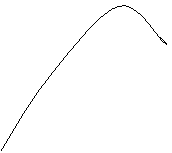
Percentages of gases in the atmosphere A graph showing the percentage of gases in the atmosphere
Percentage of air
Component of Air
Carbondioxide 0.03% Nitrogen 78% Properties of air
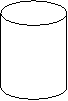
balloon with air
The balloon with air goes down because air has weight.
Hard paper When you turn the glass upside down, the hard paper does not fall off because air pressure pushes it up. When taking a drink e.g. soda using a straw, the pressure pushes the drink up the straw.
Compressed air is used in car tyres to support the weight of the car. It is also used in balls, balloons, floaters and sprays.
Compressed air
Importance of air Oxygen
An experiment to show that air supports burning
When the candle is burning, it is supported by oxygen. A glass cuts off the supply of oxygen and then it gets used up in the glass. The gas the remains in the glass is carbondioxide. NB: The gas produced by a burning candle is carbondioxide. Carbondioxide
Places where we find fire extinguishers
Picture of fire extinguisher Carbondioxide is used to preserve drinks like soda, beer and tinned food.
Plants use carbondioxide in the process of making their own food. (photosynthesis) Nitrogen –
Rare gases – used in electrical bulbs. Wind (moving air) Wind is moving air or wind is air in motion Uses of wind
Uses of wind mills
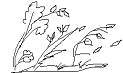
Dangers of wind
The sun The sun is the main source of heat and light energy It also provides solar energy Sources of light
Artificial sources of light (man made)
Effects of the sun Uses of the sun to animals
Uses of the sun to plants
Dangers of the sun
Plants need sunlight to grow
sun rays
A
A plant bends towards the hole where sunlight is. Shadows: A shadow is a region of darkness formed when light falls on an opaque object Formation of shadows Shadows are formed with light falls on an opaque object. Shadows are formed when an opaque object stands in the way of light. Opaque objects: These are objects which do not allow light to go through them. Examples of opaque objects Walls, books, trees, tables, desks etc Translucent objects These are objects which allow light to go through them e.g. clear glass, colourless polythene, sun glasses. Transparent objects These are objects which allow little light to pass through them e.g clear glass, water and air. Parts of a shadow A shadow has two parts. a) Umbra – the darker part of a shadow b) Penumbra – the lighter part of a shadow
Characteristics of shadows
Uses of shadows
How shadows are formed source of light
2.
| |||||||||||||||||||||||||||||||||||||||||||||||||||||||
Sub Theme |
Reading descriptions of words
Water cycle : Is the process by which rain is formed Water cycle/ rainfall formation
Diagram showing the water cycle
Condensation: is the process by which vapour changes to water. Transpiration : Is the process by which plant lose water to the atmosphere through leaves. An experiment to show how rainfall is formed Teacher to draw the experiment
NOTE: Evaporation is the changing of water into gas.
NOTE: Vapour is water in gaseous form and ice is the water in solid form. Importance of rain To man/ animals/ plants
Dangers of rain
Clouds Clouds are big masses of water that form in the sky. There are four types of clouds.
Nimbus clouds
Stratus clouds
Cirrus clouds
Cumulus clouds
Uses of clouds
Water sources There are two types of sources of water
Importance of water
Ways of protecting water sources
Water harvesting Ways of collecting water
Ways of contaminating water sources Urinating in water sources. Putting rubbish in water sources Sanitation Sanitation is the general cleanliness of a place where we live (public cleanliness)or is the cleaning of a place where we live or stay. Important of sanitation
Ways of promoting proper sanitation
Why do we smoke latrines?
Things used to keep proper sanitation
Qualities of a good house
Qualities of a clean home A good home should have;
Germs Germs are small living things (organisms) that cause diseases. There are four types of germs.
|






































































 in the ballon



 candle has gone off














 shadow
 source of light

 opaque object


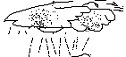
 sun rays nimbus clouds










SIR APOLLO KAGGWA SCHOOLS
P.3 LITERACY I LESSON NOTES TERM II – 2016
ENVIRONMENT
Environment are things / around us. Surroundings is another word to mean environment
Component of the environment
Environment is made up of two components namely:
- Living components
- Non – living components
Living components | Non living components |
Plants Animals | Air Water Soil |
- Living things
What are living things?
THEME: LIVING THINGS IN OUR SUBCOUNTY
Reading descriptions of words
Breath
Wastes
Respond
Reproduce
Feed
Stimuli
Thorax
Spiracles
Antennae
Tasting
Laying
Feathers
Beaks
Swimming
Gills
Cold blooded
Hooves
Buttons
Manure
Prestige
Dowry
Buffalos
Tourists
Taboos
Giraffes
Wetland
Water logged
Crocodiles
Tortoises
Earthworms
Hides
Aquatic animals
A pond
Protection
Monitor
Shelter
Slugs
Friendship
Wriggling
Gliding
Maggot
Nostril
Ventral fin
Caudal fin
Pectoral fin
Dorsal fin
Corners
Senses
Nile perch
Silver fish
Proteins
Belts
Salting
Refrigerator
Scratching
Warmth
Flightless
Web feet
Penguins
Geese
Swans
Poultry
Pigeons
Sucking
Regarded
Scorpions
Harmful
Spoil
Weevils
Wax
Swarm
Proboscis
Nectar
Dragonflies
THEME: LIVINGTHINGS IN OUR SUBCOUNTY
What are living things?
Livingthings are things which have life.
Examples: cows , goats , oranges , mangoes , beans , birds , insects etc
Groups of living things.
- Plants
- Animals
Characteristics of living things
- They breathe
- They feed
- They move
- They reproduce
- They pass out wastes
- They respond to stimuli
- They grow and change
Non-living things:
These are things which do not have life.
e.g stones, soil, water , timber , etc.
Characteristics of non-living things
- They do not breathe
- They do not feed.
- They do not move
- They do not reproduce
- They do not pass out wastes
- They do not respond stimuli
- They do not grow and change.
Animals
Types of animals in our division
There are two types of animals in our subcounty and these are;
- Domestic animals
- Wild animals
Domestic animals:
Are animals which are kept in homes.
Examples;
- Cows
- Dogs
- Goats
- Sheep
- Rabbits
- Donkeys
Reasons why people keep domestic animals.
- To get meat
- To get milk
- To sell and get money
- For transport
- For protection
Animals kept for transport
- Donkey
- Camels
- Horse
- Oxen
Animal | Products | Things we make |
Goats Cow | Skins and hides | Belt , drum , shoes , watchstraps , handbags |
Milk | Yoghurt, butter , cheese , ghee | |
Hooves and horns | Glue , buttons, bungles , necklaces | |
Bones | Animal feeds | |
Sheep | Wool | Woolen blankets , sweaters , stockings , jackets , scurvies |
Mutton | ||
Pigs | Pork | Bacon and ham, lard |
Rabbits | Fur | Blankets |
meat |
Ways of caring for domestic animals
- By giving them food and water
- By cleaning their houses (shelter)
- By treating them when sick
- By building them shelter.
Wild animals
- Are animals which live in the bush.
Examples:
- Antelopes
- Giraffes
- Elephants
- Buffalos
- Zebras
- Leopards
Uses of wild animals
- They attract tourists
- Some wild animals give us skins eg snakes , leopards , lions .
- Some wild animals gives horns eg antelopes , rhinos , buffalos.
- Elephants give us ivory.
Dangers of wild animals
- Some wild animals can eat people e.g lions , leopards, etc.
- Some wild animals can also eat domestic animals.
- Some wild animals destroy our crops
Habitats
A habit is a home of a livingthing.
Types of habitats
- Animal habitats
- Plant habitat
Animal habitats
An animal habitat is a place where an animal lives.
Examples of animal habitats
- Compound eg. goats , rabbits , geckoes
- Plants eg caterpillars , slugs , butterflies , chameleon
- Forest / bush eg monkey , buffalo, elephants
- Swamps eg mud fish
- Water eg whales, dophin
- Garden eg rats , squirrels etc
Animals in swamps and in water:
- A swamp is a water logged area with some plants in it or
- A swamp is a wetland with vegetation in it.
- A swamp can be called a wetland.
Water animals ( Aquatic animals)
Animals that live in water are called aquatic animals.
Examples
- Fish
- Crocodiles
- Hippopotamus
- Frogs
- Slugs
- Crab
A POND
A pond is a small pool of water.
Some ponds are natural and others are manmade.
A pond can be found in homes , schools and hotels.
Examples of animals in a pond
- Fish
- Frogs
- Slugs
- Snails
AN AQUARIUM
An aquarium is a glass tank where fish and other water animals are kept in our homes.
Places where an aquarium can be found:
- Hotels
- School compounds,
- homes, etc
Diagram of an aquarium
Animals without legs
- fish
- Snakes
- Slugs
- Earth worm
Animals which lay eggs
- Lizards
- Tortoise
- Chameleon
Animals and their young ones
Animal | Young | Home |
Cow Goat Rabbit Sheep Pig Horse Chicken Lion Fish | Calf Kid Kitten Lamb Piglet Foal Chicks Cab Fry | Byre Shed Hutch Pen Sty Stable Coop Den Water / aquarium |
Animal movements
Way f movement | Animals |
Crawling | Lizards Chameleon Tortoise |
Hopping | Frogs Grasshoppers Locusts Toads |
Flying | Butterflies Houseflies Bees |
Walking | Cows Dogs Hens Man |
Gliding | Snail Slug Snake |
Wriggling | Caterpillar Earthworms Maggot |
Swimming | Fish Ducks Swans Geese |
Why animals move from one place to another
- To get food
- To get water
- To get protection
- To get shelter
- To look for their young ones
- To look for friendship
- To look for new homes
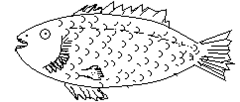
External parts of a fish
 g f e
g f e

H


i
k a b I c
- Pelvic fin
- Pectoral fin
- Ventral/anal fin
- Tail/caudal fin
- Dorsal fin
- Lateral line
- Nostril
- Mouth
- Eye
- Scale
- Gill cover/operculum
- Anus
USES OF PARTS OF A FISH
- The dorsal fin protects the fish from enemies.
- The eyes are used for seeing.
- The gill cover protects the gills.
- He tail fin helps the fish to turn to different directions.
- The scales protect the body of a fish.
- The nostrils are for smelling.
- The mouth is for feeding /getting food.
- The lateral line detects sound waves.
- Pectoral and pelvic fins are used for breaking speed and going up or down wards in water.
- Gills are used for breathing.
NB : Fins help a fish to swim in water
Examples of fish common in Uganda.
- Tilapia (engage)
- Nile perch (empuuta)
- Cat fish
- Silver fish (mukene)
- Lung fish
- Mud fish
Use of fish
- Source of proteins
- Scales are used to make bags and belts.
- Fish helps to control mosquito larvae
- Helps in manufacture of animal feeds
- Some people get jobs e.g fish mongers
- For selling
Methods of catching fish
- fish hawks
- Fishing nets
- Fishing baskets
FISH PRESERVATIONS
Preservation
Preservation is the way of keeping food for a long time without going bad.
Morden methods of preserving fish
- Canning / tinning
- Refrigeration
Local methods
- By smoking
- By salting
- By sun drying
Qn: Why do we preserve fish?
- For future use
- To prevent wastage
SUB THEME BIRDS
The external parts of a bird.
 a b
a b

 j
j
i
l
d
c
g
e
- Comb/crown
- Eye
- Wing
- Tail feathers
- Spur
- Claws/nails
- Leg
- Wattle
- Beak
- Nostril
Functions of parts of a bird.
Beak – It picks food from the ground (feeding)
- It is used for protection
Wings – used f or flying
Legs – for walking
Claws – for protection
Spur – for fighting/ protection
– seeing
– for flying
– giving birds shape
– cover body of a bird.
– Give birds colour
– Feathers give birds warmth
Characteristics of birds.
- Birds breathe by means of lungs
- Birds are covered with feathers.
- Have beaks
- Have claws
- Reproduce by laying eggs
Note: Swimming birds have webbed feet which help them to swim on water.
Examples of swimming birds
- Ducks
- Geese
- Swans
Types of birds
- Domestic birds
- Wild birds
Domestic birds
- Are birds kept in our homes .
- They are also called poultry.
Examples
- Ducks
- Pigeons
- Peacocks
- Guinea fowls
- Chicken
- Parrots
- Turkeys
Wild birds.
- Are birds found in the bush.
Examples
- Weaverbirds
- Kites
- Crested cranes
- Eagles/crows
Habitats of birds
- A habitat is a home of a living thing.
- Birds live on trees, nests, burrows.
Uses of birds to people;
- Birds provide meat e.g chicken, turkey
- Provide manure
- Provide feathers
- Provide bones used to make animal feeds
- Used f or cultural purposes e.g paying dowry
- Used for tourist attraction
Caring for birds
Providing food , water , shelter to birds
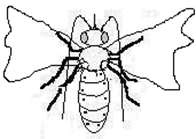
Parts of an insect
 b
b

 a
a

i
h

g
- Feelers/antennae
- Proboscis
- Eye
- Wing
- Leg
- Spiracles
- Abdomen
- Thorax
- Head
The three main body parts of an insect
- Head – It is where the eyes, feelers and proboscis are found.
- Thorax – It s where the legs and wings are attached.
- Abdomen It is where we find the spiracles.
Functions of parts of an insect
- Feelers – for feeling
- Proboscis – used for sucking food and water
- Wing – for flying
- Spiracles – for breathing
Characteristics of insects
- Insects have three main body parts
- Have three pairs of legs
- Have jointed legs
- Have feelers for feeling and smelling
- Have segmented bodies
Note: spiders, ticks and mites have two main body parts and eight legs. They are not insects.
Harmful and useful insects
- Some insects are harmful or dangerous to man
Examples:
- Of harmful insects
- Wasps
- Crickets
- Locust
- Mosquitoes
- Termites
- Bees
- Houseflies
- Red ants
- Cockroaches
Useful insects to man
- Bees
- Grasshoppers
- White ants
- Locusts
INSECT HABITATS (HOMES)
Insects that live in the soil
- Termites
- White ants
- Red ants
Insects that live on plants
- Butterflies
- Caterpillars
Social and solitary insects
Social insects are the insects that live , move and work together.
Examples
- Bees
- Red ants
- Termites
- Wasps
- Black ants
- White ants
Anti – social insects (solitary insects)
- Are insects which do not live, move and work together.
Examples
- Houseflies
- Locusts
- Mosquitoes
- Cockroaches
- Dragon flies
- Butterflies
- Moth
- Grass hoppers
NOTE: Moth pollinates flowers at night
Other insects habitats.
- Bees – bee hive
- Spider – web
CARE FOR INSECTS, BIRDS AND ANIMALS
Care for bees
- By providing a hive
- By planting flowers for nectar
- By providing water.
Types of bees.
- Worker bees
- Drone bees
- The queen bees
Note: A group of bees is called a swarm.
Uses of bees to man
- Bees provide honey
- Bees provide bee wax
- Young bees are eaten
Importance of honey
- Honey is used as medicine e.g syrup
- Honey is used to make some foods sweet
- People sell honey and get money
- It is a source of carbohydrates
Products from the wax
- Candles
- Shoe polish
- Some cosmetics
- After shave
- Crayons
Ways of caring f or birds.
- Treating birds
- Keeping bird’s records
- Providing food to birds
- Building birds’ houses
- Vaccinating birds
- Protecting eggs
Signs of a sick bird
- It is sleepy
- Has dull feathers
- It dos not want to eat food.
Note: Poaching is the hunting of wild animals without permission
- Treating sick animals in the wild life centre
- Providing food to animals.
SUB THEME: PLANTS
Reading description of words.
- Seed
- Develop
- Germination
- Seedling
- Condition
- Necessary
- Moisture
- Temperature
- Warmth
- Epigeal
- Hypogeal
- Cotyledon
- Dicots
- Monocots
- Thatching
- Chlorophyll
- Upright/erect
- Clasping
- Underground
- Flower
- Habitat
- Nursery bed
- Harsh
- Weeding
- Spraying
- Chemicals
- Thinning
- Transplanting
- Mulching
- Fencing
- Rotation
- Photosynthesis
- Legumes
- Cereals
- Firmly
- Reproductive
- Suffocate
- Harbor
- Excess
- Pests
- Pesticides
- Premature
- Pruning
- Transplant
- Manure
Plant
Plants are anything on earth’s surface
Examples of plants
- Maize plants
- Bean plant
- Cow pea plant
Reasons why they are called plants
- They make their own food
- They have chlorophyll
GROUPS OF PLANTS
- Flowering plants
Are plants which bear flowers e.g maize, beans, grass, tomatoes, peas, etc.
- Non-flowering plants
Are plants which do not bear flowers e.g ferns, conifers, mosses, liver worts
Characteristics of plants
They grow , reproduce, feed, breathe, excrete.
Plants habitats
Plant habitat is a place here plants grow or are found
N.B a habitat is a home of a living thing.
Plants in school compounds.
- Pawpaw
- Avocadoes
- Mangoes
- Palms
- Trees, flowers, etc
Plants in swamps
- Papyrus
- Yams
- Rice
- Sugarcanes, etc
Plants in desert/dry areas
- Cactus
- Sisal
Plants which grow water
- Waterhyancith
- Water lily
- Water cabbage
Plants that grow on rocks
- Liverworts
- Ferns
- Mosses
SCHOOL GARDEN
Factors to consider when setting up a school garden
- It should be near a water source
- Should be near the school
- It should be in an open space
Importance of a school garden
- Children learn about crop i.e for study purposes
- Children get food from the grown crops
- The surplus is sold and generates income to the school.
- Children learn how to dig.
NURSERY BED
Nursery bed is a small piece of land where seedlings are raised before taking them to the main garden.
Importance of a nursery bed.
- Protects the seedlings from harsh conditions e.g too much sunshine, strong wind and heavy rains.
- It is easy to care for the seedlings.
- The shelter prevents water from evaporating
- It is easy to select good seedlings.
Examples of crops grown in a nursery bed.-
- Tomatoes
- Cabbage
- Loofah plants
- Passion fruits
- Onion
- Orange
- Egg plants
- Green pepper
- Spinach
- Trees
Caring for crops in a nursery bed.
- Watering/irrigation
- It provides water to plants mainly in dry seasons
Spraying
This is the application of chemicals on seedlings to control pests, diseases and weeds.
WEEDING
This is the removal of unwanted plants from the garden.
A weed is un –wanted plant in the garden.
Examples of common weeds
- Black jack
- Star grass
- Spear grass
- Sodom apple
- Finger millet
- Goat grass
- Wondering jew
- Elephant grass
- Nut grass
Importance of weeds to man
- Some weeds are eaten as food
- Some weeds are used as herbal medicine
- Some weeds are feeds to domestic animals.
Ways of controlling weeds
- By up rooting
- By mulching
- By slashing
- By spraying
- By digging
Dangers of weeds in the gardens
- Weeds hide dangerous pests.
- Weed lead to low crops yields
- Weeds compete with plants for sunlight, water and nutrients.
Thinning
- Is the removal of excess crops from the garden to create space.
Hardening off:
This is the making of seedlings get used to harsh conditions.
Transplanting
- Is the transfer of seedlings from the nursery bed to the main garden.
Mulching
- Is the covering of top soil with dry plant materials.
Fencing:
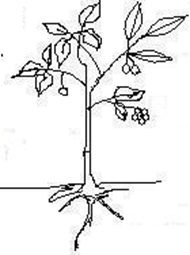 Diagram of a flowering plant

 leaf fruit


 flower
lateral bud
 stem
stem
 roots
roots
systems of plants
- Shoot system
- Root system
Parts of a flowering plant.
- It has 3 major namely leaves, stem , roots
LEAF

(leaf blade)
Uses of leaves to plants
- They make food for the plant.
- Some leaves store food
- They help plants during transpiration
Note : Plants use stomata for breathing
Types of leaves
a) Simple leaves


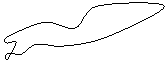
 Illustration



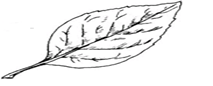

Examples of plants with simple leaves
- Mango plant
- Orange
- Jack fruit
 b) Compound leaves


examples of plants with compound leaves
- Bean plant
- Cassava plant
- Soya bean
- Acacia plants
- Molinga plant
PHOTOSYNTHESIS
It is the process by which green plants make food I the presence of sunlight and carbondioxide.
NB: Food made by plants is called starch.
Conditions necessary for photosynthesis
- Chlorophyll (Green colouring matter that trap sunlight)
-
 Carbondioxide These are raw materials of photosynthesis
 - Water
- Sunlight (provide energy to plants)
- N.B Transpiration is the process by which green plants lose water to the atmosphere through the leaves.

By – products of photosynthesis
a) Oxygen
b) Starch
Uses of leaves to animals.
- Leaves are eaten as food
- Leaves are used as herbal medicine
- Some plants have leaves used for thatching houses
- They are used for decoration
- People sell leaves and get money.
STEM
Types of stems
- Upright stems//erect stems

 node
node


 internodes
These types of stems are found in woody plants like
- Mahogany
- Eucalyptus
- Ficus tree
- Mango tree
- Muvule
- Climbing stems
They are also called weak/clasping stems.
Examples of plants with climbing stems
- Passion fruits
- Vanilla
- Some bean plants
- Loofah plants
- Water melon
- Pumpkin
- Some yams
- Cucumber
How climbing plants climb others.
- By twinning /clasping
- Using hooks or thorns
- Using tendrils
Plants using tendrils Plants using hooks by twinning
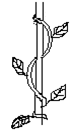


 Tendrils
- Underground stems
These are stems found below the ground e.g
- Spear grass
- Couch grass
- Ginger
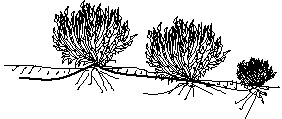

 Adventitious roots
internodes
USES OF STEMS
- To plants
- stems store food for the plants
- Transport and food
- Support branches and leaves
- Stems make plants to stand
- To animals
- Stems are eaten as food
- Provide animals medicine
- Provides building materials
- We get timber/poles from woody plants
Roots
It is part of a flowering plant found under the ground.
TYPES OF ROOTS
(a Tap roots

 Main roots

 Root hairs
Lateral root
 Root cap
Root systems
There are two types of root systems namely:-
a) Tap root system
b) Fibrous root system
N.B. Root cap
– protects the growing tip of the root.
Examples of plants with tap root system (legumes)
- Beans
- Peas
- Soya
- G.nuts
- Simsim
- Fibrous roots
They are common in cereals/grains e.g sorghum
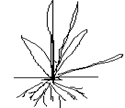
 Fibrous roots
Examples of plants with fibrous roots
- Maize
- Sorghum
- Millet
- Wheat
- Rice
- Barley
- Oats
- Some grasses
- Prop roots
They develop from the stem of the plant


 Prop roots
NOTE: The function of prop root is to give extra support to the plant.
Examples of plants with prop roots
- Sorghum
- Maize
- Millet and some grasses
- Adventitious roots
- These also develop from the stem of the plant. They are common in plants like onions, some yams

 Adventitious roots
Uses of roots to plants
- Hold the plant firmly in the soil
- Absorb water and mineral salts from the soil
- Stores food for t he plant
Uses of roots to animals.
- It is a source of food
- It is used as herbal; medicine
- Controls erosion like he buttress roots
- Some people sell roots and get money
The flower
A flower is the reproductive part of a plant.
Parts of a flower.

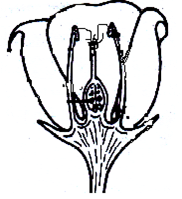 Petal
Petal
 Stigma
 Style
Style

 Anther head
 Filament
 Sepal
Sepal
 Ovules

 Ovary
Ovary
Receptacle
 Flowerstalk
NOTE: Pistil is the female part of a flower
Stamen is the male part of a flower.
Uses of flowers to people.
- They are used for decoration
- Bees and birds get nectar from flowers
- They are eaten as food
- They are used for making perfumes
- They are used for making colours
- They are used as herbal medicines
Uses of flowers to plants
- They help a plant to reproduce.
SEEDS
A SEED IS A DEVELOPED OVULE
External parts of a bean seed


Scar / hilum


 Micropyle
Testa (seed coat)
 Internal parts of a bean seed


 Plumule


 Cotyledon scar
 Micropyle
 Radicle
Groups of seeds
Monocotyledous seed
Dicotyledonous seeds
Uses of seeds
- Seeds are eaten as food.
- Seeds are used for planting
- They are sold
- They are used as medicine
- They are used I making crafts
- They are used for making vegetable oil.
Dangers of plants
Some plants are poisonous e.g Sodom apple to cattle
Some pare thorny and therefore damage the skins of animals.
Some plants harbor/hide dangerous animals and pests
Plants can be weeds hence compete for nutrients with crops.
Some water weeds cause suffocation of fish in the water.
Crop growing
Steps of clearing land
-slashing: shortening of grasses or some bushes using a slasher
– digging /ploughing- breaking up of soil in preparation for planting
Planting : It is putting a planting material in the soil
- Seeds are selected for planting
- Afterwards seedlings are cared for.
Methods of planting
- Broadcasting method: Is the planting of seeds by scattering them at random on land.
- Row planting: Is the growing of plant material in lines.
Caring for crops
Weeding: The removal of unwanted plants from the garden.
Staking: giving extra support to plants with weak stems.
Pruning: Removal of excess branches from the plant.
Thinning : Removal of excess plants from the garden to create space.
Mulching: is the covering of different crops on the same piece of land seasonally.
Spraying: Application of chemicals on plants to control pests and diseases.
- Harvesting removal of ready crops from the garden during dry season.
- Drying harvested crops.
Storing harvested crops
Granaries Silos
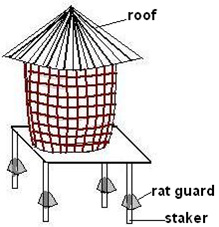

Material used to make a granary
a) grass , pole reeds, banana fibres
crops stored in a granary
sorghum , Rice , maize , millet
storage : pests , rats and weevils
Marketing
It is the selling of crops
Places of marketing
- Markets
- Shop
- Vending
PESTS AND DISEASES
4 pests is an animal which destroys farmers’ crops.
Examples
- Monkey
- Rats
- Weevils
- Goat
- Birds
- Cows
Pests control measures
- Weeding
- Crop rotation
- Using scare crows
- Spraying using pesticides
- Row planting
- Early planting
NOTE: Crop rotation , early planting and proper spacing are natural methods of controlling pests
Removing infected parts from the plant
Uprooting the plants which are severely attacked .
- Crop diseases
- Mosaic ,
- potato blight ,
- rust ,
- blast ,
- panama smut and rot
Effects of diseases to plants.
- They cause the crop to rot.
- Crops wither
- Crops dry out before time
- Fruits ripen prematurely
- Leaves fall off or become pale.
- Roots dry
Disease control measures in crops.
- Practice crop rotation
- Weeding
- Early planting
- Prune/remove the diseased parts
- Uproot the infected crops and burn them.
- Spray crops with medicine to control the diseases.
GARDEN TOOLS | IMPORTANCE | WAYS OF CARING FOR GARDEN TOOL |
Rake
|
|
|
|
| |
|
| |
Trowel
|
| |
hoe
|
| |
panga
|
| |
Spade
|
| |
|
| |
sickle
|
| |
|
| |
Garden fork
|
| |
|
|


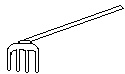

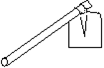

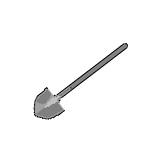
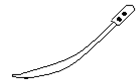

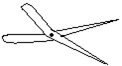

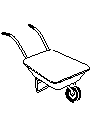
Seed germination
Is the process by which a seed develops into a young plant.
A young plant is known as a seedling
Conditions necessary for germination.
- Water , air , warmth
Types of germination
- Epigeal
- Hypogeal
Hypogeal germination is where the cotyledons remains under the ground in the soil.
It is common in cereals or monocots e.g maize , millet , sorghum , rice , wheat , barley
Diagram to show hypogeal germination.

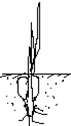
 Level of soil
 Cotyledon in the soil.
Epigeal germination is the type of germination where cotyledons come out of the ground (beans , g.nuts, etc)
Diagram to show epigeal
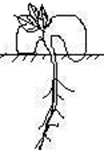
 Cotyledons above the ground
Note: Plant a bean and maize to show the types of germination.
- Germination , burning , rusting and breathing (life) all use a common gas called oxygen.
An experiment to show the condition needed for germination.
Things needed
- 3 tins
- Cotton wool
- Seeds (beans , maize)
- Ice
- Oil
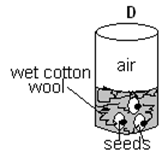
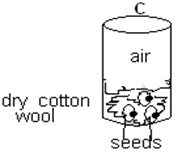

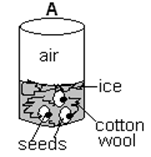
- In tin A the seeds will not germinate because there is no warmth.
- In tin B, the seeds will not germinate because there is no air . The oil prevents air from entering to reach the seeds.
- In tin C, the seeds will not germinate because there is no water (moisture)
- In tin D, the seeds will germinate because there is air, water and warmth. The cotton provides warmth.
SIR APOLLO KAGGWA SCHOOLS
PRIMARY THREE LITERACY I
TERM III – 2016 LESSON NOTES
VECTORS
What are vectors?
Vector are animals that spread disease causing germs.
Vectors are germ carriers.
Common vectors in our environment.
Mosquitoes
House flies mad dog
Black flies tsetse flies
Lice ticks
Fleas bed bugs
Characteristics of vectors.
Vectors carry germs.
Vectors live in dirty places.
Some vectors suck blood
Most vectors are insects.
Mosquitoes
There are three different types of mosquitoes.
These are;
Mosquito | Disease it spreads |
Female anopheles mosquito | Malaria |
Culex mosquito | Elephantiasis |
Aedes mosquito/ tiger | Dengue fever/ yellow fever |
Characteristics of mosquitoes
Mosquitoes lay their eggs in stagnant water / still water.
Mosquitoes live in bushes.
Mosquitoes have a proboscis used for sucking blood.
Mosquitoes are insects and move by flying.
EXTERNAL PARTS OF A MOSQUITO
Compound eyes proboscis
Feeders (Antenna)
Wings
Thorax
Leg
Abdomen
Life cycle of a mosquito
Culex mosquito | Anopheles mosquito |
Eggs larva( wriggler) Adult pupa | Eggs larva ( wriggler) Adult pupa |
A female mosquito lays eggs in stagnant water. Eggs hatch into larva, to pupa and pupa grow into adult.
MALARIA
Malaria is spread by a female anopheles mosquito.
Mosquitoes carry germs called plasmodia which cause malaria.
Signs and symptoms of malaria
High body temperature
Vomiting
Stomachache
Diarrhoea
Loss of appetite
General body weakness
Headache
Joint pain
Anaemia ( Lack of enough blood in the body)
Chattering of the teeth
Control and treatment of malaria.
Sleep under a treated mosquito net.
Drain away stagnant water
Put oil on stagnant water.
Spray with insecticides.
Slash the bushes around the home
Introduce fish in pond to eat mosquito larvae.
Treat malaria early to prevent spreading.
Medicine used to treat malaria
Factory drugs Local drugs
Chloroquine Mululuza
Quinine bombo
Co – Artem Kigaji
Fansider
Places where we can get factory made drugs
- Clinics
- Pharmacies
- Dispensaries
- Hospitals
HOUSE FLIES
Features of a house fly
- It has three main body parts i.e head, thorax. Abdomen
- Houseflies lay their eggs in dirty rotting places.
- It has a hairy that enables it to carry germs.
- It has a proboscis for sucking food.
Life cycle of a house fly
eggs larva ( maggot)
adult (imago) pupa
A house fly has four stages of growth called complete
metamorphosis i.e
Eggs – larva – pupa – Adult
List down other insects that have four stages of growth.
House flies butter flies wasps
Mosquitoes tsetse flies
Bees Fleas
The larva stage of a housefly ( maggot) is useful to man because it helps to decompose faeces in latrines.
The adult stage is dangerous to man because it spreads disease germs.
Adult stage and larva stage are called active stages because they move and feed.
Pupa stage is dormant because there is no feeding or movement.
Ways of controlling houseflies in our environment
- By spraying them
- By smoking latrines
- By burning rubbish
- By mopping toilets / latrines
- By covering our food
- Ensuring proper disposal of faeces.
Diseases spread by houseflies
- Trachoma
- Typhoid
- Diarrhoea
- Dysentery
- Conjuctivitis
- Cholera
Diagram of a cockroach
COCKROACH
Features of a cockroach
- It is a brown winged insect.
- It has a flat abdomen.
- It lays its eggs in dark corners.
- It is mostly found in dirty places.
Name the places where cockroaches live.
- Pit latrine
- Cracks of walls
- Drawers
- Book shelves
- Cupboards
- Pit latrines.
Name the things that are eaten by cockroaches.
- Books
- Papers
- Faeces
- Clothes
- Dark dirty stores
Life cycle of a cockroach
Egg Nymph
Adult
Name the three stages that a cockroach undergoes to grow.
- Eggs
- Nymph
- Adult
List down the insects that undergo 3 stages of growth.
Cockroaches locusts Dragon flies white ants
Grasshoppers termites Crickets
Dragon fly
Give the difference between a nymph and an adult cockroach.
Nymph Adult
- Has no wings – Has wings
- White in colour – brown in colour
- Less active – more active
- Smaller – bigger
Identify the diseases spread by a cockroach.
- Diarrhoea
- Dysentery
- Cholera
- Leprosy
- Polio
- Typhoid
Mention ways of controlling the diseases spread by cockroaches.
- Spray the cockroaches suing insecticides.
- Practice proper hygiene
- Provides enough light in rooms
- Cover the food that has remained
- Warm left over food.
Tsetse fly
- It is a black hairy insect with a broad abdomen.
- It is found in bushes and produces its larva near water sources.
- Mature tsetse flies spreads nagana to cattle and sleeping sickness to man.
- A tsetse fly feeds on blood by sucking with its sharp proboscis.
- Both nagana and sleeping sickness are caused by germs called trypanosomes.
Life cycle of a tsetse fly
A tsetse fly undergoes four stages if growth. i.e complete metamorphosis ( eggs, larva, pupa, adult)
NB Eggs of a tsetse fly hatch into larva from inside the abdomen.
Signs and symptoms of sleeping sickness.
Persistent fever
Sleepy all the time
Lack of appetite
Loss of weight
General body weakness
How can tsetse fly be controlled from our environment.
- By using tsetse fly traps
- By spraying with insecticides
- By clearing bushes near our homes.
- Avoid very early and late grazing of animals.
Diarrhoea, Dysentery, cholera and typhoid.
All the above diseases are water borne diseases because they are spread through drinking contaminated water.
Signs and symptoms.
- Abdominal pain
- Watery stool
- Headache
- Dehydration
- Loss if body weight
- Severe vomiting.
Note
Diarrhoeas is the frequent passing out of watery stool many times a day.
Dysentery is the frequent passing out of watery stool with blood in it.
Typhoid is mostly spread through drinking unboiled water.
Ways of controlling diarrhea, dysentery, typhoid and cholera.
Dispose wastes in latrines.
- Keep toilets and latrines clean.
- Keep cooked food covered.
- Boil water for drinking
- Proper disposal of faeces
- Burn rubbish
- Spray insecticides to kill house flies.
- Treat sick people early with antibiotics.
Trachoma
- It is spread by a house fly.
- It is caused by germs called Chlamydia virus
- It affects eyes.
Signs and symptoms of trachoma.
- Itching eyes
- Eyes turn red.
- Tears come out of the eyes.
- Difficult to look in light.
- Painful eyes.
Control and treatment of trachoma.
- Observe personal hygiene.
- Spray the house flies
- Do not share face towels and basins.
- Avoid shaking hands with infected people.
- Keep eyes clean.
Yellow fever
Yellow fever is spread by aedes/tiger mosquito.
Signs and symptoms.
Eyes turn yellow.
Passing out yellow urine.
Itching skin.
General body weakness.
Feeling sleepy.
How can yellow fever be controlled?
Spray the aedes mosquitoes with insecticides.
Drain stagnant water.
Sleep under treated mosquito nets.
Carry out fumigation
Table showing diseases with their germs.
Disease | Causing germs |
Malaria | Plasmodia |
Cholera | Vibrio cholera |
Typhoid | Salmonella typhi |
Trachoma | Chlamydia |
Elephantiasis | Filaria worm |
Sleeping sickness | Trypanosomes |
Nagana | Trypanasoma |
BIlhazia | Schistosoma / bilharzias flukes |
Dysentery | Shigella |
Other diseases, vectors and their control.
Vector | Disease | Control |
Rat fleas | Bubonic plague | Trap and kill rats |
Lice | Relapsing fever | Spray with insecticides |
Ticks | Relapsing fever | Spray with insecticides |
Itch mites | Scabies | Spraying |
Mad dog ( rabied dog | Rabies | Vaccinate dogs |
Water snails | Bilhazia | Boil water for drinking / avoid swimming in dirty water |
Black flies/ simulium flies / Jinja flies | River blindness | By spraying |
The 4Fs
Diseases spread through the 4Fs
- Diarrhoea
- Dysentery
- Cholera
- Typhoid
Write 4 Fs in full.
- Faeces
- Flies
- Food
- Fingers
Diseases spread through the 4Fs are also called diarrhoeal diseases and they dehydrate the body.
Dehydration
What is dehydration?
Dehydration is the condition when the body does not have enough water in the body.
What causes dehydration?
- Severe vomiting
- Too much diarrhoea
List down the signs and symptoms of dehydration.
- Pale skin
- Loss of weight
- A pinch on the skin goes back slowly
- General body weakness
- Sunken eyes
- Joint pain
- Little or no urine at all
- Little or not tears.
- Sunken fontanel (soft spot on the head)
- Dry lips
Treatment of a dehydrates person.
Provide a lot if juice.
Give ORS
Mineral salts lost during dehydration
- Sodium
- Potassium
Write ORS in full.
ORS – Oral Rehydration solution.
Oral Rehydration salts.
Why are patients given ORS?
To replace the lost water and mineral salts to the body.
NOTE : Rehydration is the putting back lost water and mineral salts in the body.
Steps taken to prepare ORS
Steps 1 Wash your hands with clean water and soap.
Step 2 Put 1 litre of clean boiled water into a clean container.
Step 3 Add 8 tea spoons of sugar and 1 tea spoon of slat.
Step 4 stir the mixture to dissolve completely.
Term used in preparation of ORS
a) Solutes
a solute is a substance which is dissolved by a solvent.
Examples of solutes
- Sugar
- Salt
b) solvent
A solvent is a substance which sisolves a solute eg water.
c) A solution
A solution is the mixture if a solute and a solvent.
Examples of solution
- Sugar solution
- Salt solution
- Sugar salt solution (SSS)
Things (items ) used in preparation of ORS ( SSS)
- Sugar
- Salt
- Clean boiled water
NOTE: Sugar and salt are items that dissolve in water
Questions
- What is the first step taken to prepare ORS.
- Name the items used to prepare ORS.
- How many tea spoons of salt are needed to prepare ORS.
- During preparation of ORS, state the;
- Solvent
- Solutes
ORS prepared locally is called SSS. Write SSS in full.
HIV / AIDS
AIDS is an STD ( Sexually Transmitted Disease)
AIDS is called a deadly disease because it has no cure.
AIDS is caused by a virus called HIV.
AIDS – Acquired Immune Deficiency Syndrome.
HIV – Human Immunodeficiency virus
State the signs and symptoms of AIDS.
- Loss of weight
- Chronic cough
- Loss of appetite
- Chronic appetite
- Skin rash
- Skin cancer
- Herpes Zoster ( Kissipi)
- Mouth ulcers
How is AIDS / HIV spread from one person to another?
- Through unprotected sex with an infected person.
- Through blood transfusion.
- Through breast feeding
- At birth from the mother to the unborn baby.
- Through sharing sharp instruments.
- Through cultural practices like circumcision.
Ways though which AIDS (HIV) cannot b spread
NOTE: PMTCT stands for prevention of mother to child transmission
How can AIDS / HIV be prevented from spreading.
Be faithful to your partner.
Abstain from sex.
Use condoms,
Screen blood before transfusion.
PMTC in pregnant women.
Sterlize sharp instrument before use.
Effects of AIDS/ HIV
To an individual
- Death of a person
- A person is isolated
- A person can commit suicide
- Psychological torture.
- Loss of job
To a family
- Loss of a family member
- Loss of income during treatment
- Children become orphans.
- It leads to poverty.
- Grief to family members
How can we care for HIV/ AIDS patients.
- Give guidance and counseling.
- Show them love
- Do not isolate them
- Give them a balanced diet.
- Maintain proper hygiene and sanitation.
Organizations which care AIDS victims
a) TASO – The AIDS support organization
b) Mild May Uganda
c) Uganda Cares
d) ACP – AIDS control programme
other examples of STDS
- Gonorrhea
- Syphilis
- Candida
PIASCY
Write PIASCY in full.
PIASCY – Presidential initiative on AIDS strategy for communication to youth.
PIASCY messages.
PIASCY messages help to protect the Youth from AIDS.
State the PIASCY messages.
- Say no to bad touches.
- Do not take gifts from strangers.
- Do not move in lonely places.
- Say no to early marriages.
- Follow your religion and stay safe.
- Know and observe your responsibility.
- Boys and girls respect a virgin.
- HIV and AIDS kill, protect your self.
SOURCES OF ENERGY
What is energy?
Energy is the ability to do work.
There are two main sources of energy.
- Natural sources
- Artificial sources
Natural sources of energy.
Natural sources are sources made by God.
Examples
- Wind
- Water
- Sun
- Food
How is wind a source of energy?
- Wind moves kites, parachutes and balloons.
- Wind moves wind mills.
- Wind sails boats and ships.
- Wind is used for winnowing.
- Wind generates electricity.
- Wind dries clothes.
- Wind drives machines.
- Discuss making a kite and parachute.
How is water a source of energy?
- Water generates hydro – electricity.
- Water is used for cooking.
- Water is used for transport.
- Water is used for washing clothes.
- Water is used for mopping.
- Water is used to mix chemical in factories.
- Water is used to cool machines.
Forms of energies got from the sun
- Heat energy
- Light energy
- Solar energy
How is the sun a source of energy?
The sun enables us to see.
The sun helps in rainfall formation.
The sun helps plants to make their won food.
The sun helps us to dry seeds, clothes and fish.
The sun provides solar electricity.
The sun give us light.
The sun makes us warm.
How is food a source of energy?
Helps us to grow.
Makes us healthy.
Helps us to be strong.
Helps us to build our body.
Artificial sources of energy.
Artificial; sources of energy are made by man.
Examples of artificial sources.
- Fuel
- Electricity
What is a fuel?
Fuel is anything that burns to produce heat energy.
Examples of fuels.
- Diesel – fire wood
- Petrol – paraffin
- Wood – coal
- Charcoal – natural gas.
Uses of fuels
Petrol and diesel are used to run vehicles.
Paraffin helps in cooking ad lighting.
Fire wood and charcoal are used in cooking.
Fuel are used to rum machines.
Electricity
Uses of electricity
- For running machines.
- For cooking
- For washing clothes
- For producing light.
- For producing heat.
- For hair dressing.
Types of electricity
- Hydro electricity : generated from running water
- Solar electricity : generated from the sun
- Thermal electricity : generated from burning fuels
Items that use electricity in our homes
- Televisions
- Flat irons
- Computers
- Radios
- Cookers
- Fridges
- Electric bulbs
- Oven
Dangers of electricity
- It shocks us
- It burns houses
- It spoils machines
Energy conservation.
Energy conservation means saving energy.
Ways of saving energy.
- Using energy saving bulbs.
- Switching off electrical appliances after use.
- Put out fire when not in use.
- Planting trees.
Switching off bulbs during the day.
Importance of saving energy.
- To avoid wastage.
- For future use
- To save money.
Dangers of energy and ways of avoiding them.
Danger | Ways of avoiding them | |
1 | Electric shocks | Proper installation / insulating electric wires |
2 | Fire out break | Using fire extinguisher By proper use of fire. |
3 | Strong wind ( storms) | Plant trees for wind breaks. Constructing strong buildings. |
4 | Drought | Planting trees. Irrigating the land. |
5 | Floods | Constructing wide channels |
6 | Famine | Planting more food crops. Storing food for future use. |
Accidents and First Aid
What is an accident?
An accident is a sudden injury on the body.
Accidents on the road.
Types of accidents
Road traffic accidents
- Fractures
- Burns
- Scalds
- Cuts
- Near drowning
- Stings
- Poisoning
- Bites
- Fainting
Road traffic accidents:
These are accidents which happen (occur) on the road.
Traffic : is the movement vehicles and people in an area.
Write down the causes of road accidents.
- Carelessness
- Poor roads
- Over speeding
- Overtaking in corners
- Driving while drunk
- Driving vehicles in poor mechanical conditions.
- Over loading
- Playing on the road.
- Bad weather
- Road users who can be knocked on the road.
- Pedestrians
- Drivers.
- Cyclists
- Animals
Ways of controlling road traffic accidents.
- Avoid over speeding
- Avoid playing on the road.
- Do not drive while drunk.
- Repairing the road.
- Avoid over loading.
- Following road signs.
- Avoid over taking in corners.
- Observing the high way code
- Using fly overs
Mention any road traffic signs and draw them.
- Humps ahead
- School ahead
- Traffic lights
- Parking
- No parking
- Corner a head
- Zebra crossing
Accidents at home and school.
Mention the common accidents at home.
- Cuts – poisoning
- Burns – choking
- Scalds – electric shocks
- Bruises – near drowning
- Near drowning – fractures
- Bites
Identify the things that cause accidents at home.
Sharp objects like knives, razor blades.
- Broken bottles
- Nails
- Pins
- Water bodies
- Poison
- Electricity
Give the cause of accidents at home and school .
- Climbing trees.
- Playing with sharp objects
- Over running
- Playing with fire.
- Poor storage of medicines.
- Playing with electricity.
- Fighting
- Carelessness
- Playing near water bodies.
Ways of controlling accidents at home and school.
- Keep medicines out of rich of children.
- Avoid climbing trees.
- Void playing with broken bottles.
- Avoid playing with sharp objects.
- Avoid over running.
- Keep young children away from the kitchen.
- Avoid playing near water bodies.
- Avoid playing with electrical appliances.
- Avoid fighting
First Aid
What is first aid?
First aid is the first help given to an injured person before taken to the nearest health centre.
NOTE: An ambulance is the special vehicle used to carry a casualty to the nearest health centre.
Why is it important to give first aid?
To save life
To reduce pain
To stop bleeding in case it occurs.
To promote quick recovery.
To prevent further injuries.
Who is first aider?
A first aider is a person who gives firs aid to a casualty.
Who is a casualty?
A casualty is an injured person.
State the qualities of a good firs aider.
- Should be clean.
- Should be kind.
- Should be helpful.
- Should be quick / fast .
- Should be empathetic.
- Should be knowledgeable
First aid box
What is a first aid box?
This is a box where first aid tools/ items are kept.
Items found in the first aid box are called first aid Kit.
Mention the things found in a first aid box.
- Bandages – safety pins
- Plaster – iodine
- Spirit – gauze
- Cotton wool – gloves
- Razor blade – – pain killers
- Pair of scissors
Draw some items found in the first aid box.
Give the importance of items found in the first aid box.
- Bandage – To tie broken bones, sprains and strains
- Iodine – To heal the wound by drying.
- Spirit – To kill germs on the wound.
- Cotton wool – To clean the wounds and cuts.
- Plaster – To cover the wound or cut.
- Razor blade / pair of scissors. – To cut the plasters and bandages.
- Pain killers _ To reduce pain.
- Gloves – To prevent contaminating the health worker.
A first aid kit
A first aid kit is a collection if items used to give first aid.
Qn: What is the importance of each of these items?
a) A first aid kit?
b) A first aid box?


