


Specific Objectives
By the end of the topic the learner should be able to:
- State the units of measuring length.
- Convert units of length from one form to another.
- Express numbers to required number of significant figures.
- Find the perimeter of a plane figure and circumference of a circle.
Content
- Units of length (mm, cm, m, km).
- Conversion of units of length from one form to another.
- Significant figures.
- Perimeter.
- Circumference (include length of arcs).
Introduction
Length is the distance between two points. The SI unit of length is metres. Conversion of units of length:
- 1 kilometer (km) = 1000 metres
- 1 hectometer (hm) = 100 metres
- 1 decameter (Dm) = 10 metres
- 1 decimeter (dm) = 1/10 metres
- 1 centimeter (cm) = 1/100 metres
- 1 millimeter (mm) = 1/1000 metres
The following prefixes are often used when referring to length:
- Mega – 1,000,000
- Kilo – 1,000
- Hecto – 100
- Deca – 10
- Deci – 1/10
- Centi – 1/100
- Milli – 1/1000
- Micro – 1/1,000,000
Significant figures
The accuracy with which we state or write a measurement may depend on its relative size. It would be unrealistic to state the distance between towns A and B as 158.27 km. A more reasonable figure is 158 km. 158.27 km is the distance expressed to 5 significant figures and 158 km to 3 significant figures.
Example
Express each of the following numbers to 5, 4, 3, 2, and 1 significant figures:
- 906 315
- 0.08564
- 40.0089
- 156 000
Solution
| Number | 5 s.f. | 4 s.f. | 3 s.f. | 2 s.f. | 1 s.f. |
|---|---|---|---|---|---|
| (a) 906 315 | 906 315 | 906 320 | 906 300 | 910 000 | 900 000 |
| (b) 0.08564 | 0.08564 | 0.08564 | 0.0856 | 0.086 | 0.09 |
| (c) 40.0089 | 40.0089 | 40.009 | 40.0 | 40 | 40 |
| (d) 156 000 | 156 000 | 156 000 | 156 000 | 160 000 | 200 000 |
The above example shows how we would round off a measurement to a given number of significant figures.
Zero may not be significant. For example:
- 0.085 – zero is not significant; therefore, 0.085 has two significant figures.
- 2.30 – zero is significant. Therefore, 2.30 has three significant figures.
- 5 000 – zero may or may not be significant. Therefore, 5 000 to three significant figures is 5 00 (zero after 5 is significant). To one significant figure is 5 000. Zero after 5 is not significant.
- 31.805 or 305 – zero is significant; therefore, 31.805 has five significant figures. 305 has three significant figures.
Perimeter
The perimeter of a plane figure is the total length of its boundaries. Perimeter is a length and is therefore expressed in the same units as length.
Square shapes
 5 cm
5 cm
Its perimeter is 5 + 5 + 5 + 5 = 4 × 5 = 20 cm.
So perimeter of a square = Side × 4
Rectangular shapes
Figure 12.2 is a rectangle of length 5 cm and breadth 3 cm.
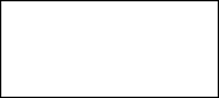 5 cm
5 cm
3 cm
Its perimeter is 5 + 3 + 5 + 3 = 2 × (5 + 3) = 2 × 8 = 16 cm.
Hence perimeter of a rectangle: p = 2(L + W)
Triangular shapes
To find the perimeter of a triangle, add all the three sides.
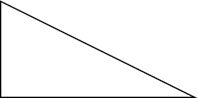
Perimeter = (a + b + c) units, where a, b, and c are the lengths of the sides of the triangle.
The circle
The circumference of a circle = 2πr or πd.
Example
- Find the circumference of a circle of radius 7 cm.
- The circumference of a bicycle wheel is 140 cm. Find its radius.
Solution
- C = πd = (22/7) × 14 = 44 cm
- C = 2πr = 140 cm
Therefore, 2 × (22/7) × r = 140
r = 140 ÷ (44/7) = 22.27 cm
Length of an arc
An arc of a circle is part of its circumference. Figure 12.10 (a) shows two arcs AMB and ANB. Arc AMB, which is less than half the circumference of the circle, is called the minor arc, while arc ANB, which is greater than half of the circumference, is called the major arc. An arc which is half the circumference of the circle is called a semicircle.
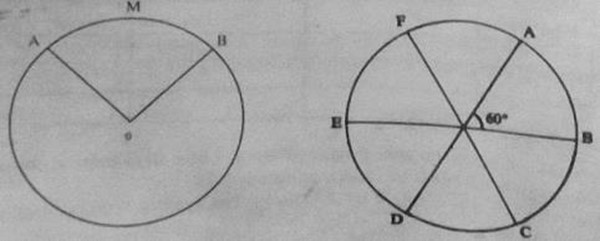
Example
An arc of a circle subtends an angle 60° at the centre of the circle. Find the length of the arc if the radius of the circle is 42 cm. (π = 22/7).
Solution
The length, l, of the arc is given by:
L = (θ/360) × 2πr
θ = 60°, r = 42 cm
Therefore, l = (60/360) × 2 × (22/7) × 42 = 44 cm
Example
The length of an arc of a circle is 62.8 cm. Find the radius of the circle if the arc subtends an angle 144° at the centre. (Take π = 3.142).
Solution
L = (θ/360) × 2πr = 62.8 and θ = 144°
Therefore, r = (62.8 × 360) ÷ (144 × 2 × 3.142) = 24.98 cm
Example
Find the angle subtended at the centre of a circle by an arc of length 11 cm if the radius of the circle is 21 cm.
Solution
L = (θ/360) × 2 × π × r = 11 cm and r = 21 cm
11 = (θ/360) × 2 × (22/7) × 21
Thus, θ = (11 × 360 × 7) ÷ (2 × 22 × 21) = 60°
End of topic
Did you understand everything? If not, ask a teacher, friends, or anybody and make sure you understand before going to sleep! |
Past KCSE Questions on the topic
1.) Two coils which are made by winding copper wire of different gauges and length have the same mass. The first coil is made by winding 270 metres of wire with cross-sectional diameter 2.8 mm while the second coil is made by winding a certain length of wire with cross-sectional diameter 2.1 mm. Find the length of wire in the second coil.
2. The figure below represents a model of a hut with HG = GF = 10 cm and FB = 6 cm. The four slanting edges of the roof are each 12 cm long.
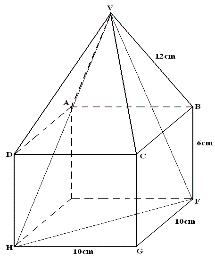
Calculate:
- Length DF.
- Angle VHF.
- The length of the projection of line VH on the plane EFGH.
- The height of the model hut.
- The length VH.
- The angle DF makes with the plane ABCD.
3. A square floor is fitted with rectangular tiles of perimeter 220 cm. Each row (tile lengthwise) carries 20 fewer tiles than each column (tiles breadthwise). If the length of the floor is 9.6 m, calculate:
- The dimensions of the tiles.
- The number of tiles needed.
- The cost of fitting the tiles, if tiles are sold in dozens at sh. 1500 per dozen and the labour cost is sh. 3000.


6 Comments