


CHAPTER SIX – WAVES II
Properties of Waves
Waves exhibit various properties that can be conveniently demonstrated using a ripple tank. It consists of a transparent tray filled with water and a white screen at the bottom. Above it, there is a source of light. A small electric motor (vibrator) is connected to cause the disturbance that produces waves.
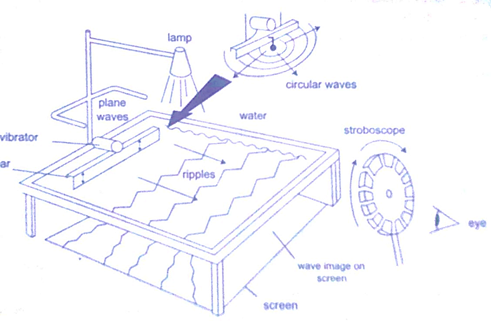
The wave fronts represent wave patterns as they move along.
Rectilinear Propagation
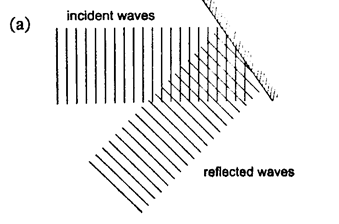
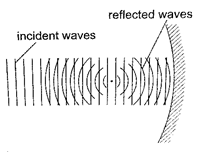
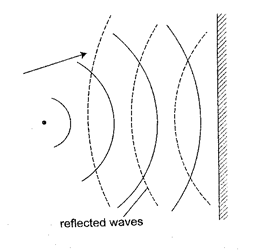
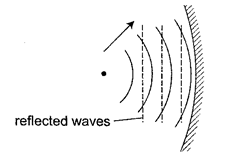
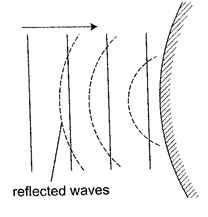
This is the property of waves traveling in straight lines and perpendicular to the wave front. The following diagrams represent rectilinear propagation of water waves.
Refraction
This is the change of direction of waves at a boundary when they move from one medium to another. This occurs when an obstacle is placed in the path of the waves. The change of direction occurs at the boundary between deep and shallow waters and only when the waves hit the boundary at an angle.

Diffraction of Waves
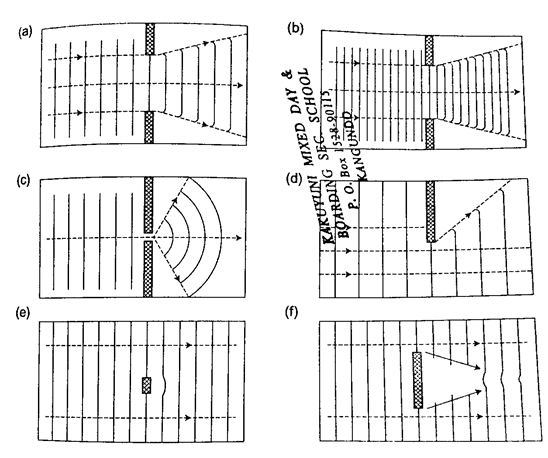
This occurs when waves pass the edge of an obstacle or a narrow gap; they tend to bend around the corner and spread out beyond the obstacle or gap.
Interference of Waves
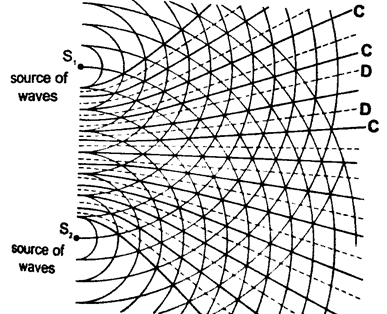
This occurs when two waves merge, and the result can be a much larger wave, a smaller wave, or no wave at all. When the waves are in phase, they add up and reinforce each other. This is called constructive interference. When out of phase, they cancel each other out, which is known as destructive interference.
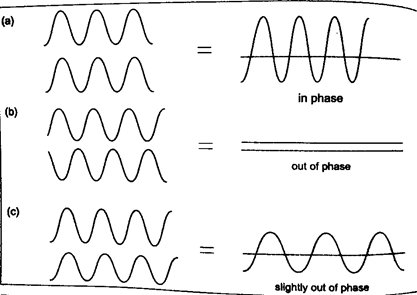
A ripple tank can be used to produce both constructive and destructive waves, as shown below in the following diagram.
Interference in Sound
Two loudspeakers L1 and L2 are connected to the same signal generator so that sound waves from each of them are in phase. The two speakers are separated by a distance of the order of wavelengths, i.e., 0.5 m apart for a sound frequency of 1,000 Hz.
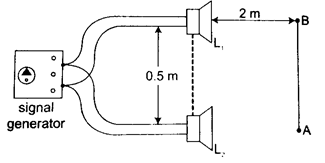
If you walk along line AB about 2 m away from the speakers, the intensity of sound rises and falls alternately; hence both destructive and constructive interference will be experienced.
Stationary Waves
They are also known as standing waves and are formed when two equal progressive waves traveling in opposite directions are superposed on each other. When the two speakers are placed facing each other, they produce standing waves. A rope tied at one end will also produce stationary waves.


1 Comment