


LIVESTOCK HEALTH II (LIVESTOCK PARASITES ) QUESTIONS
This topic entails the following:
- Host-parasite relationships
- Effects of parasites on livestock
- Life cycle of parasites
- Methods of parasite control in livestock
- Identify different parasites
The following relevant questions and their answers in this topic will greatly motivate and help the user to comprehend and understand the required concepts and practices:
1. Name two chemical methods used in deworming cattle
2. a) state six effects of parasites
b) Describe the life cycle of Taenia solium species of tapeworm
c) State four control measures of the tapeworm
3. Give two functions of calcium in dairy cows
4. Give two control measures of fleas in a flock of sheep
5. Give two measures a poultry farmer can use to control fleas in flock
6. State two reasons why drenching alone is not an effective method of controlling internal parasites
7. Give two forms in which a tape worm is found in livestock
8. Below are diagrams showing different types of internal parasites. Study them carefully and
answer the questions that follow:-
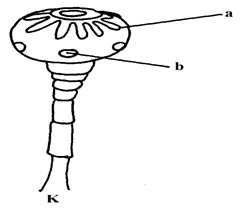
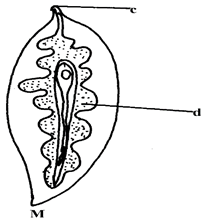
a) Identify the parasites K & M
b) Identify the parts labelled
c) Name the organs where each parasites is found
d) Give the intermediate host of parasite M
9. Give any two effects of external parasites that are harmful to livestock
10. Outline the procedure followed when hand-spraying cattle to ensure effective use of acaricides
to control ticks
11 a) A boar gained 90Kg live weight after eating 360Kg pig finisher meal over a period of
time. Calculate the feed conversion ratio
b) Describe digestion in the four stomachs of the ruminant animal
c) Give the significance of lubrication system
12. State four ways of controlling tsetseflies
13. Name two types of roughages
14. Name the common milk breed of goats reared in Kenya
15. Why are the element calcium and phosphorus important in the diet of young livestock?
16 Give two parasites of cattle which are also disease vectors
17 Give three control measures of fleas in a flock of layers
(LIVESTOCK HEALTH II (LIVESTOCK PARASITES ) ANSWERS
1. – Use of caustic potash stick (potassium hydroxide)
– Use of dehorning collodion
2. a)
- Cause anaemia
- Deprive the hoof animal of food
- Cause injury and damage to animal tissue and organs
- Transmit diseases
- Cause irritation
- Cause obstruction to internal organs
b)
- Human beings drop tapeworm segments/ progloltudes together with their faeces
- Eggs are released from the segment. Once outside the human body
- Eggs are picked by pigs when feeding
- Eggs hatch into embryos in the intestine of pigs
- The embryo penetrate the intestinal wall and enter into the blood stream
- Embryo localize in the liver
- Embryos are disturbed throughout the muscle where they become cyst/ bladder worms
- Bladder worms get into human beings through eating under cooked pork/ bacon
- Once inside the human intestines the cyst wall dissolves and the bladder worm attach themselves to the wall of intestines
- Bladder warm develop into adult tape worm
- Adult tape worm releases segments/ progloltides containing fertilized eggs with human faeces
c)
- Use prophylactic drugs/ deworms to kill the internal parasites
- Keep animal houses clean and disinfected
- Practice rotational grazing
- Use of clean feeding and watery equipment
- Use of latrines/ proper disposal of human faeces
Proper cooking of meat
3. Functions of calcium in dairy cows.
– Milk and egg formation / production;
– Bones / skeleton / teeth formation;
– Blood clotting;
4. Control measures of fleas.
– Keep clean animals sleeping places;
– Dust animal surroundings with appropriate insecticides;
– Cover with petroleum jelly to suffocate stick fast fleas;
5. Control measures of fleas *NYR*
- Dusting with appropriate insecticide in the pen
- Ensuring cleanliness in poultry house
- Dusting of the birds with correct insecticide
- Applying petroleum jelly on infected parts (1mk each for any 2 pts = 2mks)
6. two reasons why drenching alone is not an effective method of controlling internal parasites
- Cannot kill all stages of parasites
- Cannot kill the eggs (2x ½ =1mk)
7. -Embryo
-Cyst/bladder worm (2x ½ =1mk)
8. a) K-tapeworm M-liver fluke
b) a-hooks b-suckers
c-mouth d-digestive glands
c) i) Small intestine
ii) the liver
d) Water snail (1×1=1mk)
9. – External parasites effects
– Transmit diseases
– Causes anemia/ sucks blood
– Causes irritation/ discomfort
– Causes wounds on the skin that may predispose animal to secondary infection
– Loss of hair
10. – Read the manufacturers instructions carefully
- Mix the acaricide appropriately
- Pour the chemical solution into the knapsack sprayer through the sieve/ stir up pump container
- Restore in the animal
- Spray along the back to loin
- Spray the sides
- Spray under the belly including the udder/ scrotum
- Spray the rear/ hind quarters
- Spray fore limbs
- Spray the face, the eras last
- Allow the animal to drain the chemical
- Release the animal
11. a) Feed conversion is 90Kg/360Kg = ¼ = 1 : 4 *MMS*
- Digestion in ruminant animal – 4 stomachs
i) Rumen (A pauch)
– Stores food temporarily
– Fermentation of food
– contains bacteria, fungi, protozoa which breaks down cellulose
– Synthesis of amino acids from ammonia gas
– Synthesis of vitamin B complex
ii) Reticulum (Honey comb)
- Sieves and separates fine from coarse food particles
- Retrains foreign and undigestible materials
iii) Omasum (Many plies or book)
- Stores food temporarily
- Grinds and sieve food particles
- Absorption of water
iv) Abomasum (True stomach)
- Enzymetic digestion takes place
c)
- Prevents rusting of surfaces
- Reduces the rate of wear and tear of moving parts
- Minimizes power loss due to friction
- Acts as a cleaning agent
- Reduces the heat created by the rubbing surfaces and acts as a seal between them
12. Bush clearing to destroy breeding places
– Spraying breeding places with insecticides
– use fly traps with impregnated nets
– use stressing agents e.g. radio isotopes on male file sand then releasing them
13. – Succulent
– Dry
14. two common milk breed of goats reared in Kenya
- British Saaren
- The Toggenburg
- Anglo-Nubian
- Jamnapari
- The British alpine ( ½ x2=1mks
15. the element calcium and phosphorus important in the diet of young livestock?
- For bone formation and development
- For proper teeth development
- For increased conversion of feed
- Increase livestock appetite ( ½ x1=1mk)
16 two parasites of cattle which are also disease vectors
- Ticks
- Tsetse flies
Mosquitoes
17. -training
-Giving incentives/motivation
-Farm mechanization
-Labour supervison


