

REGULATION (HOMEOSTASIS)
- REGULATION – This is the maintenance of a relatively constant internal body environment. The internal environment includes temperature, concentration of salt, glucose, water, and hydrogen ions (pH), which are always changing.
- Such changes affect the rate of chemical processes in the body. For example, enzymes work best within certain temperature ranges. Outside this optimum temperature range, enzymes become inactive or may be destroyed.
- If enzymes are destroyed, metabolic processes may stop. Changes in water, salt, and hydrogen ion concentration also affect the rate of metabolic reactions.
- For efficient functioning of the body, the rate of chemical reactions must be kept at their optimum levels; hence, the need to maintain the internal environment in a state of equilibrium.
- Equilibrium may be achieved by:
- Nervous control
- Hormonal control
The maintenance of a constant internal environment is called Homeostasis.
Types of Regulation
1) Temperature regulation (Thermoregulation)
2) Osmoregulation
3) Blood sugar regulation
1. Temperature Regulation in Animals
This is the maintenance of a relatively constant body temperature. A constant body temperature favors efficient enzyme activities.
Enzymes work best at a narrow range of temperature known as the optimum temperature.
Temperatures above the optimum are less favorable for enzymes and may denature enzymes or destroy cells.
Temperatures below the optimum inactivate enzymes, slowing down or stopping enzyme-catalyzed reactions. It is very important that body temperature be kept constant.
External temperature affecting the body is detected by thermal receptors in the skin. The thermal receptors relay information to the temperature regulation center in the brain (hypothalamus).
Animals can be divided into two groups based on body response to environmental temperature fluctuations. These groups are:
- Poikilothermic regulation
- Endothermic regulation
1. Ectotherms (Poikilotherms)
This type of temperature regulation involves organisms whose body temperature fluctuates with that of the environment, e.g., all invertebrates and some vertebrates such as fish, amphibians, and reptiles. These organisms are also known as cold-blooded.
2. Homeotherms (Endotherms)
Refers to animals whose body temperature remains constant irrespective of environmental changes.
Whether an animal is endothermic or homeothermic, changes in body temperature affect metabolic processes. A rise in temperature beyond a certain limit leads to a decrease in the rate of metabolism.
A decrease in temperature below the optimum results in a decrease in the rate of metabolic reactions as enzymes become inactive. Hence, for survival, homeotherms and ectotherms must respond to changes in temperature.
TEMPERATURE REGULATION IN HOMEOTHERMS
Homeotherms have structures to detect temperature changes and mechanisms to restore temperature to normal levels.
- Temperature changes are detected by sensory cells. These stimulate impulses at sensory nerve endings, which are sent to the brain’s thermoregulatory center.
- The brain interprets the changes and initiates body reactions that may lead to production of heat, reduction of heat, or elimination of excess heat.
- When the surrounding temperature is lower than body temperature, the animal loses heat by radiation. Hence, the animal’s temperature begins to fall.
- To raise body temperature to normal, the body responds by one or more of the following:
- Increased rate of respiration – which results in the production of heat in the body. The heat energy raises body temperature.
- Shivering – due to contraction of skeletal muscles, producing heat transferred to the body.
- Vasoconstriction – narrowing of blood vessels at the skin’s surface, reducing blood flow and heat loss by radiation.
- Contraction of hair erector muscles – causes hair to rise, trapping air and forming an insulating layer. Hair is a poor conductor of heat and provides insulation.
Structural adaptations that regulate heat include possession of fur in mammals and thick skin layers in animals living in cold areas. Birds also have features that provide insulation.
When body temperature rises (due to vigorous muscular activity or increased environmental temperature), blood temperature rises and stimulates the thermoregulatory center, triggering:
- Vasodilatation – widening of blood vessels supplying the skin, allowing more blood to reach the skin. Heat is lost to the environment, producing a cooling effect.
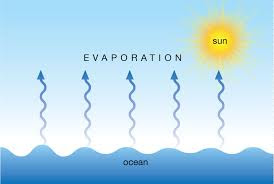
- Sweating – water produced by sweat glands evaporates from the skin, drawing heat from the body and cooling it.
In humid atmospheres, sweat may not evaporate fast enough, causing body temperature to rise above 41°C, resulting in coma and convulsions (heat stroke). Without cooling, this can lead to death.
Sweating causes loss of salts, especially sodium, which can lead to muscle cramps, vomiting, nausea, and fainting.
Hair lies flat on the body surface, increasing heat loss by conduction and radiation.
TEMPERATURE REGULATION IN ECTOTHERMS
Ectotherms, unlike homeotherms, do not have mechanisms to regulate body temperature.
- When environmental temperature falls, their bodies lose heat, causing body temperature to fall. Metabolism decreases and the animal becomes sluggish.
- They overcome this by moving to warmer areas or by hibernating (a dormant state).
- When environmental temperature rises, the body gains heat, metabolism increases, and the animal becomes active.
- Prolonged exposure to high temperatures can be fatal. To avoid overheating, they move to cooler areas or aestivate (a dormant state).
OTHER MEANS OF LOSING HEAT FROM THE BODY
- Evaporation of water from the respiratory system and buccal cavity. For example, dogs achieve this through quick shallow breathing called panting, and saliva evaporates from the tongue.
ADAPTATIONS TO COLD AND HOT ENVIRONMENTS
Animals Living in Cold Areas
- Animals have thick layers of fat under the skin and thick fur throughout their lives, or develop thick fur during winter. These act as insulators against heat loss.
- They have small ears and short noses to reduce heat loss.
Under extreme cold, animals whose regulatory mechanisms fail hide in nests or burrows and cease movement. Their metabolic processes reduce to a minimum. This is called hibernation. During this period, animals depend on stored fat for energy.
Animals without suitable insulators such as fur or fat cannot hibernate and avoid extreme cold by migrating to warmer places.
Animals Living in Hot Areas
Homeotherms in hot, dry areas have short sparse fur and little fat under the skin.
They have large ears and long noses to increase surface area to volume ratio and maximize heat loss.
When exposed to prolonged heat, they enter a state of rest called aestivation, where metabolism slows and they become inactive.
OSMOREGULATION IN MAMMALS
This is the regulation of water and mineral salt concentration in an organism. Proper functioning requires water and mineral salts in certain amounts, as they serve various physical functions.
Excess or deficiency of water and mineral salts interferes with osmotic pressure and metabolic processes of cells.
To carry out physiological processes efficiently, water and mineral salt levels must be maintained within limits.
The regulation of water and mineral salt concentrations is called Osmoregulation.
Water movement into and out of cells is closely related to salt concentration. If salt concentration in blood and tissue fluid is higher than in cells, water moves out by osmosis, causing cells to shrink.
If salt concentration in blood and tissue fluid is lower than in cells, water moves into cells by osmosis, causing swelling and possible bursting.
Water balance in blood is maintained by selective reabsorption in the distal convoluted tubule and collecting duct of the kidney.
This process is controlled by hormones, whose secretion depends on blood osmotic pressure.
Osmotic pressure depends on water and salt amounts.
A rise in osmotic pressure is caused by increased salt (NaCl) concentration or reduced water content.
When osmotic pressure rises due to decreased water, the brain registers water shortage and stimulates the pituitary gland to produce Antidiuretic Hormone (ADH).
ADH makes the distal convoluted tubule and collecting duct more permeable to water, increasing water reabsorption into the bloodstream.
Water reabsorption continues until osmotic pressure returns to normal, then hormone secretion decreases and less water is reabsorbed.
When osmotic pressure falls due to low sodium chloride concentration, the adrenal glands secrete Aldosterone.
Aldosterone stimulates tubules to reabsorb sodium chloride back into the blood via the renal vein.
Reabsorption continues until osmotic pressure normalizes, then hormone secretion stops.
BLOOD SUGAR REGULATION IN MAMMALS
Glucose is an important blood metabolite, so its level must be controlled.
Glucose is the end product of carbohydrate digestion and the main respiratory raw material, supplied continuously to cells.
Brain cells depend especially on glucose and cannot use other metabolites for energy. Lack of glucose causes fainting.
Normal human blood glucose concentration is between 80–110 g per 100 cm3 of blood, providing energy and maintaining osmotic pressure. Deviations cause energy imbalance and osmotic pressure issues.
If blood glucose rises above normal, osmotic pressure increases, causing cells to lose more water to the blood.
Glucose deficiency lowers osmotic pressure, causing water to move from blood into tissues. The body also lacks energy, possibly causing convulsions and coma. Thus, glucose must be maintained at required levels.
Blood glucose is regulated by pancreatic hormones insulin and glucagon, secreted by the Islets of Langerhans.
Increased blood sugar stimulates insulin secretion, promoting conversion of excess glucose to glycogen in liver and muscles. Glucose is also converted to fat and stored under the skin, around the heart, blood vessels, intestines, and kidneys.
If blood glucose falls and insulin secretion decreases, glucagon is secreted, stimulating glycogen conversion to glucose, raising blood glucose to normal.
DIABETES MELLITUS
This disease results from glucose accumulation in the blood.
Glucose is not converted to glycogen, so concentration remains high.
Water reabsorption in kidney tubules decreases, producing large volumes of dilute urine and causing severe dehydration.
With little glycogen stored, body fat and proteins are used as respiratory substrates, causing rapid weight loss.
Diabetes mellitus can be treated with insulin injections.



39 Comments