

Introduction
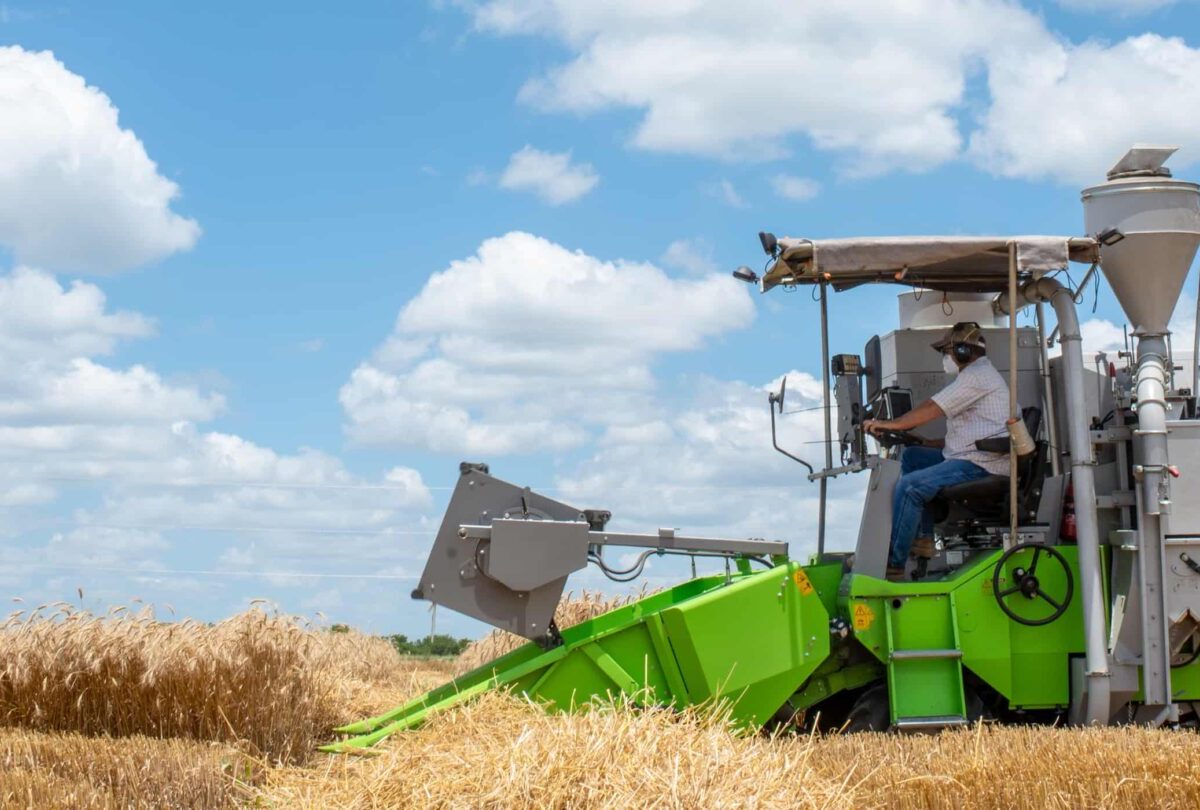
- Agricultural marketing is an economic activity that involves the distribution of farm produce from the farm to the consumer.
Market and Marketing
- A market is an institution for the exchange of goods and services or a place where selling and buying of goods takes place.
- Marketing refers to the flow of goods and services from the producer to the consumers.
Marketing Functions
- Transportation – Movement of goods from production centres to consumption centres.
- Buying and selling – Purchase of goods from the producer to be sold to the consumer.
- Storage – Agricultural products are seasonal; hence storage is necessary.
- Processing – Changing raw form into utilizable form.
- Grading and standardisation – Sorting into uniform lots of certain qualities.
- Assembling – Collecting farm produce from the farm to the market centres.
- Collecting market information – To know the prices, supply, and demand of certain commodities.
- Advertising – Making consumers aware of the produce.
- Bearing of risks – Such as fire risk and price fluctuation.
- Financing or expenditure on other processes.
- Packaging – Putting produce into small packs and labelling.
- Packing – Putting produce in containers such as bags.
Marketing Agencies and Institutions
Middlemen (itinerant traders) are people who buy from the producer and sell to other agencies.
- Wholesalers – Buy in bulk and sell to retailers.
- Retailers – Buy from wholesalers and sell in small units to consumers.
Problems in Marketing Agricultural Produce
- Farm produce are bulky, meaning weight and volume are high but monetary value is low, making transportation difficult.
- Most agricultural products are perishable, for example, milk, vegetables, and fruits.
- Storage problems due to bulkiness requiring a lot of space.
- Lack of proper transport systems since agricultural products are in rural areas while markets are in urban centres.
- Lack of market information, leading to exploitation of farmers by middlemen.
Price Theory
- Price is the amount of money paid in exchange for goods or services.
- Price theory concerns the determination of the price of any commodity.
- Price is determined where demand for and supply of any commodity are equal.
Demand
- Demand is the quantity of any commodity purchased at any price within a given time.
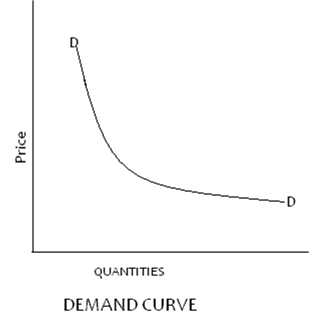
- The law of demand states that quantity demanded changes inversely with the price.
Demand Curve
The curve slopes downward from left to right.
This means people buy more at lower prices and less at higher prices.
Demand Curve
Factors Affecting the Demand of a Commodity
- Population
- Income of the consumer
- New inventions
- Taste and preference of the individual
- Price of substitute commodities
- Price expectations
- Advertisement
- Culture and social values of consumers
- Price of commodities having joint demand, for example, tractors and diesel
Elasticity of Demand
- It is the responsiveness of demand to a change in price.
- Elasticity of demand = Percentage change in quantity demanded / Percentage change in price
Types of Elasticity of Demand
- Elastic demand occurs when the ratio is more than 1.
- Unitary elasticity occurs when the ratio is equal to 1.
- Inelastic demand occurs when the ratio is less than 1.
Supply
- Supply is the quantity of any commodity offered for sale at any price at a given time.
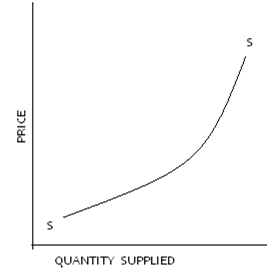
- The law of supply states that when price rises, quantity supplied increases, and when price falls, quantity supplied decreases (other factors held constant).
- The supply curve rises upward from left to right.
- This means people are willing to offer more for sale at higher prices.
SUPPLY CURVE
Factors Affecting Supply of a Commodity
- Number of sellers
- Price of substitute commodities
- New technology
- Price expectations
- Peace and security
- Weather conditions
- Government policy
- Cost of production of the commodities
Elasticity of Supply
This refers to the rate at which quantity supplied changes due to a change in price level.
Elasticity of Supply = Percentage change in quantity supplied / Percentage change in Price
Types of Elasticity of Supply
- Elastic supply occurs when the ratio is more than 1.
- Unitary elasticity of supply occurs when the ratio is equal to 1.
- Inelastic supply occurs when the ratio is less than 1.
One problem with agricultural produce is that supply does not readily adjust to price changes.
Equilibrium Price
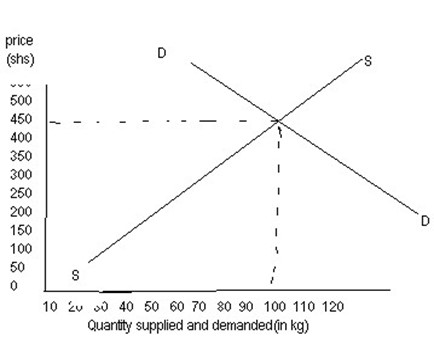
- Equilibrium price is the price at which demand and supply are equal.
- At this price, whatever is offered for sale in the market is bought.
- In the graph below, the quantity supplied and demanded are equal at a price of Shs. 300 and quantity of 80 kg.
- If the price is higher than Shs. 300, supply will exceed demand, causing a surplus and a fall in price.
- If the price is lower than Shs. 300, demand will exceed supply, causing a shortage and a rise in price.
Agricultural Organization
- Agricultural organizations are agencies that promote agricultural development through their activities.
- These organizations include co-operatives and statutory boards.
Co-operatives
A co-operative is an organisation of people with a common aim of pooling their resources to achieve their objectives.
Functions of Co-operatives
A co-operative society carries out the following functions:
- Collecting and assembling members’ produce.
- Processing farm produce after collection.
- Transportation of members’ produce to market points.
- Negotiation of fair prices with purchasing agencies for members’ produce.
- Purchase and distribution of farm inputs to members.
- Storage of members’ produce before transmission to market points.
- Provision of credit facilities to members on easy terms.
- Training and education of members on improved farming techniques.
- Offering farm machinery services to members on hire terms for farm operations.
- Investing in other viable ventures and sharing profits among members as dividends or bonuses.
Formation and Structure of Co-operatives
The formation of a co-operative involves the following stages:
- Individuals with common interests come together to form a primary co-operative society.
- At least ten (10) members qualify for registration.
- Each primary co-operative society elects office bearers consisting of chairman, secretary, and treasurer.
- Several primary co-operative societies are usually amalgamated to form a district co-operative union.
- Tertiary co-operative unions are nationwide organizations to which secondary co-operative unions are affiliated.
- Examples include Kenya Planters Co-operative Union, Kenya Farmers Union, Kenya Cooperative Creameries, Co-operative Bank of Kenya, etc.
Problems Facing Co-operatives
- Managerial problems arising from:
- Financial mismanagement due to poor accounting.
- Corruption and misappropriation of cooperative resources by personnel.
- Lack of advisory services on technical operations.
- Inability to meet obligations of providing credit facilities due to malpractices.
- Bulkiness causing difficulties in transportation and storage.
- Perishability of produce making it difficult to sustain quality.
- Inadequate capital to invest in cooperative undertakings.
- Transport problems due to poor roads.
These problems hamper timely delivery of produce to market points.
Statutory Boards
A statutory board is an organization established by an Act of Parliament and charged with managing a certain industry within the government sector.
Marketing Boards
Some statutory boards are responsible for marketing certain farm produce and are called marketing boards.
Examples include the Coffee Board, Pyrethrum Board, Cotton Seed and Lint Marketing Board, Tea Boards, National Cereals and Produce Board, Kenya Meat Commission, the Dairy Board of Kenya, and others.
Their marketing functions include finding markets and securing better prices.
Research Organizations
These are research centres that carry out research and trials on:
- Development of new varieties and cultivars of crops.
- Breeding disease- and pest-resistant varieties of crops and animals.
- Adaptation of crop and livestock species to ecological conditions of certain areas.
- Use of fertilizers and pesticides on crops in specific areas.
- Development of early maturing and high-yielding species.
- Soil testing and crop analysis, including advisory services on agro-economic aspects.
Other Organizations
The Kenya National Farmers’ Union negotiates for:
- Reasonable and affordable prices of farm inputs.
- Better prices for farm produce.
- Improved credit facilities.
- Better control of diseases and pests.
Agricultural Society of Kenya
- Organizes agricultural shows in the country.
- Encourages improvement of livestock through exhibitions and farmer education.
- Organizes young farmers’ clubs.
- Organizes and finances ploughing contests where farmers learn modern seedbed preparation techniques.
- Publishes the “Kenya Farmers” magazine.
Young Farmers and 4-K Clubs
These are student organizations with objectives to:
- Expose young students and encourage appreciation of agriculture as a career.
- Encourage youth to develop leadership qualities through small farming projects.
- Organize student exchange programs locally and abroad.
- Develop better farming skills through judging competitions, annual rallies, and camps.
Agricultural-Based Women Groups
These self-help groups aim to uplift the economic status of their members by carrying out agricultural activities.
Their success depends on:
- Commitment of their leaders.
- Motivation of members.
- Mutual sacrifice and support.
Agroforestry
Introduction
- In Kenya, land use is shifting from extensive farming methods to more productive and sustainable intensive methods.
- Agroforestry is a farming method that has become increasingly important.
Definition
- Agroforestry is the practice of integrating various land uses.
- It combines tree growing, pasture, and crop production on the same piece of land to improve land output.
Forms of Agroforestry
- Agroforestry: Combination of trees/shrubs and crops in agricultural production.
- Silvopastoral: Combination of growing trees/shrubs, pastoral activities, and livestock keeping.
- Agrosilvopastoral: Combination of growing trees/shrubs, animals, pastures, and crops.
Importance of Agroforestry
- Environmental protection.
- Source of income.
- Afforestation for timber production.
- Maintenance of soil fertility.
- Aesthetic value.
- Labour saving in firewood collection.
- Source of food and feed.
- Source of fuel wood.
Important Trees and Shrubs for Particular Purposes
- Eucalyptus spp.
- Timber
- Bee forage
- Fuel wood
- Medicinal uses
- Production of essential oils
- Acacia spp.
- Leaves and pods eaten by animals
- Provision of shade
- Cajanus cajan (pigeon peas)
- Protein-rich feed for humans
- Used as fodder
- Firewood
- Croton megalocarpus (croton)
- Fuel wood and timber for poles
- Handles for hand tools
- Erythrina abyssinica (flame tree)
- Wood carvings
- Bee forage
- Nitrogen fixation
- Medicinal uses
- Markhamia lutea (markhamia tree)
- Timber for construction
- Shade
- Soil protection
- Bee forage
- Grevillea robusta (silky oak)
- Timber
- Fuel wood
- Fodder
- Bee forage
- Soil protection
- Windbreaker
- Shade
- Sesbania sesban (sesbania)
- Fodder
- Nitrogen fixation
- Shade
- Fuel wood
- Calliandra calothyrsus (calliandra)
- Fuel wood
- Fodder
- Nitrogen fixation
- Shade
- Bee forage
- Persea americana (avocado)
- Fodder
- Fruit production
- Shade
- Fuel wood
- Mangifera indica (mango)
- Fruit production
- Shade trees
- Windbreak
- Soil protection
- Fuel wood
Characteristics of Agroforestry Tree Species
- Fast growth rate.
- Deep rooted.
- Nitrogen fixation ability.
- By-product production ability.
- Multipurpose in nature.
- Should not compete with the main crop.
- Have coppicing and lopping ability.
- Have appropriate canopy that does not shade other plants excessively.
- Nutritious and palatable.
Trees and Shrubs to Avoid at Certain Sites and Reasons
- Eucalyptus spp. should not be planted near water sources because they absorb water excessively.
- Eucalyptus spp. should not be planted on arable land as their roots have allelopathic effects on other vegetation, including crops.
- Tall trees should not be planted near farm buildings because they may fall and damage the buildings; their roots can also break building stones gradually.
- Bushy trees or shrubs should not be near farm buildings as they may harbour predators.
- Tall trees planted with main crops of lower canopy intercept rainfall, affecting crop growth.
- Cypress trees have leaves that produce acidity in the soil, preventing undergrowth beneath the tree.
- These trees should be planted at the farm periphery rather than within the farm.
Tree Nursery
Tree nurseries are structures used to raise tree seedlings until they are ready for transplanting.
There are two main types: Bare root nurseries and containerized nurseries.
Bare Root Nurseries:
Also known as ‘Swaziland’ beds, where seedlings are raised directly in the soil.
Advantages
- Cheap and less time-consuming.
- Require less labour.
- Occupy small space.
- Many seedlings can be raised in a small space.
- Transportation of seedlings is easy.
Disadvantages
- Root damage when uprooting seedlings.
- Difficult to transport.
- Lower survival rate after transplanting.
Containerized Nursery:
- Seedlings are raised in containers such as pots, polythene bags, tubes, or tins.
Advantages
- Higher survival rate after transplanting.
- No root damage.
- Successful in arid areas.
Disadvantages
- Labour intensive.
- Difficult to obtain containers.
- Sometimes difficult to get the right type of soil for containers.
Seed Collection and Preparation
Seed Collection
Seeds should be collected from:
- Adaptable trees
- High-yielding trees
- Healthy trees
- Resistant to pests and diseases
- The mother plant should be identified first.
Methods used to collect seeds include:
- Shaking the tree
- Gathering from under the tree
- Lopping the tree
- Climbing the tree
- Hooking method
Seed Preparation
- When seeds are collected from fresh fruit, they should be soaked in water, then washed and dried.
- Cleaning and sorting to remove immature, rotten, broken, or damaged seeds.
- Drying by sun-drying or oven drying.
- Seed testing to determine:
- Seed quality for percentage purity
- Seed weight
- Moisture content
- Germination percentage
- Seeds should be stored in dry containers at room temperature.
- Seed treatment to break dormancy and ensure rapid germination:
- Hot water treatment softens the seed coat to make it more permeable to water (e.g., leucaena, calliandra, acacia).
- Mechanical breaking by nicking the seed coat with a knife (e.g., croton seeds).
- Light burning applied to wattle tree seeds.
Nursery Management
The following practices are carried out in the nursery when seedlings are growing:
- Mulching:
- Reduces excessive evaporation.
- Moderates soil temperature.
- Improves soil structure when it decays.
- Reduces the impact of raindrops.
- Weeding:
- Reduces competition for growth factors by uprooting weeds.
- Use a sharp pointed stick.
- Watering:
- Done using a watering can.
- Performed twice daily, in the morning and evening.
- Pricking out:
- Removal of seedlings from overcrowded areas to another nursery bed.
- Allows seedlings to grow strong and healthy.
- Root pruning:
- Cutting roots longer than the pots.
- Reasons for root pruning:
- Makes lifting easier.
- Encourages fast establishment.
- Reduces damage to seedlings.
- Encourages development of a short, dense, and strong rooting system.
- Shading:
- Reduces intensity of sunlight.
- Dark conditions should be avoided.
- Pest and disease control:
- Use appropriate chemicals.
- Sterilize soil through heat treatment.
- Fence seedlings to protect against animal damage.
- Hardening off:
- Prepares seedlings to adapt to ecological conditions in the seedbed.
- Involves gradual reduction of shade and watering 1–2 weeks before transplanting.
- Transplanting:
Transferring seedlings from the nursery bed to the main field where they grow to maturity.
Procedure of Transplanting
- Dig holes early before transplanting.
- Mix topsoil with compost manure.
- Water seedlings well a day before transplanting.
- Remove seedlings carefully from nurseries with a ball of soil for bare root seedlings; trim roots for containerized seedlings.
- Place the seedling in the hole at the same height it was in the nursery.
- Remove the container carefully.
- Return soil into the hole and firm it around the seedling.
- Water and mulch the seedling.
Care and Management of Trees
- Protection:
- Protect from damage by animals such as goats and cattle that eat leaves.
- Done by fencing fields or using small poles around each seedling with or without wire netting; can be done for individual trees or entire fields.
- Pruning and trimming:
- Removal of extra or unwanted parts of a plant.
- Unwanted parts may be due to breakage, overcrowding, pests, disease attacks, or overproduction.
- Pruning initiates growth of shoots and trains the tree to have the desired shape.
- Regular cutting back of trees is known as coppicing.
- Done at the beginning of each cropping season to reduce competition for water, minerals, nutrients, and sunlight with crops.
- Materials pruned or coppiced are used as fuel wood or fodder.
- Grafting old trees:
- Uniting two separate woody stems.
- The part with the rooting system is called rootstock (base).
- The part grafted onto the rootstock is called the scion, which has buds that develop into the future plant.
- The ability of the scion and rootstock to form a successful union is known as compatibility.
- Methods include whip or tongue grafting, side grafting, and approach grafting.
Agroforestry Practices
- Alley Cropping/Hedgerow Intercropping:
- Growing multipurpose trees and shrubs together with crops.
Benefits
- Improves soil fertility through nitrogen fixation and organic matter addition.
- Provides green manure.
- Used as fences and boundary markers.
- Acts as windbreaks.
- Suppresses weeds.
- Source of timber and fuel wood.
- Multi-storey cropping
- Growing trees of different heights together.
- Based on crops that tolerate shading.
- Trees and crops form different canopy levels resembling storeys.
Benefits
- Increases water conservation for pastures.
- None of the crops or trees are excessively shaded.
- Acts as windbreak for crops.
- Creates a suitable microclimate.
- Trees provide timber, fuel wood, and forage.
- Woodlots (farm forests)
- Plots of land set aside exclusively for trees.
- Established in hilly and less productive parts of the farm.
- Fast-growing tree species such as Eucalyptus spp. are recommended.
Sites for Agroforestry
- Farm boundaries – provide live fences.
- River banks – protect water catchment areas.
- Homesteads – provide shade and windbreak.
- Terraces – for soil conservation.
- Steep slopes – as contour hedges to encourage water seepage.
Tree Harvesting Methods
- Pollarding
- Extensive cutting back of the tree crown about 2–3 meters above ground to harvest side branches.
- Stimulates development of a new crown and branches.
- Coppicing
- Cutting the main stem completely at a height of 10–50 cm above ground.
- Cut should be at a slanting angle.
- Lopping or side pruning
Removal of selected branches to produce fuel wood and fodder.
- Shaking of the tree
Harvesting pods and seeds without cutting the tree.
- Cutting back
Cutting the tree from the base to allow new growth, as done in coffee when changing the cycle.
- Thinning
Removal of some trees growing in lines to give remaining trees enough space to grow.


