

Sequence and series Questions
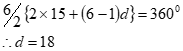
1. The six exterior angles of a hexagon form an arithmetic progression. if the smallest angle is 150, find the size of the biggest angle of the hexagon (3 mks)
2. An arithmetic progression whose first term is 2 and whose nth term is 32 has the sum of its first n terms equal to 557. find n. (3mks)
3. Every time an insect jumps forward the distance covered is half of the previous jump. If the insect initially jumped 8.4 cm, calculate
(i) To the nearest two decimal places the distance of the sixth jump (1 mk)
(ii) The total distance covered after the sixth jump (2mks)
4. (a) An arithmetic progression is such that the first term is -5, the last is 135 and the sum of
progression is 975.
Calculate
(i) The number of terms in the series. (7 marks)
(ii) The common difference of the progression (2 marks)
(b) The sum of the first three terms of a geometric progression is 27 and the first term is 36.
Determine the common ratio and the value of the fourth term. (4 marks)
5. The sum of the second and fourteenth terms of an arithmetic progression is 15 and sum of the fifth and sixth terms is 25. Find the first term and the common difference. (4 mks)
6. The area covered by Mau forest is 40,000 km2 at present. If the human encroachment rate is
estimated to be 2 % every 10 years. Calculate the area of the forest encroached in 30 years.
7. Three consecutive terms of geometric progression are 3 2x + 1, 9x and 81 respectively. Calculate:
(a) The value of x
(b) Find the common ratio
(c) Calculate the sum of the first 10 terms of this series
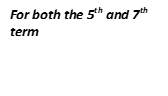
(d) Given that the fifth and the seventh terms of this G.P forms the first two consecutive
terms of arithmetic sequence, calculate the sum of the first 20 terms of this sequence
8. How many terms of the sequence -12 + -10 + -8 …..should be added to give a sum of 338?
9. An arithmetic progression whose first term is 2 and whose nth term is 32 has the sum
of its n terms equal to 357. Find n
10.

In the figure OACB is parallelogram in which M is the mid- point of AC and OM produced
meets BC also produced at X.
Given OA = a and OB = b
a) Express OC in terms of a and b
b) Find the values of r and s such that OX = rOM and CX = sBC
c) Hence determine the ratio BC:BX
11. For the series 29 + 23 +….. + (-91), find;
(a) The number of terms in the above series
(b) The sum of the series
12. (a) Given that 5, a, b, and 7 are in arithmetical progression, find the value of a and b
(b) If 5, P, Q , 135/8 are in geometrical progression. Find the value of P and Q
(c) Prove that the sum of the first 12 terms of the first series in (a) is approximately
equal to the sum of the first 6 terms of the second series (b) above
13. An aeroplane flew East for 640km then turned and flew on a bearing of 050o. After 2.5hrs
flying at 324km/hr, it was necessary to fly to the original point because of technical hitch.
How much shorter is it going to cover flying straight to the starting point than retracing
its former route?
14. A ball falls vertically from a height of 15m. Each time it bounces back to 50% of the
height achieved on the previous bounce. Find the distance covered after 6 such bounces
15. Find the sum of the first 51 terms of the series:-
-22, -19, -16……………………………..
16. Olunga saves shs.100 on his son’s first birthday. He saves shs.200 on the second birthday and
Shs.400 on the third birthday and so on doubling the amount on every birthday. How much
will he be saving on the boy’s 10th birthday.
17. A self-help group intended to purchase a dry cleaning machine worth shs.720,000.
The members were required to contribute equal amounts to pay for the machine.
The group recruited 20 more members consequently, each member paid shs.3000 less
that what he would have contributed.
(a) find the original number of members
(b) find the amount required from each member to contribute after the recruitment
18. Find the number of terms in the following sequence
8, 4, 2, ½ …….., 1/512
19. An arithmetic progression has the first term a and the common difference d
a) Write down the third, ninth and twenty fifth terms of the progression in terms of a and d
b) The arithmetic progression above is increasing and that the third, ninth and twenty fifth
terms form the first three consecutive terms of a geometric progression. The sum of the
seventh and twice the sixth terms of the arithmetic progression is 78.
Calculate:
i) The first term and common difference of the arithmetic progression
ii) The sum of the first nine terms of the arithmetic progression
20. The difference between the fourth and the seventh terms of an increasing arithmetic progression
Sequence and series Answers
1 | | M1 M1 A1 | Alternative
|
3 | |||
2. | a = 2 nth = 32 Sn = 357 Sn = n/2 (2 + 32) 714 = 34n 21 = n | M1 M1 A1 | Substitution Simplification |
03 |

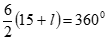


1. P 1 + R

100
= 40,000 1 + 2
 100
100
= 40, 000 x (1.02) = 42,448.32 km2
Encrouched area
= 42 448.32 – 40 000 = 2448.32 km2
2. (a) 9x = 81
32x + 1 9x
92x = 34(32x + 1)
34x = 34 + 2x + 1
34x = 32x + 5
4x = 2x + 5
2x = 5
x = 2.5
(b) Common ratio = 81
92.5
= 1
3
 (c) a = 3(2 x 2.5 + 1)
= 36
= 729
S10 = 729 1 – 1
10
3
1 – 2
3
= 1093.5 x 0.99998 = 1093.5
(d) 5th term = 729 x (1/3)4
= 9
7th term = 729 x (1/3)6
= 1
a = 9 d = 1 -9 = -8
S20 = 20 2 x 9 + (20 – 1) (-8)
2
= 10 (18 – 152) = -1340
3. – 12 + – 10 + -8 + ……………………..
a = -12 d = z
Sn = n 2a + (n – 1)d
2
338 = n 2(-12) + (n- 1)2
2
676 = n – 24 + 2n – 2
2n2 – 26n – 676 = 0
2 2 2 2
n2 – 13n – 338 = 0
(n – 26) (n + 13) = 0
n = 26 or n = -13 reject
∴ n = 26 terms
3. – 12 + – 10 + -8 + ……………………..
a = -12 d = z
Sn = n 2a + (n – 1)d
2
338 = n 2(-12) + (n- 1)2
2
676 = n – 24 + 2n – 2
2n2 – 26n – 676 = 0
2 2 2 2
n2 – 13n – 338 = 0
(n – 26) (n + 13) = 0
n = 26 or n = -13 reject
∴ n = 26 terms
4. 32 = 2 + (n-l)d…….(i)
357 = n 2.2 + (n-l)d …… (ii)
2
N 4 + (n-l) d = 714
2 + (n-l)d = 32
N(4 + nd – d) = 714
-d + nd = 30
4n + n2d – d = 744
nd – d = 30
d(n-l) = 30
5. a) OC = OB + BC = a + b
b) OM = OA + AM = a + ½ b
Given OX = rOM
= r(a + ½ b)
From OBX
Ox = OB + BX
= OB + BC + CX
= b + a + sa
= (1+s) a +b
r(a + ½ b) = (1 + s) a + b
Comparing coefficients of a and b
r = 1 + S
and ½ r = 1 r = 2
Substitute for r = 2 2 = 1 + s s = 1
c) Now BX = BC + Cx
= a + a = 2a
BC:BX = 1:2
6. (a) -91 = 29 + (n-1) x -6
-120 = -6n + 6
6n = 126
n = 21
(b) S21 = 21/2 [(2 x 2a) + (20 x -6)]
= 21 x -62
2
= -651
7. d = p-5…..(i)
d = q – p ………(ii)
0 = 2p -q – 5
0 = 7 – 2q + p
– p + 2q = 7
2p – q = 5
-2p + 4q = 14
2p – q = 5
3q = 19
q = 19/2
p=2q – 7 38/3 – 7
p=17/8
S = n [2a + (n-1)d}
2
= 12/2 (10+11 x 2/3)
= 6 (10+22/3) = 104
Sn = a(rn-1) = S(1.5-6)
r-1 1.5 – 1
= 5 x (1.5 – 1) = 103.90
0.65 = 10.4
8. a + a + d = 10………………(i)
10 2a + 9d = 210……………..(ii)
2
2a+ d =10
2a + 9d = 42
8d = 32
d= 4
T1 = 3 +6(4)
= 3 + 24
= 27
9. S6 = 15 (1-0.56)
1- 0.5
= 29.5314metres
10. Sn = n 2a + (n-1)L
2
S51 = 51 (2x -22) + (51 -1)3
2
= 2703
11. 100 + 200 + 400 + 800 + 1600 + 3200 + 6400 + 12800 + 25600 + 51200
200 = 400 = 800
100 200 400
= 51200 99600 108200 110,600
25600
6400
1600
700
76800 105,000 109,800 111,300
12800
3,200
800
99,600 108,200 110,600
= 111300
12.. a) Let n be the initial members
Each to contribute 720000
n
New membership n + 20
Contributions: 720000
n + 20
720000 – 720000 = 3000
n n + 20
720000(n + 20) – 720000n= 3000n(n + 20)
4800 = n(n + 20)
n2 + 20 – 4800 = 0
n2 + 80n – 60n – 4800 = 0
n(n + 80) – 60(n + 80)= 0
(n-60) (n + 80) = 0
n = 60
Original members = 60
b) Contributions required before recruitment
= 720000
60 = 120000
After requirement = 720000
13. nth term is arn-1
a = 8, r = ½
nth term = 1/512
8( ½ )n-1 = 1/512
8( ½ )n-1 = 2-9
( ½ )n-1 = 2-9 ÷ 23
( ½ )n-1 = 2-12 = ( ½ )12
n-1 = 12
n = 13
14. 3rd a + 2d
9th a + 8d
25th a + 24d
(i) a + 2d = a + 8d
a + 8d a = 24d
(a +2d) (a +2d) = (a + 8d) (a +8d)
a2 + 26da + 48d2 = a2 + 16da + 64d2
10da = 16d2
10d 10d
a = 1.6d………….(i)
(a + 6b) + 2(a+5d) = 78
3a + 16d = 78…………………(ii)
But a = 1.6d
(3×1.6d) +16d = 78
4.8d + 16d = 78
4.8d + 16d = 78
20.8 = 78
20.8 20.8
Common distance d= 3.75
a=1.6 x 3.75
first term a = 6
(ii) Sn = n/2 (2a + (n-1)d)
Sa = 9/2 ((2×6) + (9-1)3.75)
= 9/2 (12 + 30)
9/2 x 42= 189
15. T4 = a + 3d
T7 = a + bd
(a + 6d) – (a + 3d) = 12
3d = 12
d = 4
But a = 9
S5 = 5 2(9) + 4 (4)
2
= 5 18 + 16
2
= 5 x 34
2
= 85


