


K.C.S.E BIOLOGY 1995
BIOLOGY 231/1
QUESTIONS
SECTION A (20 MKS)
Answer all questions in this section in spaces provided
- Motor vehicles move, use energy and produce carbon dioxide and water. Similar characteristics occur in living organisms yet motor vehicles are not classified as living (3 mks)
- Name the organelle that performs each of the following functions in a cell (2 mks)
- Protein synthesis
- Transport of cell secretions
- State two ways in which some fungi are harmful to man (2 mks)
- Explain what would happen to red blood cells if they are placed in a concentrated salt solution (2 mks)
- State the role of light in photosynthesis (2 mks)
- The diagram below represents a fern
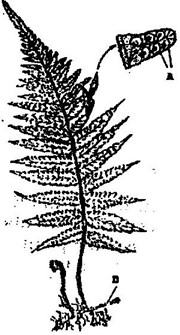
Name
- The parts labeled A and B (2 mks)
- The division to which the plant belongs (1 mk)
- Complete the table below on mineral nutrition in plants (3 mks)
| Mineral element | Function | Deficiency symptoms |
|---|---|---|
| Synthesis of proteins and protoplasm | Stunted growth and yellowing of leaves | |
| Calcium | ||
| Forms part of chlorophyll | Yellowing of leaves |
- Explain why Lamarck’s theory of evolution is not accepted by biologists today (2 mks)
- Name a disorder of human blood that is caused by mutation (1 mk)
SECTION B (40 MARKS)
- An experiment was carried out to investigate the rate of reaction shown below
Sucrose → Fructose + Glucose
For the products fructose and glucose to be formed, it was found that substance K was to be added and the temperature maintained at 370C. When another substance L was added, the reaction slowed down and eventually stopped.
(a) Suggest the identity of substances K and L (2 mks)
(b) Other than temperature, state three ways by which the rate of reaction could be increased (3 mks)
(c) Explain how substance L slowed down the reaction (2 mks)
- The diagram below represents a transverse section of a young stem
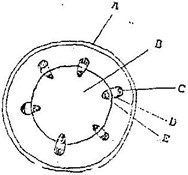
- Name the parts labeled A and B (2 mks)
- State the functions of the parts labeled C, D and E (4 mks)
- List three differences between the section shown above and one that would be obtained from the root of the same plant (3 mks)
 The diagram below shows an experimental setup to investigate an aspect of germination
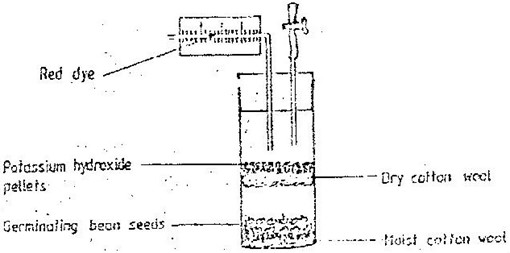 The diagram below shows an experimental setup to investigate an aspect of germination
(a) Why are sodium hydroxide pellets used in this experiment? (1 mk)
(b) Why is moist cotton wool used in this experiment? (1 mk)
(c) (i) By means of an arrow, indicate on the diagram the direction in which red dye would move during the experiment. (1 mk)
(ii) Give reasons for your answer in (c)(i) above (3 mks)
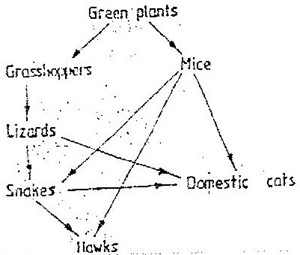
- Construct two food chains ending with a tertiary consumer in each case (2 mks)
- Which organism has the largest variety of predators in the food web? (1 mk)
- Name secondary consumers in food web (2 mks)
- Suggest three ways in which the ecosystem would be affected if there was a prolonged drought.
- The diagram below represents growing seedlings which were subjected to unilateral light at the beginning of an experiment
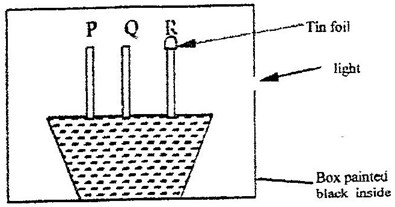
(a) (i) State the results of P, Q and R after 5 days? (5 mks)
(ii) Account for your answer in (a)(i) above (3 mks)
(b) If the tin foil were removed from the tip of the seedling R, what results would be observed after 2 days? (1 mk)
- State the expected results after 3 days if the box were removed (1 mk)
SECTION C (40 Mks)
Answer question 15 (compulsory) in the spaces provided and one question from this section in the spaces provided after question 17
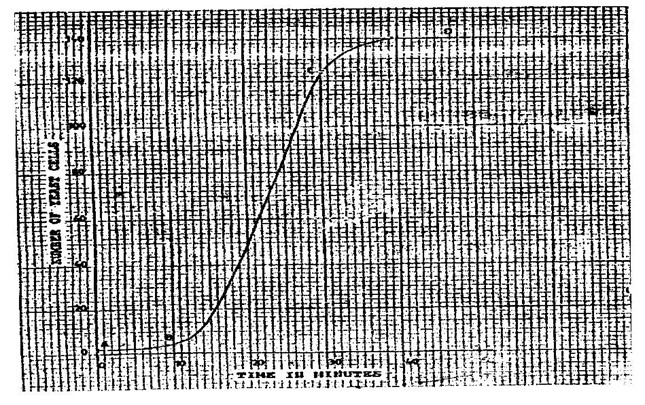
- The graph below represents the increase in the number of yeast cells over a period of 48 minutes
 The graph below represents the increase in the
 (a) Name the type of curve shown (1 mk)
(b) Determine the number of yeast cells after 26 minutes (1 mk)
(c) Work out the rate of cell division between 24 and 28 minutes (2 mks)
(d) After how long was the population of yeast cells 128? (1 mk)
(e) Name the phase of the curve labeled
(i) A to B
(ii) B to C
(f) Give reasons for the shape of the graph between points C and D (3 mks)
- State five factors which would cause human population growth to assume the shape of the graph curve between points B and C (5 mks)
- Describe how the quadrat method can be used to estimate the population of various species of plants in a given habitat (5 mks)
- (a) Describe how insect-pollinated flowers are adapted to pollination
- (b) Describe the role of each of the following hormones in the human menstrual cycle
- (i) Oestrogen
- (ii) Progesterone
- (iii) Luteinising hormone (9 mks)
- (i) Mammalian kidneys
- (ii) Green plants (5 mks)


