WHOLESALE TRADE
WHOLESALE TRADE
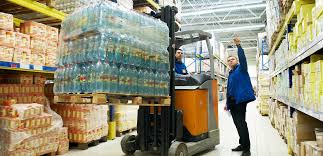
This is the trade which involves the buying of goods in large quantities from a manufacture and selling them to the other traders i.e retailers rather than consumers.
A wholesaler is the person who buys goods on bulk from manufacturers and sells them to retailers. The main role of wholesaler is “bulk breaking “i.e. buying goods in large quantity and selling them in relatively small quantity to retailers
A wholesaler is the person who buys goods on bulk from manufacturers and sells them to retailers. The main role of wholesaler is “bulk breaking “i.e. buying goods in large quantity and selling them in relatively small quantity to retailers
BROAD FEATURES OF WHOLESALER
- Is neither a producer nor retailer but act as a link between the two person i.e. producer and retailer.
- He generally specialize on the commodities.
- He doesn’t deal directly with consumer but sell through retailer.
- He requires huge capital to conduct the business.
- He buys in bulk but sells in relatively small quantities to retailers.
- Usually he keeps his stock of goods in the go down rather than in the shop.
- He gets profit mainly due to trade discount rebutes or cash discount granted by producers.
FUNCTIONS OF A WHOLESALER
A wholesaler perform the following functions in the process of making goods
- Buying and assembling
Wholesalers collect the agricultural goods in small quantities from small scale farmers (producer) and store them in the warehouses. He normally assembles goods from various producer so as a retailer may be able to buy what he wants from him at a right place, price, and time, quality and quantity.
- Warehousing
Wholesaler keeps a large stock of goods for retailer, he ensure that the goods are available to retailer at all time. The wholesaler helps to stabilize price by adjusting supply according to the demand.
- Grading , packaging and branding
Many wholesaler sort out goods according to size , shape ,quality etc they break goods into small lots re pack them and put their own branch names in this way the perform by grading and standardization, they ensure supply of uniform quality to retailer.
- Financing
Wholesaler provides finance to manufacturers / producer and retailer. They often buy goods from producer on cash basis and even make advance payment. Wholesaler generally sells goods to retailer on credit basis.
- Dispersing
A wholesaler distributes the assembled goods among retailer scatered all over the country . sells goods in small lots to retailers according to their advice.
- Transport
Wholesalers provide facilities for transportation of goods from the producer to their own godowns.
- Risk bearing
A wholesaler serves as a stock absorber. He bears a risk of change in demand and damage of goods when in transit and during storage , also the risk of bad debts by granting creadits to the retailer, a wholesaler therefore face many risks by buying bulk and storing goods in bulk.
- Market information
A Wholesaler forecasts the market condition. He collects information from retailers about change in tastes , fashion , buying habits of the consumers and passing them to producer. some wholesalers advice the retailer on which goodwill satisfy the needs of the consumers and at what price .
SERVICES RENDERED BY A WHOLESALER.
A wholesaler provides useful services to both manufacture or producer and to the retailer also as follows:
SERVICES TO MANUFACTURERS
- BULK BUYING
A wholesaler collects orders from large number of retailers. He buys goods in large quantities, therefore producers are seemed to be in trouble to collect small orders from a large number of widely scatered retailers.
- STORAGE
By buying goods in bulk , a wholesaler relieves the producers the barden of carrying large stock . producers do not have to make arrangement for warehousing.
- PRICE STABILITY/ ECONOMIES OF SCALE
Wholesaler stores goods during the stock season and do sell them during the period of peak demand by so doing, he prevents the violent fluctuations of prices.
- FINANCING
A Wholesalers makes prompt and sometimes pay in advance to the producer. therefore producer have to invest lesser capital in the business.
B. SERVICES TO RETAILERS
- PUBLICITY AND ADVICEWholesalers advertise their goods regularly, such publicity help the retailers in increasing their sales . some wholesalers also guide retailers in store layout and selling techniques.
- CREDIT
Wholesalers grant liberal credit facilities to retailers as a result, retailers can carry on a large volume of business ever with small capital.
- ECONOMIES OF SCALE
Wholesalers operate in the large scale, therefore they can obtain heavy discounts and rebate from producers and freight costs. so retailers buy goods from wholesalers at the reasonable prices.
- PRICE STABILIZATION
By regulating the supply of goods , wholesalers maintain stability in price which enable retailer to take a fair margin in profit. Wholesalers also help retailers to take advantages of favorable fluctuations in prices.
- PROTECTION FROM RISK
Wholesalers relieve the retailers from several risk by keeping huge stock and selling goods on credit . retailers now can bear less risk of price fluctuation and spoilage goods.
- INFORMATION ABOUT NEW PRODUCT
A Wholesaler keeps in constant touch with producer, therefore he has up-to –date information about new product and new varieties of a existing products. He passes on such information to retailers.
- REGULAR SUPPLIES
Wholesaler stock variety of goods . by so doing he ensure that supplies to retailers are available at right time ,right place and at reasonable price .
ELIMINATION OF WHOLESALERS
Wholesalers performs several useful functions and render many vital services . they provide a ready set outlets often to manufacturers and services as the source of stead supply of goods to retailer .therefore they provide a variable link between producers and retailers.
ARGUMENT IN FAVOUR OF ELIMINATION OF A WHOLESALER FROM CHAIN OF DISTRIBUTION
Some people insist that wholesaler exploit producer and retailer for this case they should be eliminated and their function should be taken over by producer and retailer .
The following are the arguments given in favour of elimination of wholesalers:
- Production in price
Wholesaler charges the substantial margin of profit add to cost of distribution .this result into higher
price payable by the ultimate consumer. hence price payable by consumer can be reduced by elimination of the wholesaler.
price payable by the ultimate consumer. hence price payable by consumer can be reduced by elimination of the wholesaler.
- Manipulations
Many wholesaler indulge in mal-practices such holding and adulteration .the push up the price by creating scarcity of goods such mal-practice can be eliminated by cancelling the function of wholesaler
- Faster distribution
Wholesaler are more transfer agents wholesaler up unnecessary made block in the process of distribution .their interference in the distribution channel obstruct the smooth and quick flow of goods from producer to retailers elimination of wholesaler goods can be supplied to consumer very quickly.
- Better alternatives: Large scale retailer such as chain store , departmental ,supermarkets etc. have adequate fund and space to buy goods in bulk directly from producer . they can bear risk and promote sales on large scale therefore they do not need the services of wholesalers.
- Perishable commodities:Thats to say when goods sold by wholesaler are perishable and cannot be stored for a long period of time.
- Purchasing by oder:Incase retailers or consumers buy by ordering directly.This makes a wholesaler jobless.
ARGUMENT AGAINST ELIMINATION OF WHOLESALER
Those who believe that the wholesaler trade is essential give the following/ argument.
- STORAGE OF GOODS
In case wholesalers are eliminated, have to maintain large stock and bear the risk of price fluctuations . but retailers are generally to bear this burden due to limited capital.
- SEASONAL PRODUCTS
Some product are produced through out the year but their demand arise only during a particular season.if wholesalers are eliminated, producers will have to keep huge bulk of stock like rain coats.
- FINANCING
In case the wholesaler are eliminated , retailer will have to invest more capital in business.
- NECESSARY FOR SMALL PRODUCERS
Small manufacturers or producer are not in better position in distribution of their product. Due to the large number of producers and retailer with small capital, wholesalers still dominate the field of distribution of goods
- UNDIVIDED ATTENTION
If wholesaler are eliminated .the producers will have to under take the distribution of his goods in the small lots to the large number of widely scatered retailers. as a result, he will not be able to concentrate fully in production.
- SAVING COSTS
Wholesaler are expert in the task of distribution . therefore they take expenses through more efficient marketing of goods . they maintain sale forces which call up on retailers regularly . their expenses are lower than those of manufacturers who sell directly to the retailers by eliminating the wholesalers costs of distribution may increase.
⇒ CONCLUSION DRAWN UP
By eliminating wholesaler , his function can not be eliminated .this function will have be performed by either producer / manufacturer or retailers
Therefore the elimination of wholesaler is desirable only:
In those case where producer or wholesaler can perform these function more efficiently than wholesalers therefore wholesalers are essential links in distribution of all such commodities where as producer and retailers are small and unable to consume the burden of wholesaler trade.
SERVICES OF A WHOLESALER TO THE PUBLIC
- By holding large stock and releasing them regularly, a wholesaler helps the consumers to get stead supplies through frequently replacement.
- He plays an important role in keeping price stable which is obviously advantages to the consumers /public .
- He helps to make the process of distribution be smooth.
THE SOURCE OF SUPPLY OF A WHOLESALER
The source from which a wholesaler obtains his supplies of course depends to the particular time of business but in general the source of supplies are as follows:
- Home grower for perishable goods
- Commercial sales e.g. coffee ,tea, etc
- Home manufacturers for manufactured goods
- Import agent for over seas products
- Products exchanged for commodities e.g. grains , materials etc.
TYPES OF WHOLESALERS
Wholesalers can be classified according to the areas saved by them or according to the goods offered by them . moreover according to the services performed by them .hence we have:
a. ACCORDING TO GEOGRAPHICAL AREAS
- National wide wholesalers
These are wholesalers who are established in all major towns in order to save all parts of the country .This types of wholesalers operate in large scale like Tanzania training cooperation (TTC).
- Regional or local wholesalers
These wholesalers operate only in particular area of the country and may offer wide range of goods or a specified range of goods like (TTC)
- Export and import wholesalers
These are wholesalers specialized in foreign trade , they may sell out side the country (export ) or buying from outside the country (import)
b. ACCORDING TO THE GOODS OFFERED BY THEM
- General wholesalers
These wholesalers offer the varieties of goods in the number of field e.g. groceries ,hardware ,frozen food, sports goods and even house holds.
- Specialized wholesalers
these are wholesalers who carry a particular range of goods .this kinds of wholesalers usually offer great variety of goods but which are in one line of production or field of production e.g. books, soft drink , hardware etc.
a. ACCORDING TO THE SERVICES RENDERED BY THEM
- Full services wholesalers
These are wholesalers who provides many services which are required to push up sales those marketing services are like to buy and assembling of goods , storage , transportation etc full services wholesalers are such as general wholesalers ,export and import wholesalers and specialized wholesaler
- Limited services wholesalers
These are those who perform particular function and leaves the other . this means they only perform few function and these are as follows:
− Mail order
− Truck wholesalers
− Drop shippers /dark jobber
− Cash and carry wholesalers
− Risk or pack of jobber.
PROBLEMS OF WHOLESALE TRADE
Traders in East Africa experience a number of problem that prevent them not only from maximizing their profit but also from providing the types of magnitude of services to the customers that are available in the more commercial developed countries, some of them are :
- Small scale operation
Due to the lack of finance most traders in E. Africa operate in very small size which means they can not buy their goods in bulk and hence fail to get large discounts.
- Lack of capital
Many traders face the problems of un sufficient money to run smoothly the business . This makes /results traders to conduct mostly on cash basis rather than credit.
- Poor transport and communication
This makes difficult in the process of transport and distribution of goods and services to reach the users /consumers.
- Lack of training
Many people who enter in the business world thinking that trade is simple “give and take affairs ” soon discover that are ill equipped to handle the intricacies of the professional.

CHAIN OF DITRIBUTION
The following steps would usually be involved in the distribution of goods and services from the producers to the final consumers:
- The producers may sell his product either to the whole seller or to a large scale retailer.in both cases, the quantities involved are very huge and some may operate their own retail outlets.
- The wholesaler also sells goods and services to the retailers.The quantity in which they sell to them (retailers) is always smaller than the quantity in which they buy.
- Some small scale retailers may purchase their goods from large scale retailers or retail shops copareted by manufactures themselves.
- The retailers sells goods to the final consumers.
CHAIN OF DISTRIBUTION