


SECOND TERM
SUBJECT: ENGLISH LANGUAGE CLASS: JSS 2
SCHEME OF WORK
WEEK TOPIC
- Revision of last Term’s work
- Speech Work: Diphthongs
- Writing: My New Year Resolution. Writing a Report, Outline and Features
- Grammar: Requests and Commands Pg. 94
- Reading/Comprehension: Extracts from Things Fall Apart P.91
- Writing: A Letter to One’s Parents
- Speech Work: Rhymes
- Grammar: Prepositions
- Comprehension: A Formal Thank You Letter P. 109
- Writing: Argumentative Essay
- Speech Work: Word Stress
- Grammar: Adverbial – Manner, Time and Place
- Comprehension/Summary; Unit 8 P.124
- Writing – Argumentative
- Speech Work: Consonant Clusters tr and str P.124
- Grammar: Punctuation Mark: Full stop, Comma, Exclamation mark, Question mark, Colons and Semi-Colons
- Vocabulary Development: Words to do with Law and Orders P.126
- Writing: Formal Letters (To the Principal)
- Speech Work: Vowel Contrasts /Ӡ:/, /˄/, /e/, /ә/
- Grammar: Punctuation Marks P.132
- Listening Comprehension: A Conversation About a Crime P.130
- Writing: Narrative Essay: My Last Birthday Party
- Speech Work: Emphatic Stress
- Grammar: Demonstratives P.145
- Reading/Comprehension: Life of Aminu Kano P.147
- Vocabulary Development: Science and Technology
- Writing: Expository Essay: Entrepreneurship
- Speech Work: Consonant Contrasts /s/ and /z/, /Ә/ and /Ө/
- Grammar: Regular and Irregular Verb
- Listening Comprehension: A Talk about Kofi Annan P.144
- Writing: Topic Sentences P.146
- Speech Work: Consonant Contrast /k/ and /g/
- Grammar: Subject and Verb Agreement
- Comprehension: What Our Bodies Are Made of P.152
- Writing: Report of a Science Experience P.16
- Speech Work: Consonants /m/, /n/, / /
- Grammar: Articles
- Vocabulary Development: Names of Various kinds of Crops P.153
- Writing: Review of Letter Writing and Essay
- Revision (literature)
- Examination
REFERENCES
- Effective English JSS2 by Evans
- Exam Focus for JSCE by Bolaji Aremo
- The New Students’ Companion by Chris Talbot
- English Grammar for JSS by P.O Olatunbosun
- Longman Dictionary of Contemporary English
WEEK ONE
TOPIC
- Revision of Last Term’s work
- Speech Work: Diphthongs
- Writing: My New Year Resolution. Writing a Report, Outline and Features
- Grammar: Requests and Commands Pg. 94
- Reading/Comprehension: Extracts from Things Fall Apart P.91
- Writing: A Letter to One’s Parents
- Revision of Last Term’s Work
Content
During the first term, we were able to study the following:
- Parts of Speech
- Transitive/Intransitive Verbs
- Types of composition – Narrative, Descriptive, Argumentative, Expository
- Elements of Composition Writing – Introduction, body and conclusion, pre-writing, editing, arrangement of ideas.
- Question Tags
- Active and Passive Voice
- Tense: Present, Past and Future
- Conjunction: Types and Future
- Prepositions and Prepositional Phrases
- Figures of Speech
In this lesson, we shall briefly talk about each of the highlighted items.
- Speech Work: Diphthongs
/ei/: play, pale, pail, state, cake, day, wait
/ai/: pie, my, height, plight, mite, write, right
/ƆI/: oil, boy, toil, toy, foil, noise, joy
/әu/: go, hoe, home, no, know, coat, goat, hose, rose
/au/: house. how, now, cow, row
/ɪә/: beer, here, near, idea, fear, cheer, beer, serious, peer, tier
/eә/: pair, air, hair, bare, there, fare, bare, chair, there, bear
/uә/: tour, moor, poor, sure, lure, endure
EVALUATION: Underline the words with diphthongs in the following sentences:
- Rome was not built in one day.
- He alone went to raise funds to build the stadium.
- Horse riding is both a skill and an art.
- Writing
Content: My New Year Resolution
In this type of essay, you are expected to make a summary of what you did the previous year.
Discuss the things you were able to achieve in the previous year.
The things you were unable to achieve.
Discuss in details what you intend or resolve to do or achieve this year.
Discuss what you will do in order to achieve these set goals.
EVALUATION: Write a comprehensive essay on this topic: My New Year Resolution.
- Grammar: Requests and Commands
Content: To learn structures for requests and commands
Request making could take any of the following forms.
- Request from a student to a senior person e.g. a teacher, use please and could. E.g.
- Please could you explain how to do this sum?
- Please and can E.g. Can you tell us how to do this sum, please?
- Request from one student to another.
- Please and can or could. E.g. Can you help me carry this table, please?
- I need a ruler, could I borrow yours, please?
You can also say what you want and add an if clause, E.g. I’d like my pen back, if you’ve finished with it.
- Requests from a senor person to a student – these usually have the force of commands
e.g The imperative (a command) e.g. Give these pencils out!
a. Will you, e.g. Will you close the door, please?
b. Would (a request), e.g. Would you close the door, please?
c. Would you mind and verb in the –ing. E.g. Would you
mind giving these pencils out, please?d. I’d like you to …E.g. I’d like everyone to hand their work in tomorrow, please.
EVALUATION: Effective English JSS 2 (PG 95. Practice2 1-3)
READING ASSIGNMENT: Effective English JSSS 2 pgs 94 – 95
- Comprehension: Extracts from Things Fall Apart
Content: To Understand and Enjoy an Extract from a Novel.
This passage is an extract from Chinua Achebe’s Things Fall Apart
Okonkwo has just taken part in the killing of Ikemefuna, his adopted son. The oracle of the village had said that the boy must die, but one of the elders had told Okonkwo that he ought not to take part in his son’s death.
EVALUATION: Practice 2 (1-10) P.92 Effective English JSS 2
READING ASSIGNMENT: Effective English JSS 2 P.92
- Writing: Informal Letter
Content: To Write a Letter to One’s Parents
The composition that is set here has these detailed aims:
It gives you the opportunity to:
- Explain something that has happened.
- Make a polite request.
EVALUATION: Imagine that you are on holiday with the family of one of your friends and your friend has been admitted to hospital. Write to your parents, explaining what has happened and asking them to send something to interest your friend. Before you begin, read again the letter in the vocabulary section on P.101
READING ASSIGNMENT: Effective English JSS 2 P.104.
GENERAL EVALUATION/REVISION
Change the following active sentences into the related passive sentences:
- She broke it carelessly.
- You can catch a rat with the trap.
- They have written a letter to the commissioner.
- They are now writing another to the governor himself.
- Chinyere brought the workers some water in the morning.
WEEKEND ASSIGNMENT
- Fill the blank space in each of the following sentences with: ‘a’. ‘an’ or ‘the’
- Mrs. .Bako is __________ women. She saw ________________ man and __________ animal.
- I saw ________ lion and _______ elephant at _____ zoo of _____ University of Lagos.
- He is __________ Governor of Lagos State
- Mr. Bowen is ______________ European who works in _________University.
- He is kind to ____________ (a man and an animal: man and animal).
- Complete each of the following sentences with best option from the alternatives lettered A-E.
- The _____________ has referred the patient to an eye specialist. A. dentist B. family doctor C. sister D. pharmacist E. ward attendant
- There is little hope because the patient is now in a ___________ condition. A. poor B. critical C. deadly D. chronic E. fatal
- Those who sustained injuries during the accident have been rushed to the ___________ A. mortuary B. maternity C. theatre D. ward E. casualty
- Before I start using this medicine, let me read the information on the _____________. A. measure B. transfusion C. nature D. dosage E operation
- She has not been feeling fine since she drank that ________ water. A. hygienic B. epidemic C. contaminated D. infectious E. contagious
WEEK TWO
TOPIC:
- Speech Work: Rhymes
- Grammar: Prepositions
- Comprehension: A Formal Thank You Letter P. 109
- Writing: Argumentative Essay
- Speech Work: Rhymes
Rhymes are words which have the same sounds, i.e, vowels or consonants.
Examples:
greet seat
fight bright
cow how/now
bend send
you ewe
key quay
high buy
see bee
paid laid
seat beat
height bite
port thought
heaven seven
feather weather
curtain mountain
pretty city
rain pain
know no
EVALUATION: Write out five words that rhyme.
READING ASSIGNMENT: Exam Focus English JSCE p. 143-144
- Grammar: Parts of Speech
Content: Prepositions
Prepositions show relationship between people, places and things, i.e show relation between one thing and another. It also relates a noun or a pronoun to another word in the sentence.
Examples:
She left her muddy shoes on the mat.
I am terrible at tennis but I like the game.
I am going to town.
There is a snake under the table.
They have been writing since three o’clock.
We went to town with my mother.
Many things can be made from rubber.
Examples:
About before down on towards
Above behind during out under
Across below for opposite underneath
After beneath from over until
Against besides in around up
Along between into since upon
Among beyond near through with
Around by of till within
At despite off to without
EVALUATION: Write five prepositions and form sentences with them.
READING ASSIGNMENT: Exam Focus English JSCE pg.
- Topic: Comprehension: A Formal Thank You Letter.
Contents: To Understand a Letter
This passage is a formal thank you letter by Joko Samuel.
Secretary, Young Farmers’ Club appreciates Mr. O.F. Awe, the project officer of Fashola Farm Settlement who came to give them a talk on farming.
EVALUATION: Practice 2 (1-8) Effective English JSS 2.
READING ASSIGNMENT: Effective English JSS 2 p 109-110
- Writing: Argumentative Essay
Content: A father is more useful to a child than a Mother.
To help you write this essay, follow this guideline.
Have a title
Who is a father?
What is his role in the family?
Types of Fathers – salary earners or a business man.
Scale of salary or rate of turn over.
Father as a Shepherd – protecting his family.
Planning the future of his children.
Ownership of children – before and after death.
The role of a father in a child’s life generally etc.
READING ASSIGNMENT: College Essays for Bk. 8 p.49.
GENERAL EVALUATION: Fill in each blank with the correct preposition:
- He was walking __ the road when he stepped __ a puddle __ water.
- Keep on climbing __ the tree. Don’t look __ or you will feel dizzy and hold tightly __ the branches.
- My parents have gone __ a dinner and I have __ stay __ home to look after my younger sisters.
- We have __ leave today.
WEEKEND ASSIGNMENT: Effective English JSS 2 P – 123 1(a) and (b) and 2 (1-5)
B) Fill the blank space in each of the following sentences
Present Progressive Tense Present Tense Past Tense Present Perfect Tense
- I am finding it out. I _________ it out. I _____ it out I __________ it out
- We are going out. We ________ out. we ________ out we ________ out
- He ________ it. he gives it. He ________ it He ________ it
- He is weaving. He _________. He _________. He ________.
- It is speeding. It __________ . It __________. It _________.
C) Fill the blank space in each of the following sentences with the correct form of the verb in brackets in front of each sentence.
- I __________ the book in the shelf last week (put)
- A snake ___________ the boy last week (bite)
- My teacher __________ me yesterday (teach)
- He was __________ when I saw him (eat)
- He has _________ like a fish (swim)
WEEK THREE
TOPIC:
- Speech Work: Word Stress
- Grammar: Adverbial – Manner, Time and Place
- Comprehension/Summary; Unit 8 P.124
- Writing – Argumentative
- Speech Work
Content: Word Stress
Stress is the quality or degree with which one pronounces a sound or a syllable. It is the force with which a sound is pronounced.
A stress syllable is indicated by placing a stroke at the beginning of the syllable or written in capital letters. A stressed vowel is one that is said with more energy, is louder and more prominent.
Examples
BEtter GARden
HOTly STRONGly
SEcond MAnner
WANted COMfort
PAtience
However, a louder or higher tone does not always guarantee a stronger stressed syllable. By contrast, unstressed vowels are weak and not loud and sometimes not clearly heard.
Some Rules of Stress
- Monosyllables are not stressed.
Examples: buy, hawk, tone, eat etc.
- Disyllabic words, that is, words with two syllables are mostly stressed on the first syllables when they are nouns and stressed on the second syllable when they are verbs. Though, there is an exception when a stressed syllable in a di – syllabic word is weak, the stress falls or shifts to the next syllable.
Nouns Verbs
CONtract conTRACT
OBject obJECT
CONtest conTEST
REfuse reFUSE
PROject proJECT
SUBject subJECT
REcord reCORD
PREsent preSENT
Adjective | Verb |
ABsent | abSENT |
PREsent | preSENT |
Other nouns are: BIScuit, BIble, PoLICE, POlish, poLITE(adj), MOney, MONkey etc.
- The suffix ‘ion’ added to some words takes a stress on the preceding syllables i.e the syllable immediately before ‘ion’ as in: proMOtion, oCCAsion, persSUAsion, circuLAtion, calcuLAtion.
- Syllables with central vowel /ә/ or schwa are stressed. E.g: aBOUT, TEAcher, FAther, BUtter, PASture etc.
- Syllables that end with syllabic /l,m,n/ are not stressed. E.g: LIttle, BUtton, COtton, ABle, enJOY, CAstle, SUckle.
- Polysyllabic words that end with these suffixes “-ic, -ian, -ial, -sive” are stressed on the penultimate syllable i.e, second to the last syllable. E.g: draMAtic, speCIfic, imPREssive, coLOnial.
- If the words end with these suffixes “-ate, -ity, -iate, -ise, -fy”, stress the third syllable counting from the last syllable. cerTIficate, capTIvity, FORtunate, EXercise.
- Most words ending with these suffixes “-sim, -ive, -ure, -ry, -ize” in four syllable words are stressed on the 4th syllable from the end. Capitalism, comfortable, profitable, legislative, agriculture, personalise, nationalize.
- Words ending with these suffixes (-ogy, -phy, -cal, -ant, -ment) are stressed on 3rd syllable from the end.
EVALUATION: Stress the following words: delicate, commission, distinction, fortunate, understand, delirium, presently, dramatic, refugee, strategic, occasion.
READING ASSIGNMENT:
- Grammar: Adverbial
Content: Adverbials of Manner
An adverb is a word or a group of words that describes either the verb, or the whole sentence. They tell us about how something is done, when or how often it is done, where it is done, etc. An adverbial that is just one word is usually called an adverb. An adverbial made up of several words is an adverbial phrase.
Adverbials have different kinds of meanings. An adverbial of manner describes the manner or way an action is performed. Adverbs of manner often end in –ly for example:
- The people waited impatiently.
- He shouted angrily.
- They shouted slowly.
EVALUATION: Choose adverbs from the box to complete the sentences which follow:
Note: Well is the adverb form of good.
Patiently Hungrily Helpfully Thirstily | Suspiciously Angrily Softly Well | Obstinately beautifully Noisily Badly |
- Dieng waited ___________ in the queue.
- The typewriter eyed Dieng ______________.
- The fat woman ___________ left the Post Office.
- The children ___________ waited for their supper.
- The clerk ___________ refused to accept it.
- My sister dresses ______________.
Adverbial of time and place
Adverbial of time and place answer the questions when? and where? E.g.
- When did she arrive?
- She arrived at twelve
- Where did they go?
- They went to Kano.
When all three types of adverbial occur in the same sentence, thy normally go in this order
Manner Place Time
She arrived safely in Jos at two.
He walked slowly to school yesterday.
EVALUATION: Make up 5 similar sentences.
- Comprehension: Unit 8
Content: To read, enjoy and act a scene from a play.
In this scene, the mother of a girl is asked if she will agree to let Henry Ajai marry her daughter. The asking has to be done in the tradition manner, and there has already been a long exchange of greeting and polite enquiries, crops and cattle.
EVALUATION: P.125 Practice. 2 (1-8) Effective English JSS 2.
- Writing: Argumentative Essay
Content: Indiscipline among secondary schools students. Who should be responsible, parents or teachers? An argumentative essay is very much like a debate where two opposing views of the same issues are presented and defended as rigorously as possible. It is a controversial writing that suggests the bringing forth of facts to support or refute an argument. It involves ordered reasoning and is a process of organizing and stating objectively the fact and reasoning surrounding a particular stance or point of view.
EVALUATION: Write in support or against this proposition, Indiscipline among secondary school students: who should be responsible parents or teachers?
GENERAL EVALUATION/REVISION
Fill in the blanks with the correct form of the words in the bracket.
- The man in dark glasses is behaving very _____ (suspicious).
- The dog attacked the thief _____ (ferocious).
- The accident victim was bleeding ______ (profuse).
- My brother drives very ______ (reckless).
- The little girl trembled ______ when she saw the huge dog (fear).
WEEKEND ASSIGNMENT
Choose the best options
- They gave my friend and ____________ the money. A. me B. I C. we
- Twenty years ___________ not enough for one to prepare for life. A. was B. is C. should not be
- He was treated __________ a delicious meal at the party. A. with B. to C. for
- I saw Bunmi, Shola and Ngozi when they were going to school ___________. A. Weren’t they? B. didn’t I? C. were they
- The principal, as well as two of his staff ____________ travelling tonight. A. are B. is C. were
THEORY
Complete each of the following sentences with the proper form of the verbs in the brackets.
- The boy ____________ the gates for the car to come in every morning (open)
- My friends will ___________ this evening (travel)
- My younger brother is ____________ an interview next week (attend)
- Mrs. Ajayi ______________ up at 5:50am every Sunday (wake)
- We are not __________ to make a noise in the class (allow)
WEEK FOUR
TOPIC:
- Speech Work: Consonant Clusters tr and str P.124
- Grammar: Punctuation Mark: Full stop, Comma, Exclamation mark, Question mark, Colons and Semi-Colons
- Vocabulary Development: Words to do with Law and Orders P.126
- Writing: Formal Letters (To the Principal)
- Speech Work: Consonant Clusters tr and str P.124
Content: tr and str cluster
There is a consonant clusters in these words:
Train strain trap strap
Tray stray treat street
Trip strip truck struck
EVALUATION: Write and pronounce three words each that have either the cluster tr or str.
READING ASSIGNMENT: Effective English JSS 2 p 124.
- Grammar: The Full Stop
Content: Usages
Punctuation marks are used to mark a pause or a stop in a sentence.
- Question marks ? are used at the end of a direct question: What is your favourite game?
Where is that brother of mine hiding?
- Comma , is used to separate the items in lists of words, phrases and clauses. I have invited Bimpe, Ahmed, Audu and Aisha.
Don’t worry, you still have time to dress before the show.
- Full stop . is used at the end of a sentence: He looked out of the window. My baby brother goes to nursery school. Full stop is also known as the period. It is used:
- For marking the end of a gentle command e.g.
- Eat your food quickly.
- Do not waste our time
- For making the end of a statement (i.e. a sentence that merely supplies some piece of information): He is a nuisance
She is wonderful.
- For indicating abbreviations (i.e. shortened forms of words or phrases) e.g. O.A.U – Organisation of African Unity
Mr. – Mister, U.N – United Nations.
Dr. – Doctor N.U.T – Nigeria Union of Teachers.
Note: However, that the full stop is sometimes omitted in abbreviations. It is therefore also possible to write some of the above examples without any full stop e.g. OAU, Mr. ECOWAS.
- Apostrophe ‘ is used with ‘s’ to show possession: Akosua’s shoes, Nurses’ uniforms.
- Colon : is used to show that something more is to follow such as before explanations before a list and to introduce quotations.: I have to call the plumber: the pipe is leaking.
The colours of the rainbow are as follow: violet, indigo, blue, green.
- Semi – colon is used where the meaing of two independent sentences is closed connected.
It’s a good idea; let’s hope it will work
- Inverted comma ‘ ‘ or Quotation marks are used to highlight a slang technical term or a word which the writer wants to draw attention; in direct speech to show the actual words of the speaker; used to highlight names of books. Etc.
I read ‘Snow White’ when I was seven.
The peasant said, ‘I have an idea’.
Scrub the ‘floor’ with a clean brush.
EVALUATION: Punctuate this sentence correctly:
i think it is impossible said the cat that you have the power to change yourself into a rat or a mouse impossible cried the ogre you shall see that at once.
READING ASSIGNMENT: Exam Focus. English Language for JSS P. 145-147.
- Vocabulary Development
Content: Words to do with Law and Order P. 126.
- Arrest: Police arrest someone when they strongly suspect him of a crime.
- Behind bar: i.e. in Prison. When a person is released from prison, he is set free, i.e. given his freedom.
- Charge: When a crime has been committed, the suspect is charged with that crime (he may be charge with murder or with theft)
EVALUATION: Exam Focus: English Language P.120 Revision Exercise (1-5)
Effective English JSS 2 pg 126 – 17 Prac. 3
- Writing
Content: Letter to One’s Principal
What are formal letters? These are business or official letters. They are sent to holders of posts and not to particular persons. These types of letters include letters of applicants, letters in answer to an advertisement, commercial correspondence, letters of references and testimonials. The person who receives such a letter is interested to know about the matter that caused you to write, not about your personal life or a problem. He is also unimpressed by your praises of him or your concern for his health and that of his family, so, in the introduction of such a letter, avoid unwarranted or distracting preambles.
Features of Formal Letters:
- Address: This kind of letter requires two addresses – the writer’s address and the address of the reader or recipient. The writer’s address should be at the top right hand corner of the writing materials as in the informal letter. The address of the recipient should come below the date but as the left hand corner.
- This is illustrated below: 3, Olayinka Street,
Omoroga,
Meiran,
Lagos State.
14th January, 2016.
The Manager,
The Punch Newspaper,
314, Albert Ogunde Road,
Mokola,
Ibadan.
Dear Sir,
APPLICATION FOR EMPLOYMENT
________________________________________________________________________________________________________________________________________________________________________________________________________ Body of the letter _____________________________________
___________________________________________________________________________________
Yours faithfully,
Signature
Adeyemo Ademola
- Salutation: After the second address, you write ‘Dear Sir’ or ‘Dear Madam’ or ‘Sir’ or Madam’ immediately below. Under this, you give the title of the letter and this should be underlined. You must capitalize all words in the title or capitalize only the first letter of the key words in the title
- Body
Complimentary close (conclusion)
Yours faithfully,
Signature
Ojo Makinde
Note
- The ‘Y’ of ‘Yours’ must be capital letter while the ‘F’ of faithfully must be small letter.
- There must be a comma after faithfully.
- The letter should end with the writer’s full names – first name and surname and signature. The signature should be above your name. You may wish to write your official status below you name.
- The complimentary close should be at the right hand corner bottom of the letter.
Warning:
Don’t use:
- Yours obediently
- Yours truly
- Yours in the lord
Expression: The tone of this type of letter is the exact opposite of the informal. There should be no room for colloquial expressions, slang clichés and idioms e.g.
- Let me know what I owe you (informal)
- Kindly render your account. (formal)
More examples
Formal Informal
Feasible workable
Recompense pay back
Affable friendly
Vivacious lively
Comprehend understand
Centralized forms are not acceptable.
Use full form: couldn’t, will not etc.
Sentences must be short and more direct.
EVALUATION: Write a letter to the principal of your school requesting for a 3 day permission to visit your sick grandmother in the hospital.
READING ASSIGNMENT: Exam Focus English JSCE pg 8 -10.
GENERAL EVALUATION
- With the aid of a dictionary write the meaning of the following:
a. solicitor b. defendant c. client d. evidence e. verdict f. witness g. magistrate.
- Punctuate the following:
- A few weeks after the registration exercise Joe Udo wrote Rose an official letter in his capacity as faculty officer. He summoned her to report to him ostensibly to clarify certain things on her registration forms so as to put the records in good order so that Rose might not suspect his intention directly he also summoned three other students including the boys
- 1. Punctuate this sentence: Where is the bag
2. What is the meaning of this legal term ‘plaintiff’.
WEEKEND ASSIGNMENT
Complete each of the following sentences with the best option.
- All the following except ___________ can be found in a court of law A. moderator B. police officers C. judges D. magistrates
- Someone complained against in a court of law is the __________. A. lawyer’s client B. defendant C. plaintiff D. accused
- The statement: The accused was acquitted and discharged means that the accused was A. found guilty but set free B. found guilty and jailed C. found innocent and set free D. found guilty and jailed
- The accused has _____________ against the judgment. A. appealed B. spoken C. written D. requested
- A country’s Armed Forces are made up of its ___________ A. Army, Navy and Air force B. Police, Army and Air Force C. Navy, Army force and Police force D. judges, Air force and police force
WEEK FIVE
TOPIC:
- Speech Work: Vowel Contrasts /Ӡ:/, /˄/, /e/, /ә/
- Grammar: Punctuation Marks P.132
- Listening Comprehension: A Conversation About a Crime P.130
- Writing: Narrative Essay: My Last Birthday Party
- Speech Work
Content: Vowel Contrasts
/e/ | /Ӡ:/ |
End | Earned |
Yen | Yearn |
Debt | Dirt |
Best | Burst |
Edge | Urge |
| /Ӡ:/ |
Cub | Curb |
Such | Search |
Shut | Shirt |
Hub | Herb |
Fun | Fern |
EVALUATION: Write out five words for each sound.
READING ASSIGNMENT: Oral English for Schools and Colleges by Sam Onuigbo, M.A. pg. 7 – 19
- Grammar: Punctuation Marks.
Content: Commas around Inserted Works.
Example
And what apart from the honour of being entertained by my family do you seek here today? Notice the two commas. They separate off the words underlined above and show that the basic sentence is: And what do you seek here today? The comma shows that the words underlined are not part of this basic sentence. It is as if they have been added in or inserted.
Here is another example: we have heard that you have a daughter, unmarried, who is chaste, beautiful and obedient. It is as if unmarried had been inserted as an extra word.
EVALUATION: Effective English P. 132. Prac. 4. (1-5)
- Listening Comprehension
Content: To understand a conversation about a crime.
Two friends are talking about a crime of forgery. Forgery means printing false currency notes and exchanging them for real money, listen to your teacher as she/he reads the passage to you.
EVALUATION: Complete the table on page 130.
- Writing: Narrative Essay
My Last Birthday Party
Here are some guidelines to help you in this essay writing.
- When were you born? And where?
- How old are you now?
- When last did you celebrate your birthday?
- Enumerate the preparation you made e.g. invitation, gifts, menu, music, venue etc.
- What happened on the day – dressing, photograph, gifts given etc.
EVALUATION: In not less than two pages. Write an account of your last birthday party.
GENERAL EVALUATION/REVISION QUESTIONS:
Change the verbs in the bracket to correct form to complete the sentences below.
E.g. Bello is ______________ a letter (write)
Bello is writing a letter.
Now, do this.
- The child had _____________ the entire bottle of water before I came in (drink).
- Ojo has ______________ many plans before the chairman of the company (lay)
- His mother, together with his sister _____________ in the bakery (work)
- Neither the back tyre of the bicycle nor the brakes ____________ faulty (be)
WEEKEND ASSIGNMENT: Effective English for JSS 2 p.g. 151 Practice 2 & 2b
Choose from the list in brackets the preposition that best completes each of the following sentences.
- The advertised price was subject _____________ change. (at; in; to)
- Students must be able to abide _______________ their own decision (to; by; on)
- He bought his dress ______________ the same price you bought yours. (on; with; at)
- We have not arrived _______________ any decision on the matter. (by; with; at)
- A member of the audience said that he did not agree _____________ the speaker’s remarks. (to; with; about)
WEEK SIX
TOPIC:
- Speech Work: Consonant Sounds
- Grammar: Demonstratives P.145
- Reading/Comprehension: Life of Aminu kano P.147
- Vocabulary Development: Science and Technology
- Writing: Expository Essay: Entrepreneurship
- Speech Work: Consonant Sounds
Content: Sound /p/ and /f/
To make the sound /p/, the upper and lower lips are together to obstruct the flow of the airstream from the lungs, then the air is pushed out between them. To make the sound /f/, the upper teeth touch the lower lips and the air passes between them, there is a continuous frictional noise as the airstream passes. The sound /f/ and /p/ are not voiced.
Listen and say:
pig fig plop flop
pin fin please fleas
pull full play phase
pat fast cap loaf
EVALUATION: Write five words each that have /f/ and /p/ sounds.
- Grammar: Demonstratives
Content: Demonstrative Adjectives
This, that, these and those can be used as demonstrative adjectives or as demonstrative pronouns. When demonstratives are used as adjectives, they point out nouns and are followed by the nouns which they point out. The table beneath shows their use as demonstrative adjectives.


‘Nearer’ (this, these) Farther away (that, these)
Singular This mango is a big one. That mango is small.
Plural These mangoes are enormous. Did you like those mangoes?
When demonstratives are used as pronouns, there is no noun after them. They point out specific persons, places, and things referred to.
(Close) (Far)
Singular: This That
Plural: These Those
E.g.
- What is this?
- Those are my books.
- This is going to be fun.
In a comprehension test, you may be asked to explain the grammatical function of a word or group of words. If you had to explain the grammatical function of those in sentence 2, you could do so like: Those is a plural demonstrative pronoun. It refers to some books which the speaker is pointing out, and it acts as the subject of its sentence.
Example 3
I like those pictures but I don’t like these.
In this example, those refer to some pictures which the speaker is pointing at, but it is the object of its clause, not the subject.
- Aminu Kano received awards from several governments. These included the government of Guinea and Benin.
In the text, these is a plural demonstrative pronoun. It refers to governments mentioned in the previous sentence it is the subject of its sentence.
EVALUATION: Effective English JSS 2 P. 146 practice 2 (1-2)
READING ASSIGNMENT: Effective English JSS 2 P. 145-146
- Comprehension
Content: Life of Aminu Kano
This passage is about the life of Aminu Kano. While reading the two parts of the stories, try to understand what sort of a politician he was and what his aims and interest were.
EVALUATION: Effective English JSS 2 P. 139-140
READING ASSIGNMENT: Effective English JSS 2 P. 139-140
- Writing
Content: A Short Life History of an Important Person
Plan your account of the person’s life.
First, work out what each paragraph will be about. Here is a possible plan:
Paragraph 1: Introduction; summary of the person’s main achievements.
Paragraph 2: Early life
Paragraph 3: Main Events in his/her political life
Paragraph 4: Aims and Interests.
Paragraph 5: Death and Conclusion
EVALUATION: In not less than two pages, write a detailed account of a popular political leader that interests you.
READING ASSIGNMENTs: Effective English JSS 2 P. 146
Literature: Rage Act 2 Scene 3-5
GENERAL EVALUATION/REVISION EXERCISES
- Make 5 sentences each, using this, that, these and those as demonstrative pronoun.
- Make 5 sentences each using this, that, these and those as demonstrative adjective.
WEEKEND ASSIGNMENT
Choose the best option.
- Sola writes an account of her daily activities in an/a ____________ A. directory B. dictionary C. dairy D. atlas
- We lifted the lid off the box and examined its ______________ A. materials B. items C. inside D. content
- My mother ______________ is a teacher, gives me private lessons at home. A. which B. who C. whom D. that
- The villagers helped ________________ A. each other B. themselves C. one another D. their selves
- Of the two girls, Tobi is the ____________. A. tall B. taller C. more tallest D. more taller
THEORY
Correct the following sentences by choosing the right verbs from the brackets to fill in the gaps.
- All the equipment he bought ____________ out of order. (is, are)
- The nature of all his problem ______________ still unknown (are, is)
- Only an observer from one of the European Countries ____________ allowed to cover the election (was, were)
- Either John or I ________________ supposed to do the work (is, am)
- A knowledge of the rules of grammar _______________ useful (is, are)
WEEK SEVEN
TOPIC:
- Speech Work: Consonant Contrasts /s/ and /z/, /ð/ and /Ө/
- Grammar: Regular and Irregular Verbs
- Listening Comprehension: A Talk about Kofi Annan P.144
- Writing: Topic Sentences P.146
- Speech Work:
Content: Practicing sounds /s/, /z/ and /Ө/
Listen and say:
/s/ | /z/ |
Sip | Zip |
Said | Zed |
Seal | Zeal |
Soon | Zoon |
Sink | Zinc |
use (noun) | use (verb) |
Place | Plays |
Loose | Lose |
Hence | Hens |
/Ө/
Theme, thank, thick, thorn, thin, both, sheath, north, forth, bath, through, thief, thought, throw, third, pith, path, oath, earth, cloth, breath, wrath, both, north, moth.
/ð/ this, those, that, breathe, writhe
EVALUATION: Do the minimal pairing of these words.
READING ASSIGNMENT: Effective English P. 145, 149.
- Grammar: Regular and Irregular Verbs
Most verbs form their past tense and past participle by adding ‘d’ or ‘ed’ and their present participle by adding ‘ing’.
Examples of Regular verbs:
Present Present participle Past tense Past participle
Apologise apologizing apologized apologized
Direct directing directed directed
Invite inviting invited invited
Share sharing shared shared
Switch switching switched switched
Irregular verbs form their past tense and past participle differently.
Present Present participle Past tense Past participle
Are being were been
Awake awaking awoke awaken
Bleed bleeding bled bled
Build building built built
Cut cutting cut cut
Come coming came come
Go going went gone
Hit hitting hit hit
See seeing saw seen
Tell telling told told
Win winning won won
Write writing wrote written
EVALUATION: Write out the past and past participle forms of the following verbs: ring, run, say, see, sing, stand, swim, take, teach, throw, write, pray, mail, use, lap.
READING ASSIGNMENT: Student’s Companion pg. 84-94
- Listening Comprehension
Content: A Talk about Kofi Annan
Listen attentively to the comprehension passage about to be read to you and answer the questions that follow.
EVALUATION: The practice on p. 144. Effective English JSS 2
- Writing Skill
Content: To Learn the Use of a Topic Sentence.
The first sentence of a paragraph often tells the reader what the paragraph will be about. This helps the reader. For example, paragraph 5 of the passage on page 141 of Effective English JSS 2 begins with the topic sentence: During his life, Mallam Aminu Kano held many important positions. The rest of the paragraph mentions some of these positions. Sometimes the first sentence only gives a clue on what the paragraph will be about. For example, paragraph 4 states….
When Mallam Aminu Kano became a politician, he did not join the Northern People’s Congress (NPC)… Since it tells us what he did not join, we can perhaps guess that the paragraph will tell us what party he did belong to, and so it does.
EVALUATION: Effective English JSS 2 P.146 practice 3 (1-2)
GENERAL EVALUATION/REVISION questions.
Change the tense in the following sentences to the simple past tense.
- I think I’ll go for a swim.
- I visit my grandparents thrice a month.
- The plane takes off at 11:00am.
- She fetches water daily.
- Amadu throws the ball to Musa who flings the ball at the goal with all his might.
WEEKEND ASSIGNMENT
- Effective English JS2, Test for Continuous Assessment pg 165 no 1 (a-h) Effective English
- Write the correct form of the verb in parentheses.
- We have (began, begun) to move at last.
- The canalboat (blew, blown) its whistle when we moved away from the pier.
- The captain had (chose, chosen) to leave early.
- He has (left, leaved) early several times.
- I wish my sister had (come, came) too.
WEEK EIGHT
TOPIC:
- Speech Work: Consonant Contrast /k/ and /g/
- Grammar: Subject and Verb Agreement
- Comprehension: What our Bodies are Made of P.152
- Writing: Report of a Science Experience P.16
- Speech Work:
Content: Consonant Contrast /k/ and /g/
Listen and practice:
|
|
Cane | gain |
Call | gall |
could | good |
Cold | gold |
Kilt | guilt |
Pick | pig |
peck | peg |
Lack | lag |
duck | dug |
leak | league |
crab | grab |
crow | grow |
clue | glue |
EVALUATION: Write five words each for the sounds /k/ and /g/.
- Grammar:
Content: Subject – Verb Agreement
Agreement is the state of having the same number, gender or person. The verb must always agree with the subject. Here are the rules:
- When the subject is singular, the verb is singular:
She is a policewoman.
That boy sings well.
It licks its paw gently.
I love to read.
- When the subject is plural, the verb is plural:
They are policewomen.
Those boys sing well.
Most people like chocolates.
- When two or more singular subjects are joined by ‘and’, the verb is plural:
Yaro and Sola are policewomen.
Uke, Timi, and Audu sing well.
Dike and Ahmadu study very well.
- When two or more singular subjects are joined by ‘or’, neither………. nor, either………or, or not…… but, the verb is singular or the one close to the verb determines the verb.
Neither the boy not the man likes cheese.
Either he or she knows the answer.
Not Ekema but Adamu was the winner.
Neither the boy nor the men were here.
Not only the students but also the teacher was late.
Edet or you help her.
Either he or I have to tell the teacher.
- Indefininte pronouns like anybody, everybody, nobody, no one and somebody require a singular verb.
Is anyone feeling cold here?
Everybody likes hotdog.
- Where a sentence begins with ‘it’, the verb is always singular.
It is we who told him about it.
It is the Josephs.
- When subjects are separated by ‘all but’ and ‘both ……..and’, the verb is plural.
All but Mr. Alisu have left.
Both Ona and Yaro enjoy singing.
- When a singular subject is joined to other subjects by ‘with’, as well as, together with, no less etc. the verb is singular.
My son as well as daughter likes reading.
Hannah together with her sister is going to France.
- When two singular subjects refer to the same person or thing, the verb is singular. Mr Tanko, my boss and guide teaches me how to be a good salesman.
EVALUATION: Fill in the blanks with suitable verbs:
- Neither she nor her brother _______ gone to university
- A number of boys from that school _____ going camping.
- Some of the teachers _____ gone home due to the strike.
- The policeman _______ caught the robbers.
- Your behavior _________ unpardonable.
READING ASSIGNMENT: English Grammar by P.O Olatunbosun. pg. 35-41
- Comprehension
Content: What Our Bodies Are Made Of
While reading this passage, your purpose should be to try to learn some of the elements that your body contains and in what form your body receives them.
EVALUATION: Effective English JSS 2 P. 153 practice 2 (1-7)
- Writing
Content: Report of a Science Experiment
When you write a report of a science experiment, you say what happened, that i.e, you say what you did (your method) and what the result was (i.e what you observed). This is like writing a story. But there are things you must write in your report.
- You must begin by saying why you did the experiment (your purpose).
- You must end by saying what the result of the experiment makes you think.
(Your Conclusion).
EVALUATION: Effective English JS 2 P.160 – 162
GENERAL EVALUATION/ REVISION QUESTIONS
- Write the correct word in parentheses.
- Everyone in Nigeria (seem, seems) to be in the station this morning.
- Several of the ticket windows ( is, are) closed.
- All of my patience ( is, are) exhausted.
- ( Is, Are) any of the newspaper interesting today?
- One of these sections (contain, contains) advertisements and sports news.
- Write is or are to complete each word group correctly
- The engineer and the conductor ______
- Peaches and cream ______
- Either the first car or the last one ______
- Both men and women ______
- Neither trains nor steamboats ________
WEEKEND ASSIGNMENT
Use the correct forms of the adjectives in brackets in the following sentences.
Example:
Lagos is (far) from here than Abuja.
Lagos is Farther from her than Abuja.
- Tell me whether you prefer the (small) of the two cars.
- That is the (tall) building in this town.
- You are (lucky) than your friend.
- Thank God, her condition is much (good) today.
- You are not as (careless) as Jane.
THEORY
Underline the adjective or adjective phrases in these sentences
- The water turned red.
- It was the Principal’s timely arrival that helped.
- The very sick students stayed behind.
- Some say that he is too handsome.
- The cook is fond of the hen.
WEEK NINE
TOPIC:
- Speech Work: Consonants /m/, /n/, / /
- Grammar: Articles
- Vocabulary Development: Names of Various kinds of Crops P.153
- Speech Work
Content: Consonants /m/, /n/, / /
/m/ | /n/ | / / |
nail | length | |
Some | son | song |
Boom | boon | booing |
Beam | bean | being |
Balm | barn | bang |
Bomb | born | long |
EVALUATION: Write out five examples for each sound.
READING ASSIGNMENT: Oral English for Schools and Colleges by Sam Onuigbo M.A. pg 35-66.
- Grammar
Content: Articles



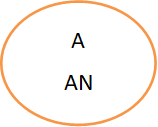

- ‘A’ is used with singular, countable nouns that begin with a consonant sound. Examples: a ball, a flower, a hat, a pen etc.
- ‘An’ is used with singular, countable nouns that begin with a vowel sound. Examples: an apple, an egg, an onion, an umbrella etc.
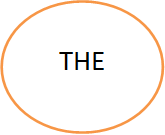
- Uses of ‘The’ :
- To refer to a specific person or object:
- The girl standing there is my cousin.
- The blouse you are wearing is very pretty.
- To refer to something which is one of a kind:
- The sky is blue
- The earth is a planet.
- To refer to superlatives:
- This is the coolest place on earth.
- Who is the smartest girl in your class?
- This is the coolest place on earth.
- To refer to names of countries which use the words ‘United’ or ‘Republic’.
- The Republic of Indonesia
- The Republic of Indonesia
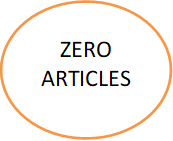
- Zero Article: No articles are needed for the following:- with uncountable nouns used in a general
sense; with abstract nouns in the general
sense; with words such as bed, college, home, hospital, market, prison, school, war etc.; with proper nouns; with names of games and activities, roads, diseases etc.
Eaxmples: Sugar is good.
Knowledge is power.
My mother goes to market daily.
Cape Town is in South Africa.
Jogging is good exercise.
Measles is infectious.
There are many large shops along Abeokuta Road.
EVALUATION: Fill in the blanks with ‘a’, ‘an’, ‘the’, or ‘—’ where necessary
- I usually read ____ newspaper before I take my breakfast
- _____ love of ____ money is ____ root of all ______ evil.
READING ASSIGNMENT: Effective English JS 2 pg. 114 – 118.
- Vocabulary Development:
Content: Names of Various Kinds of Crops pg. 153
Most crops can be categorized into grains, fruits and vegetables.
Grains: guinea corn (sorghum) and wheat are grain crops. Most grain crops can also be called cereals or corn.
Fruit: This term is used for crops that grow on trees like pineapples, melons, pumpkins and tomatoes and vegetables.
Vegetables: They are food from smaller plants. They include root or tuber crops like carrots, sweet potatoes, yam. They also include leaves like bitter leaf, cabbage etc.
EVALUATION: Mention the various divisions of crops.
WEEKEND ASSIGNMENT
INSTRUCTION: Choose the correct option for each of the sentences below.
- ‘I don’t know her’, in indirect speech is written as ‘he said that ______________ A. I don’t know her B. he doesn’t know her C. he didn’t know her
- ‘Do you want one or two oranges written in indirect speech is, ‘I was asking whether ___________ one or two oranges. A. did you want B. you are wanting C. you wanted
- ‘Don’t study today’ in indirect speech is ‘he told me ______________ A. no studying today B. don’t study today C. not to study that day
- ‘Do the work tomorrow’ in indirect speech is he instructed me to ____________ A. do the work the previous day B. do the work the next day C. do the work tomorrow
- ‘Everest is the highest mountain in the world’ in indirect speech is ‘our teacher said that _______________ A. Everest was the highest mountain in the world B. Everest is the highest mountain in the world. C. Everest had been the highest mountain in the world.
WEEK TEN
REVISION AND EXAMINATION


1 Comment