


ASPECT: PUNCTUATION
LESSON ONE: CAPITAL LETTERS
Aa Bb Cc Dd Ee Ff Gg Hh Ii Jj Kk Ll Mm Nn Oo Pp Qq Rr Ss Tt Uu Vv Ww Xx Yy Zz.
USES OF CAPITAL LETTERS
- Beginning of sentences
e.g. The table was cleaned.
- To start proper nouns
e.g. Mukasa, Kampala, August, December, Tanzania, Friday, Mt. Rwenzori, Doctor, Teacher, Easter, Christmas.
Mr. Mukasa came from Mbarara on Sunday.
- When writing I as a pronoun in any position of a sentence. e.g. Mary and I passed the exams very well.
I was told to come very early in the morning.
- To introduce a direct speech sentence e.g.
I said, “I shall come tomorrow”
“The books were bought yesterday.” said the teacher.
- When writing pronouns referring to God.
e.g. Everything was created by God and He decided all of them to be in His image.
- The names of Almighty God should be written beginning with capital letters and pronouns referring to God.
e.g. Jesus Christ, Allah, God the Almighty, Jehovah, the messiah.
- Capital letters are used for peoples’ initials e.g Y.K. Museveni, I.K Musaazi, A.M. Obote.
- It is used for titles of books. e.g. The Nile English Course.
- It is used for titles of plays. e.g That’s Life Mwattu.
- When writing newspapers e.g. The New Vision, The Monitor.
- When writing titles of songs e.g. The Uganda National Anthem.
- When writing titles of poems and every line of poetry e.g. The stubborn child.
- When writing titles before the proper noun e.g.
Princess Diana
Omukama Iguru
Kabaka Mwanga
- When writing names of streets and avenues e.g.
Luwum street
Kimathi Avenue
FULL STOP (.)
Uses of a full stop
- It is used at the end of every negative and affirmative sentence or statement. e.g. My father has gone to town.
- It is used when writing initials of people e.g. J.B. Walusimbi.
- When writing abbreviations e.g. A.D, Maj. , N.B
- It is used in writing internet and e- mail addresses e.g http:// www.oup.com
LESSON TWO
QUESTION MARK (?)
- It is used at the end of an interrogative statement e.g. where are you?
- It is used for rhetoric questions. These are questions that have obvious answers of either yes or no.
E.g. Can you match God’s Glory? Definitely No.
Isn’t water necessary for life? Yes of course.
- Question marks are also used after question tags. She is clever. Isn’t she?
EXCLAMATION MARK (!) (Uses of How and What)
- It is used after an exclamatory sentence
e.g. what a fat girl Jane is!
- It is used with exclamatory words
e.g. Oh! Hullo! Alas! Ah!
APOSTROPHE (‘)
It is used to show possession in nouns
e.g That is Mugisha’s pen.
It is used to show contractions.
e.g They do not know him.
She’d taken a soda when I came in
It is used to form plurals of letters and figures
e.g. Life was very hard during the 1980’s, 3’s, , 5’s, T’s and P’s
COMMA (,)
- A Comma is used in question tags, to separate the main statement from a question tag.
e.g. We are going home today, aren’t we?
- A comma is used in speeches to separate the speech tag from the words of the speaker. e.g. She asked, “Where have you put the money?”
- It is used to separate a relative clause form the main clause e.g. The animal, which was being chased by the whole village was killed.
- Kampala, the city of seven hills, is located in the southern part of Uganda.
- A comma is used addresses, salutations and subscriptions in letter writing. e.g Dear Jane, Yours faithfully, Yours sincerely,
- It is used when writing figures with more than three digits e.g. 1,555,555, 10,000, 24,000
- It is used to separate some words and phrases e.g. nevertheless, however, therefore, in fact, of course, for instance, on the other hand, besides, on the contrary.
- A comma is used to separate words written in series e.g. Benz is a car which is small, comfortable, black and from Germany.
- It is used to separate items in a list e.g. orange, mango, lemon.
- It is used in a sentence which begins with an adverbial clause.
LESSON FOUR
SEMI COLON (;)
- It is used to separate titles, names and figures which are just listed. It can also work in place of a comma
e.g. Titles: the following people are useful to the nation: the president; the ministers; the teachers; the nurses. Figures 30,000; 60,000; 150,000.
- It can be used if you want to avoid using the words “and” and “but” e.g. she went and looked for the lost pen; she didn’t find it.
COLON (: )
- It is used before an introduction of long lists of series of things
e.g. There are many things sold in Owino market: old clothes, food, shoes, socks, fruits, bags etc
- A colon is used to show ratios
e.g. the ratio of men to women is 1:6
The ratio of hens to ducks and turkeys is 4:6:8
- It is used to identify particular speeches of individuals in a written conversation or in a play
e.g. John: Hurry up lest I leave you. Or Asio: You can go because I may delay you.
QUOTATION MARKS (” “) (Shaping of opening and closing quotation marks)
These are also called inverted commas.
- They are used to enclose the actual words said by somebody in direct speech. E.g. The teacher said, “You are going to learn about punctuation marks.”
- They are used when one wants to be specific with certain names. E.g. The Newspaper of today “The New Vision” has news about Kony rebels.
HYPHEN (-)
- It is used to separate a prefix ending in a vowel form a word beginning with the same vowel. E.g. co-operation, re- election, pre- eminent.
- It is used between two numbers or dates to include between the mentioned items. E.g. pages 100 -500
Years 1980 – 1989
- It is used to form a compound form a prefix e.g.
Anti- Uganda, Pre- colonial
- It is used for joining words to form a compound word from two or more other words. E.g Tea pot
Call – box, Time – table
- It is used to form a compound from two other words that are separated by a preposition e.g. son – in – law
Princess – of – Africa, Pearl – of – Africa
- It is used when writing out compound numbers from 21 to 99 e.g. Forty- night, Thirty – six.
TOPICAL QUESTIONS ABOUT PUNCTUATION
Punctuate the following sentences.
- Where is she going.
- I wont go to Kampala said mary
- do you remember where she lives
- i wanted to see them said the head master
- jesus loves us a lot
- the english say practice makes perfect
- We learn maths sst and science at st. peters primary school.
- Oh I have broken her arm.
- was she present last week
- I once lived in tanzania and nigeria.
- my father in law has flown to london
- where are you going sarah the teacher asked
- mary peter joy and florence are needed by the headmaster.
Write the short form of the given words.
- for instance
- will not
- shall not
- I would
- please turn over
- have not
- must not
SAFETY ON THE ROAD
LESSON ONE
Vocabulary: bend, crossroads, cyclists, first aid, hand signal, pedestrians, pavement, junctions, motorists,
Roundabout, traffic police, side path, zebra crossing.
Activity: Use the words first aid, hand signal, junction, motorists.
- The driver made a …….. to show that he was turning right.
- Drivers should not take over at the ………..of a road.
- Drivers should be careful not to knock ………down.
- He was given ………after getting in an accident.
- We met John at the road…………………
LESSON TWO
PICTURE INTERPRETATION
Traffic lights, road signs
Activity
- What type of road users do you see in the picture?
- Name the type of vehicles you can see in the picture.
- What is the purpose of the green light?
- What road sign should be put along the road to show that there is a healthy centre ahead? MK Pupils Book 6 pgs 4 -6
LESSON THREE
STRUCTURES: The use of ….as soon as….
- E.g There were no more cars coming. The pupils crossed the road.
The pupils crossed the road as soon as there were no more cars coming.
- The use of ….because….
E.g. The car knocked Hamza down. Hamza’s bicycle had weak brakes.
- The car knocked Hamza down because his bicycle had weak brakes.
- The use of ….must…. e.g. The policeman must help pupils to cross the road.
- The use of “where must……….” E.g. Where must pedestrians walk?
Pedestrians must walk on pavements.
- The use of …..mustn’t……
- The use of ….should not…. E.g. You should not stand behind a parked car.
(Exercise pages 7,8,9, 10 MK)
Comprehension
Lesson: Poem (safety on the road) Ref New Mk primary English book 6 pg 10
LESSON FOUR
DIALOGUE: CROSSING THE ROAD
Vocabulary
Anyhow, knocked, crossing, careful, fast, again, taught, safety, traffic, duty, sure, safe, mindful, especially, pedestrians, classmates (MK pupils book 6 pg 11 – 17)
LESSON FIVE
Revision exercise pages 17 -18
Arrange these words to make correct sentences
- Road the cross to waiting are pupils.
- Stopped the driver red the light showen when.
- Injured the was woman first aid given was who.
- Repairs jam traffic the caused his bicycle.
- Zebra crossing a at cross road the always.
- Cyclist fell of the careless his bicycle.
- Accident the caused signal a wrong an form cyclist.
- The road cross to helped us a traffic policeman.
- The road play on never should pedestrians.
- To turning he has side which driver indicated the
LESSON SIX
COMPOSITION WRITING
PRE COMPOSITION: REVISION QUESTIONS ON PUNCTUATION
In about 100 – 150 words, write a composition about the causes of road accidents consider paragraphing.
Guidelines: Definitions
Causes of road accidents
How to avoid road accidents
Write a letter to the traffic officer about the causes of road accidents.
Stages of official letter writing.
TRAFFIC DANGERS
LESSON ONE
Vocabulary
Crossroad, roundabout, junction, accidents, traffic lights, side path, first aid, careless, careful, island, highway code, road humps
Activity
- Make sentences using words
- Choose words from the box to complete sentences Ref. Mk pupils book 6 pg 21
LESSON TWO
The use of when and because
The motorist stopped when he got to a zebra crossing
Tushabe drove slowly because the traffic was heavy.
Activity
Join the sentences using because or when Ref. Mk pupils book 6 pg. 24
LESSON THREE AND FOUR
Use of so…that…..
Use of …….so…..
Examples
The vehicles were so fast that the children could not cross the road
Lydia wanted to cross the road, so she asked the traffic officer to help her.
Activity
Exercise on pg 24 (New Mk bk6), exercise on pg 25
LESSON FIVE
Comprehension
Dialogue (crossing the road) Pg 29: New Mk bk 6
LESSON SIX
Passage (a narrow escape) New Mk bk6 pg 31
LESSON SEVEN
Poem (traffic dangers) : New Mk bk6 pg 30
LESSON EIGHT
Picture composition (New Mk bk6 pg 34)
LESSON NINE
Writing articles to the newspaper editor
ASPECT THREE
NOUNS
A noun is a naming word or name of anything. Types of nouns:- common nouns, proper nouns, collective nouns, abstract nouns.
LESSON ONE
TYPES OF NOUNS
PROPER NOUNS
These are real or particular names of people, places, animals, months, days, lakes, and rivers e.g. John, Mary, Okello.
Jinja, Kampala, Nairobi, Kololo, Mukono, Mbale
Uganda, Kenya, Asia and Mt. Kenya.
Animals
Cows Gazu
Dogs Jack
Cats Robin
Days of the week: Monday, Wednesday
Months : June, July
COMMON NOUNS
These are several names of things found everywhere e.g paper, girl, boy, man, suit, pen, radio, house, hotel
Activity
Underline the proper nouns in these sentences
- Dr. Milton Obote was the president of Uganda in 1982.
- The Bible is the commonest book.
- Kampala is the capital city of Uganda.
LESSON TWO
COLLECTIVE NOUNS
These are names given to groups of things collected together. E.g.
- A swarm of bees.
- Herd of cattle
- A crowd of people
- A suite of furniture
- A bench of Bishops
- A host of angles. (Ref. detailed grammar pg 84)
LESSON THREE AND FOUR
ABSTRACT NOUNS
Abstract nouns are names of things which denote an idea of state. They cannot be felt or touched. They cannot also stand on their own. They are formed from other words like adjectives, verbs e.g. beautiful, ugly, poverty, patience, age, death, power, truth
FORMATION OF ABSTRACT NOUNS FROM VERBS
VERB ABSTRACT NOUNS
Sit seat
Speak speech
Choose choice
Accuse accusation
Abolish abolition
Punish punishment
Pay payment
LESSON FIVE AND SIX
Formation of abstract nouns from adjectives and other nouns.
Adjectives abstract nouns
Kind kindness
Lazy laziness
Poet poetry
King kingdom
Friend friendship
Man manhood
Slave slavery
War warrior
Baker bakery
High height
TOPICAL QUESTIONS
- Complete each phrase below using the nouns formed from the words in the brackets
- A fixed………….(allow)
- A quick…………..(move)
- A poor………..(judge)
- A clear………..(explain)
- A weekly………….(revise)
- Complete the sentences using the correct noun formed from the words in the brackets
- Because of his………..James was not given money for fees. (lazy)
- Bad weather caused great…….to many farmers in our village. (lost)
- Wars bring a lot of ………..among nations. (hate)
- Their……………is eagerly awaited. (marry)
- The…………….to the theatre was crowded with people. (enter)
LESSON SEVEN
SINGULAR AND PLURALS OF NOUNS
Formation of plurals by adding s, es, and ies.
Singular
Plural
Book books
Key keys
City cities
Church churches
Negro Negroes
Lady ladies
Hero Heroes
Photo photos
Potato potatoes
Mango mangoes
Radio radios
Piano pianos
LESSON EIGHT
Formation of plurals by adding “ves” to nouns that end in “f” or “fe”
Singular Plural
Knife knives
Wife wives
Calf calves
Loaf loaves
EXCEPTIONS
Roof Roofs
Chief Chiefs
Reef Reefs
WITH TWO PLURALS
Hoof Hoofs/Hooves
Handkerchief Handkerchiefs/Handkerchieves
Dwarf Dwarfs/dwarves
Scarf scarfs/scarves
LESSON NINE
Nouns that have the same singular and plural form
Deer deer
Sheep sheep
Fish fish
Furniture furniture
Common nouns that are always in plural form just because they are in pairs
Trousers shorts
Compasses binoculars
Knickers pliers
Spectacles barracks
Scissors pants
Common nouns that end with letter s but are not in singular form
News mastitis
Tuberculosis politics
Mumps athletics
Economics draughts
Mathematics civics
LESSON TEN
Compound nouns whose first word takes the plural form
Singular plural
Father – in- law Fathers – in – law
Master – on – duty masters – on- duty
Maid – of – honour maids – of – honour
Officer – in – charge officers –in- charge
Member – of –staff members – of – staff
Commander-in-chief commanders-in-chief
Compound nouns that change both parts into plural form
Singular plural
Man – servant men- servants
Woman –driver women – drivers
Man- friend men- friends
Man – driver men – drivers
Nouns which are made up of a noun and a preposition
Singular plural
By- law by-laws
On-looker on-lookers
Passer – by Passers – by
Compound nouns with a hyphen
Singular plural
Mouse- trap mouse-traps
Head-phone head-phones
Foot – path Foot – paths
Egg- plant egg- plants
Compound and common nouns without a hyphen
Singular plural
Spoonful spoonfuls
Mouthful mouthfuls
Plateful platefuls
Handful handfuls
Mugful mugfuls
Headmaster headmasters
Workman workmen
LESSON ELEVEN
UN COUNTABLE NOUNS
These are names of things which cannot be counted.
E.g. blood, chalk, money, rubbish, information, trade, sugar, bread, water, soap, charcoal, sand, wood.
Changing uncountable nouns to plural forms
A jerry can of water jerry cans of water
A piece of chalk pieces of chalk
A litre of milk litres of milk
An item of news Items of new
A cup of tea cups of tea
A piece of wood pieces of wood
A bar of soap bars of soap
TOPICAL QUESTIONS
- Rewrite sentences giving the plural form of the underlined words
- My goose lays seven eggs a week.
- The baby was given a spoonful of medicine
- The promotion was for that chief.
- His ox ploughs my garden all the time
- Give a singular form of the underlined words
- Their wives were humble women.
- Our shorts are dirty.
- Buy for us some toothbrushes.
- Byamukama sold sheep in the market
- Puppies ran out of the kennel when the bitch barked
- Very many lice were found in their hair.
LESSON TWELVE
ASPECT: ARTICLES “a” , “an” and the
Content: Use of “a”, “an” and “the”
- Article “a” is used before a countable noun e.g
A car, a man, a boy, a match box, a chair.
- It also begins with a vowel letter whose sound is consonant e.g a European, a university.
- It is also used to refer to an incident taking place for the first time e.g. I saw a boy chasing a hen.
- “An” is used with words bearing vowels sound like “H” e.g an hour, an heir, an honest man
- Give me an orange please
- Have you ever seen an elephant?
- That is an honourable member of parliament.
Article “an” is used for nouns that appear for the first time just like article “a” e.g. an accident has happened at the railway station.
N.B Article “an” is not used with proper nouns like human beings e.g. you cannot say “an Agnes”
THE DEFINITE ARTICLE “THE”
- “The” is used to refer to a noun that is already known or established.
- It can be used with both singular countable nouns and nouns that start with vowel letters.
E.g. the egg, the axe, I met a shabby boy and the boy was a thief.
- “The” is used to refer to one important event or person, place or ceremony e.g. the River Nile, the Caribbean , the zulu, the airport.
- It is also used when referring to proper nouns e.g. the Bible, the Quran, the argentine.
- “The” is also used to specify nouns in a point e.g. I like a dog with the short tail.
“ARTICLE “SOME”
It is used with plural countable nouns as well as non-countable nouns.
Plural countable nouns un countable nouns
Some boys the flour
Some pencils the paraffin
Some girls the milk
Some juice the juice
Some sugar the sugar
Some soils the soil
Use of “any”
- It is used where a Yes answer is expected e.g. will you bring me some milk?
- It can be used to show exception or part of the group e.g.
- Some of you are not serous
- It can also be used on conditional clauses e.g if you find any insects in the food, don’t pay for it.
- It can be used with the meaning “no matter which”/ how/ where/ e.g. send any person to collect your suit.
Activity
Use either “an”, “a”, “any” , “the” and some in each other space below.
- He eats …………………………egg every morning
- ………………..chair is made out of wood.
- ………………..Nile is the longest river in Uganda?
- Will you please lend me ……………money?
- I don’t mind ………one of you can do this job.
NOUNS
GENDER: This is the fact of being male, female or none. Gender can be grouped into three;
Gender can be identified in three ways
- Gender formed by adding a prefix e.g.
Masculine Feminine common gender neuter
Cock – sparrow hen- sparrow baby tree
He – goat she- goat child desk
Pea-cock pea – hen doctor water
- Gender formed by adding a suffix e.g.
Masculine Feminine
Actor actress
Heir heiress
- Gender formed form a completely different noun
Masculine Feminine
Drake duck
Bull cow
- Neuter: These are nouns which are neither female nor masculine. E.g. tree, desk, window, stone, table, water, book etc
ACTIVITY
Give the opposite of the following gender
Actor
Husband
Son
Queen
TOPICAL QUESTIONS
- Kalinda thinks that the peacock is the most beautiful.
- The princess visited the king’s palace yesterday.
- He is a bachelor.
- The proprietor of the guest house was French.
- The rams raised their heads as we entered the meadow.
- Sally has two tame rabbits both does.
- The heir is expected to inherit a large fortune.
- The book has no author.
- Oboth cheated his nephew.
- That hero was given a prize.
ASPECT SIX
LESSON ONE
PRONOUNS
These are words which can be used in place of a noun.
Kinds of pronouns
- Subjective pronouns e.g. I , we , he, she
- Objective pronouns e.g. me, you, her, him
- Adjective pronouns e.g. my, your
- Possessive pronouns e.g. mine, yours, hers, his
- Reflexive pronouns e.g. myself, oneself, herself
Copy and complete the table
Subjective | Objective | Adjective | Possessive | Reflexive | |
1st person singular | I | Me | My | Mine | Myself |
2nd person singular | You | You | Your | Your | Yourself |
3rd person singular | He She It One | Her It One |
Ones | It is
| Himself
|
1st person plural | We | Ourselves | |||
2nd person plural | You | Yourself | |||
3rd person plural | They | Their |


LESSON TWO
CONTENT:
SUBJECTIVE PRONOUNS AND OBJECTIVE PRONOUNS
Activity:
Identify by underlining subjective pronouns in the sentences given
- He killed a lion.
- You and I are going to school tomorrow.
- It will bite you.
- They were ten in number.
Identify objective nouns by underlining them in the sentences given
- She beat him yesterday.
- John took her
- We helped them last year.
- Mary and her brother always work for him
LESSON THREE
CONTENT: ADJECTIVE AND POSSESSIVE PRONOUNS
ACTIVITY:
Identify and underline adjective pronouns in the given sentences.
- That is my friend.
- One should respect one’s parent.
- They were his books.
- My uncle went to visit his mother.
Identify and underline possessive pronouns in the given sentences.
- The cat of theirs went on following them.
- All the mangoes are mine.
- The book belongs to him. It is his.
- Our lessons were taught by the son of hers.
LESSON FOUR
ASPECT CONTENT: REFLECTIVE PRONOUNS
ACTIVITY: Form reflexive pronouns from the given pronouns
My –
Her-
Him –
One –
It –
Fill in the gaps with the correct reflexive pronoun.
- Jonathan clapped hands by …………
- One clapped hands by …………………
- We clapped hands by ………………….
- Kawalya John had his first grade by……….
- The bird misses its prey by ………………..
(Detailed English Grammar Book for P.5 – P.7 Vol. 1 pg 109)
LESSON FIVE
CONTENT
PLURALS OF THE PRONOUNS
Activity: Give the plural of the given words
I …………………. Himself …………………
That ……………… my ………………………
Him ……………….. mine ……………………
Itself ……………… herself …………………..
This ……………….. it ………………………..
That ……………… she ………………………
He ………………… her……………………….
Re – write the sentences changing the underlined words into plural form
She is playing it form the football field
This is my book.
Activity
Complete the following sentences with the correct pronoun
- I always look at………..in the mirror before I go to work.
- One can easily deceive oneself that……….work is perfect.
- Peter bought a car for …………………………
- You can go and do it by ……….
- They had to blame ……..for filing to score
Rewrite the sentences as instructed in the brackets
- Jane and Joseph have done the test without any body helping them to get the answers (End with …selves.)
- My father bought the meat from the market. (use…..self.)
- The cat climbed up the ditch without help. ( use …oneself)
- She took her problems to her parents by herself. (Begin: One……….)
- One was supposed to carry out an experiment independent of others. (End: ….oneself.)
LESSON ONE AND TWO
ABBREVIATIONS AND CONTRACTIONS
Abbreviations are short forms of words, names, titles, organisations or a group of words
Requirements for abbreviations
Full stops on some abbreviations e.g. i.e., st. a.m etc
In case of abbreviations which can be pronounced as words, full stops are not needed in between them
Example
UWESO – Uganda Women Effort to Save Orphans
SWICO – State Wide Insurance Company
NIC – National Insurance Corporation
BODMAS – Brackets of division, multiplication, addition and subtraction
If it is one word that has been shorted, the full stop comes at the end e.g.
Rev. – Reverend
Hon. Honourable
Dec. – December
Tue. Tuesday
Dept. – department
Capt. – Captain
Examples of abbreviations
Am – before noon/ ante meridiem
Pm – afternoon/ post meridiem
Etc – and so on
e.g. – for example
i.e. – that is
pte – private
BC – before Christ
Rev. – reverend
St. – saint / street
TB – tuberculosis
PTO – please turn over
PSV – public service van
PMO – private motor omnibus
Co. – company
Ltd – limited
Jr or Jnr – Junior
Activity
Write the full forms
- Mt.
- c/o
- IOU
- Esp.
- OG
- Viz
- Capt
- Asst.
- Rd
- AD
Contractions
A contraction is used to shorten a word by the use of a punctuation mark called an apostrophe (‘) which means that some letters are missing, omitted or left out
Examples
Can’t – cannot
I’d – I had
Won’t – will not
‘re – are
P’se – please
Ne’er – never
Shan’t – shall not
Activity
Write the short forms of the following
- Are
- He is
- I would
- It is
- Could not
- Because
- Never
ASPECT: VERBS AND TENSES
LESSON ONE AND TWO
CONTENT: PRESENT SIMPLE TENSE (EVERYDAY TENSE)
Verbs are doing words.
Kinds of verbs
- Regular verbs
- Irregular verbs
- Main verbs (principal verbs )
- Helping verbs
- Transitive verbs
- Intransitive verbs
REGULAR VERBS
These are verbs which take “ed”, “d”, or “t” in their past tense.
Regular verbs which take “ed”
Present simple Past simple Perfect
walk walked walked
wait waited waited
Regular verbs that take “d”
Present simple past simple perfect
believe believed believed
escape escaped escaped
move moved moved
change changed changed
Regular verbs that take ‘ied’
carry carried
copy copied
dirty dirtied
bury buried
hurry hurried
marry married
Regular verbs that take “t”
Present simple past simple perfect
mean meant meant
dream dreamt dreamt
Irregular verbs that don’t follow any order to change
These are verbs which do not take “d”, “ed”, or “t” or irregular verbs that drop one “e” and “t” is added at the end.
Present simple past perfect
go went gone
tear tore torn
Irregular verbs that change vowel “I” to “a” in past simple and “u” in perfect tense
Present past perfect
drink drank drunk
ring rang rung
sing sang sung
Irregular verbs that change “I” to “u” both past and perfect
Present past perfect
dig dug dug
sting stung stung
Verbs that simply change completely
Present past perfect
sit sat sat
shine shone shone
Irregular verbs that don’t change at all
Present past perfect
put put put
cut cut cut
Verbs that double letters in the continuous tense.
Present continuous tense
swim swimming
split splitting
Exceptional words
present continuous tense
say saying
draw drawing
Verbs that end with “ie”
In the continuous tense these change “ie” toy and “ing” is added.
Present continuous past perfect
tie tying tied tied
LESSON THREE
CONTENT: Present Simple tense (Every day tense)
Kinds of sentences
Affirmative and negative sentences
He speaks good English
He doesn’t speak good English
Activity:
Change these sentences into negative form.
- He speaks good English.
- I can repair this radio.
- She draws accurate angles.
- T.B is a curable disease.
- Bwindi is a penetrable forest.
- There are some boys in the field.
- There is some water in the pot.
LESSON 4
Interrogative statements
Activity:
Change these sentences into interrogative form
- She greets people.
- They don’t have much money
- It is not far from Kampala to Gulu
- They grow millet
- She studies in Makerere Unversity.
- Onyango works very hard these days.
- The leopard climbs trees.
- I can go there next week.
- They are informed about it.
- There are regular visitors here.
LESSON FIVE AND SIX
Present simple tense: Active and passive voice
Activity: Change these sentences from active into passive voice.
- Kato plays football.
- The timekeeper rings the bell on time.
- She sells mangoes everyday.
- The doctor warns James against smoking.
- Cars carry people.
(MK Precise BK 6 PAGE 92)
Change these sentences from passive voice to active voice
- Mangoes are sold by John everyday.
- We are taught English everyday.
- This song is sung by the choir every Friday.
- Coffee is grown by Brazlians.
LESSON 7
Question tags in present simple tense
Activity: Supply these sentences with a suitable question tag.
- She enjoys music, doesn’t she?
- I am in P.6, aren’t I ?
- They play football everyday, don’t they?
- Mary is not happy today, ……………..
- I didn’t go to school these days,…………
- She doesn’t write well,…………….
- They do not eat pork,………………….
- He can not drive a tractor, …………………………….
- You are early today,…………………………………….
- They have a lot of money, ………………………………
Special tags
- Come here, ……..?
- Let’s go swimming,………?
- Let us go for break, ………..?
LESSON 8, 9, AND 10
CONTENT: PRESENT CONTINUOUS TENSE
Activity: Use the words in the brackets to complete the sentences in present continuous tense.
- I ………………….not going to school. (to be)
- They are …………very fast. (run)
- Musa is ……….to me. (lie)
- Why are you ………………..your friend? (hit)
- The sun ………………….brightly now. (shine)
Re write the following sentences in present continuous tense
- Musoke buys milk from the milk man.
- The children fetch water.
- He collects all our books.
- The farmer harvests all his crops.
- My mother makes pots out of clay.
LESSON 11
Negative statements
Activity: Change the following sentences into negative form.
- She is learning English now.
- The dogs are barking at him.
- We are eating some oranges.
- We are dancing now.
- The shop keepers are selling some sugar.
LESSON 12
Interrogative statements
Activity: Change the following sentences into interrogative
- Baker is eating an apple.
- I am revising my science notes.
- They are learning English.
- James is climbing up the pole.
LESSON 13
CONTENT: ACTIVE AND PASSIVE VOICE
- Activity: Change these sentences to passive voice.
- She is reading a novel.
- Tom is teaching us.
- Martin is throwing a stone.
- The girls are plucking flowers.
- The timekeeper is ringing the bell.
- Change these sentences to active voice.
- A whistle is being blown by Ali.
- Our house is being painted by the builder.
- We are being taught by the teacher now.
- The baby is being fed by the house girl.
- The mats are being woven by the P.6 girls.
LESSON 14
QUESTION TAGS
Activity: Supply question tags to the given statements.
- She is sewing her dress, …………………?
- I am singing a nice song, ………………….?
- We are spending a lot of money,………………….?
- Moses is taking pencils out of the cupboard,…..?
- It is raining now, ………….?
ASPECT 9
ADJECTIVES (Definition)
Adjectives are words that describe nouns and pronouns more. e.g. tall, short, small, big, fat, nice.
Kinds of adjectives
- Demonstrative adjectives: These are adjectives which show or demonstrate he noun e.g. that, those, these.
- Personal pronoun adjectives: These are personal pronouns used as adjectives e.g. his, her, your, my, our, its, their.
- Quantity adjectives: These show how many / much a noun is e.g. one, two, three.
- Quality adjectives: These refer to the goodness or badness of the noun. e.g. good, bad, beautiful.
- Colour adjectives: They stand for the colour of the nouns e.g yellow, blue, green, red, black.
LESSON 2 AND 3
Formation of adjectives
Activity: Form adjectives from the nouns
Circle – circular
misery – miserable
child – childish
woman – womanhood
danger – dangerous
mountain – mountainous
Using verbs ending in ….’ing’
E.g. Walking stick, bathing soap etc
LESSON 4 AND 5
Activity
Form adjectives from the verbs
Force – Forceful
Talk – talkative
continue – continuous
mourn – mournful
use – useful
harm – harmful
care – careful
LESSON 6
CONTENT: PROPER ADJECTIVES
These are adjectives formed from proper nouns. e.g.
Uganda – Ugandan
Kenya – Kenyan
Tanzania – Tanzanian
Germany – German
Complete the sentences by filling the proper adjectives in the spaces provided.
- A ……………..speaks French. (France)
- Are you a ………..? (Portugal)
- I am a ……………..(Uganda)
- Do you speak ……………………?(china )
LESSON 7 AND 8
CONTENT: COMPARISON OF ADJECTIVES
Adjectives can be compared in three degrees:
positive, comparative and superlative.
- Use of “er” and “est” in degrees or comparison
Positive comparative superlative
rough rougher roughest
tall taller tallest
strong stronger strongest
new newer newest
kind kinder kindest
- Regular adjectives which take “r” and “est”
Positive comparative superlative
fine finer finest
safe safer safest
- Regular adjectives which take “more” or “less” and “most” or “least”
Positive comparative superlative
beautiful more beautiful most beautiful
important more important most important
handsome more handsome most handsome
- Irregular adjectives which change completely in comparison.
Positiive Comparative superlative
bad worse worst
good better best
LESSON 9
CONTENT: POSITIVE DEGREE
The use of “as” ……”as” in positive degree. e.g.
- John is near the school. Joseph is also near the school.
- My mother is two metres in height. My father is two metres in height.
- My mother is as tall as my father.
LESSON 10
CONTENT: comparative degree
This is used when comparing two things, sides, parties, which are different e.g.
Rose beats Mary in size.
- A leopard beats a lion in roughness.
- A leopard is rougher than a lion.
- Of the two animals, a lion and a leopard, the leopard is the rougher.
SUPERLATIVE DEGREE
This is used when nouns being compared are more than two. e.g.
- All the children are smart but the head beats all of them in smartness.
- The teachers live far away from the school. Mr. Mukasa beats them in distance.
- Of all the teachers, Mr. Mukasa lives the furthest.
- Activity : Use the superlative degree
- Of the triplets, Tom is the ………….(handsome)
- Kyabaggu is the …………..person among the others. (healthy)
- Who is the ………….. among the three boys?(tall)
- Jackie is the ………..girl in the school. (Discpline)
LESSON II
Content: Double comparative
Here, one uses two clauses where each starts with article “the” followed by an adjective in comparison in comparative degree. e.g.
- If you go high, it becomes cool.
- The higher you go, the cooler it becomes.
- If it is done soon, it will be good.
- The sooner it’s done, the better it will be.
Activity:
Use the ……..the………in the sentences.
- As you stood very far you become small.
- If you come early, you will be busy.
- If you work hard, you will score highly.
- As you grow older, you become wiser.
LESSON 12
Content: Order of adjectives
Number opinion
Size shape
age colour
origin material
Purpose noun
e.g. The ladies are beautiful. The ladies are brown. The ladies are young. The ladies are long –legged. The ladies are from Asia. The ladies got married.
The ten beautiful long-legged young brown Asian ladies got married.
Activity: Join these sentences using the order of adjectives
- I saw a girl, she was brown. She was from Belgium. She was ugly. She was young.
- I solved numbers. They were very good. They were fifteen.
- The chief has three daugters. They are tall. They are talkative. They are highly educated.
- She is a Ugandan. She is talented. She is long- legged.
LESSON 13
Compound adjectives
The headmaster led a delegation of 10 men to Juba
The headmaster led a ten – man delegation to Juba
NB
Compound adjectives take hyphens like compound nouns e.g. two – year – old baby
Even if noun denotes plural compound adjectives take singular nouns
DEBATING
LESSON ONE AND TWO
VOCABULARY
Speakers, motion, oppose, proposer, point of order, point of information, point of inquiry, audience, points, argue, argument, chairperson, secretary, timekeeper, roles, opinion, conclude, previous, current
Activity
Make sentences using the vocabulary
LESSON TWO
Direct and indirect speech of the present tense i.e. present simple and present continuous
Present simple tense
Present simple changes to past simple if the speech is in past
If the speech tag is in present simple don’t change the tense
Examples
Jane said, “I go to school everyday.”
Jane said that she went to school everyday.
He says, “I go to school every day.”
He says that he goes to school everyday
Exercise 57 (Detailed grammar vol 1 pg 70)
Lesson three
Direct and indirect of present continuous tense
Present continuous tense changes to past continuous if the speech tag is in past
Examples
- Peter said, “My mother is washing utensils.”
Peter said that his mother was washing utensils
- They say, “We are sleeping on our beds now.”
They say that they are sleeping on their beds now
Exercise 58 (Detailed grammar vol 1 pg 71)
LESSON FOUR
STRUCTURES
Use of even though……..
Examples
Namulo spoke clearly but the audience did not understand what she said
Even though Namulo spoke clearly, the audience did not understand what she said
The audience did not understand what Namuloi said even though she spoke clearly
Activity
Rewrite the following sentences using (even though, even..though)
- The motion was clear but some pupils could not give pupils for or against it
- The speakers were allowed only two minutes but some of them spoke for three minutes
- Kugonza made a point of inquiry but did not get any response from the speaker
LESSON FOUR
Using ….although..
Examples
- Nakku talked loudly, but few people heard what she said
Few people heard what Nakku said although she talked loudly
Activity
Exercise A and B pg 42 of Mk primary English pupils’ book 6 (new edition)
LESSON FIVE
Using: if…./ if….(if 1)
If you give a point of order, I will stop talking and listen.
You will hear what the speakers say if you listen carefully
If they give more points, they will win the debate
Activity
Make sentences (10) using ‘if’
LESSON SIX
Using ……whereas….
Examples
The chairperson allowed Rukeba. He did not express his opinion.
Rukeba didn’t express his opinion whereas the chairperson allowed him
Exercise
Form correct sentences from the circles on page 44 (MK primary English pupils book 6)
COMPREHENSION
LESSON SEVEN
Debate
Motion: Mixed schools should be abolished
LESSON EIGHT
Dialogue: Ref: Mk primary English pupils book six pg 58
LESSON NINE
Passage: Children’s rights (Ref. Mk bk6 pg 59 – 60)
LESSON TEN
Picture composition: A memorable day (Ref. Mk bk6 pg 61)
LESSON 16
CONTENT: PAST SIMPLE TENSE
ACTIVITY: Use the verbs given in past simple tense
- He ………………. to Mityana yesterday. (walk)
- Alice ……………….with her friends yesterday. (play)
- He………three years in France when he was a young man. (spend)
- He ……………his keys at home. (leave)
- Mr. Mubiru ……………his car at a very high speed. (drive)
Negative and interrogative statements E.g
- I was made to lie down yesterday.
- I wasn’t made to lie down yesterday.
- He got a first grade.
- He did not get a first grade.
Activity: Change these sentences into negative form.
- The teacher marked our books yesterday.
- He took a long time waiting for you.
- She organised the classroom very well.
- He went to the beach last weekend.
INTERROGATIVE STATEMENTS
- The birds made nests on the tree.
Did the birds make nests on the tree?
- A lion chased a hunter seriously.
Did a lion chase a hunter seriously?
- The teacher arrived at noon.
Did the teacher arrive at noon?
- The baby cried all night.
Did the baby cry all night?
Activity
Change these sentences into interrogative
- There are some boys in the room
- He found it somewhere in the room.
LESSON 17
CONTENT: Active and Passive voice e.g.
- The dogs chased a goat.
- A goat was chased by the dogs.
- It ate a rat last week.
- A rat was eaten last week.
Activity: Change the following sentences into passive voice
- They stole the old man’s mangoes.
- Kato bought a nice pen.
- She baked a cake last Saturday.
- Grandmother visited us on Monday.
- He wrote a letter to the headteacher.
Change the following sentences into active voice e.g.
1. Football was played yesterday by Sam.
2. Sam played football yesterday.
3. Food was cooked by Norah last night.
4. Norah cooked food last night.
5. Tom dug a deep pit last week.
6. I drew a picture yesterday.
7. She collected our books yesterday.
Activity
Change the sentences from passive to active
- The meat was eaten by the cats.
- The classroom was swept by John.
- The car was driven by Musa.
- The thief was caught by the policeman
Aspect: adverbs
Adverbs modify a verb by giving the following information
- How the action occurs. (manner)
- Where the action occurs. (place)
- How many times it occurs (frequency)
- At what time ( time)
- Intensity of the actions. (degree
Examples
Manner | Place | Time | Frequency | Degree |
Loudly Slowly Correctly Carefully Easily Fast | Here There Somewhere Ahead Near Somewhere | Now Then Soon Tomorrow Night | Daily Seldom Sometimes Ever Never Generally Rarely | Very Quite Fairly Badly Totally Well |
“Just” and “already”
Just and already are used with the present perfect tense to talk about something that has just happened a while ago.
e.g. the teacher has just slapped the boy
NB: Already is used with both the present and past perfect tense
Examples
- Birabwa’s aunt has just arrived
Birawa’s aunt has already arrived
- We have just met our aunt
We have already met our aunt
Activity
Rewrite these sentences using ….just….and ……..already…..
- My son went to school a while ago.
- The baby started sleeping a while ago.
- My elder brother talked to me a while ago.
- We talked to him few minutes ago
- The twins went to the dairy a moment ago
Formation
- ‘ly
Annual annually
Slow slowly
General generally
Quick quickly
Brave bravely
Cheerful cheerfully
Probable probably
Terrible terribly
Able ably
True truly
- ‘y’ – ‘I’ + ‘ly’
Day daily
Heavy heavily
Lousy lousily
Happy happily
Lazy lazily
Noisy noisily
Hungry hungrily
Greedy greedily
Comparing adverbs
Comparative and superlative
Examples
Adverb | Comparative | Superlative |
Fast High | Faster Higher | Fastest Highest |
Early Happy Greedy | Earlier Happier Greedier | Earliest Happiest Greediest |
Well Badly Much Little | Better Worse More Less | Best Worst Most Least |
Gladly Freely Frequently Recently | More gladly More freely More frequently More recently | Most gladly Most freely Most frequently Most recently |
Late | Later | Latest |
Far | Farther Further | Farthest Furthest |
- We must not reach there later than 7 o’clock
- You speak more loudly than a speaker
- He arrived the earliest so he had to wait for the others
- Why do you have to speak the most loudly of all the others at the meeting
- Of all the girls, your sister sang the most beautifully
- This has to be the farthest I have ever walked
TERM II
ORDER OF ADVERBS
Verb/ manner/ place/ frequency/ time/ purpose
e.g.
- Dad walks impatiently into town every afternoon before supper to get a newspaper
- We take milk hurriedly at home every morning
Activity 6
- The prefect spoke (yesterday) at the parade, carefully
- Will your run (in the field, at 8:00am, tomorrow, fast)
- The congregation prayed (in the church, very hard, last Sunday)
- The couple moved (to the reception hall, smartly, after the church ceremony)
- I shall take the ball (outside, today, stealthily)
- Take it (there, silently, now)
Comprehension
Family relationships
Vocabulary
- Grandparents
- Stepmother
- Step father
- Auntie
- Brother – in – law
- Sister – in – law
- Uncle
- Cousin
- Mother – in – law
- Father – in – law
- Matron
- Dowry
- Nephew
- Niece
- Half – brother
- Half – sister
- Step brother
- Step sister
- Twins
- Triplets
- Quadruplets
- Young
- Bridemaid
- Bestman
- Bride price
- Old
- Elder
- Eldest
- Populated
- Scarely
- Densely
- Marry
- Defile
- Rape
- Incest
- Tribe
FAMILY TREE
Members of the family in English
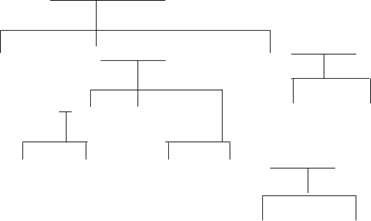 Grandfather grandmother
Uncle father mother aunt uncle
Sister – in law brother sister you cousin cousin
Nephew niece son daughter son – in – law
Grandson granddaughter
STRUCTURES
USING : RATHER …….THAN
Example
She should read her books. She is just playing.
She would rather read her books than play.
- I had better visit my aunt than remain at home. (use ..rather …than..)
- He married a European. He did not want to mary an African. (……rather ……than……..)
- I would like to stay at home. I don’t want to go out. (….rather than….)
- Why don’t you wear the black shoes? Leave the brown ones. (rather)
- She enjoys helping her grandmother. She doesn’t like helping her uncle. (….rather than……..)
USING ……..JUST….
Examples
- The children reached school just as the bell was rung.
- My aunt gave birth a while ago.
My aunt has just given birth.
- Your niece got married to an Ethiopian a while ago
Your niece has just got married to an Ethiopian
Activity
Rewrite the sentences using ……just
- My mom gave birth to a baby girl a while ago.
- Andy’s father – in – law lost his wife a while ago.
- Rose wedded this week.
- Yogo’s cousin completed P7 a few weeks ago
- Lule’s brother had a meeting a while ago
- My step brother, the stationer sold a lot of books three minutes ago
- Hama’s step sister left for Jinja a few minutes ago
- The family meeting ended a few minute ago
- My nephew wrote a letter to my niece a short while ago
USING :…..TOO…..TO
Examples
- Nalugwa’s aunt is very old. She cannot remember anything.
Nalugwa’s aunt is too old to remember anything.
- Katongole is weak. He cannot do good work.
Katongole is too weak to do good work.
- The food is very hot. The baby can’t eat it now.
The food is too hot for the baby to eat now.
Activity
Join using too……..to…..
- Kato’s sister is very short. She can’t jump over the fence.
- Maria’s niece is very young. She can’t get married.
- Banda’s sister was very scared. She couldn’t walk out of the house.
- Mugabo’s brother in law is very poor. He cannot care for a big family.
- Magie’s co – wife is very kind. She cannot refuse to give you a lift.
Such …………that
Examples
- Opio’s uncle is very honest. He cannot accept any bribe.
- Opio’s uncle is such an honest man that he cannot accept any bribe.
- Bakama’s sister is a very fast runner and always comes first in the race.
- Bakama’s sister is such a fast runner that she always comes first in the race
Activity
Rewrite using such……..that
- My uncle is a cruel man. I fear to talk with him.
- The bride’s mother – in – law was a very old woman. She could not attend the wedding
- A nephew of mine has a cute dress. You would love to own it.
- Kitty’s niece has a very good handwriting. All her teachers can read it.
- Your grandmother is a very humble lady. I love to live with her.
- Our grandfather is a very old man. He can neither see nor hear.
- My step mum is wearing very expensive shoes. No other person can afford them.
- Dennis is a very smart guy. He will answer all the questions.
- You son – in – law is a very obedient man. We all want to work with him.
- His half – brother is a very rude man. People near him fear him
Is….but….is
Examples
- Mr. Kimuli is my father but Mrs. Kimuli is my mother
- Father is masculine. Mother is feminine
- Father is masculine but mother is feminine
Activity
Use:…is/are…..but…..is./are
- Hawa is my niece. Her brother is my nephew
- That teacher is my uncle. His wife is my aunt.
- Mugisha is my brother. Mbabazi is my sister.
- The magistrate is your half – brother. The doctor is your half-sister.
- Carol is my cousin. Faridah is not our cousin
Complete with the best word
- Mr. Nkambo is my uncle but his sister is my……………
- Omondi is my brother in law but his sister is my………….
COMPREHENSION
Dialogue: Re. Mk (new edition pg 69
Poem: Ref: Mk new edition pg 71
Passage: A grand family re-union (Ref. Mk new edition pg 75)
Guided composition
Rearrange the given sentences to form a correct order
- My grandmother was so happy that she hugged me.
- She always taught us folk songs
- Last holiday, I visited my grandmother
- She stays with two cousins of mine
- The grandmother stays far away from our home
- They welcomed me to the house
- Then she gave me some food to eat.
- And also told us very interesting stories
Picture composition
A happy family (Ref. Mk old edition pg 95)
Debate:
Motion: Nuclear families are better than extended families
VERBS
A verb is a doing word. Verbs are subdivided into two groups; regular and irregular
Regular verbs
These form their past and participle by adding a ‘d’ or ‘ed’
Examples
Roll – rolled
Sometimes the last consonant must be doubled as in plan – planned
Not to teacher: general a list here with your children
IRREGULAR VERBS
Here the past and participle of these verbs from differently. Some do not change at all, cut – cut, others change completely go – went – gone, while others change letters in the middle fall – fell – fallen
Note: generate a list of irregular verbs with learners
MAIN VERBS
Examples
Go, sitting, dreamt, etc.
HELPING VERBS
Examples
Is, are, was, were, had, have, has, do, did, done, am, will, shall etc
LESSON 1.2
ASPECT: VERBS AND TENSES
CONTENT: Future Perfect Tense
Here we use either “shall have” or “will have” plus the perfect of the main verb. e.g.
- I shall have understood tenses by the end of this topic.
- He will have taken a bus to Malindi by the time we arrive.
Activity:
Detailed English Grammar Bk 1 Page 28
LESSON 3
CONTENT: Negative sentences
- I shall have understood tenses by the end of this topic.
- I shall not have understood tenses by the end of this topic.
- He will have taken a bus to Masindi by the time we reach their.
- He will not have taken a bus to Masindi by the time we reach there.
Activity: Change the following sentences to negative form.
- We shall have finished the work by the time the teacher comes.
- The man will have finished the work by the time we leave.
- They will have slept by the time their mother returns
- Ali will have gone for prayer by the time we open the shop.
LESSON 4
CONTENT: INTERROGATIVE STATEMENTS
Change to interrogative form.
Examples
You will have gone by the time the office opens.
Will you have gone by the time the office opens?
- We shall have listened to the teacher for half an hour by the end of the lesson.
- Shall we have listened to the teacher for half an hour by the end of the lesson?
LESSON 5
CONTENT: Active and Passive voice
Changing statements from active to passive voice
Examples
- We shall have ridden a bicycle by the time he comes back.
A bicycle shall have been ridden by the time he comes back.
- My mother will have mopped the house by the time I go back.
The house will have been mopped by the time I go back.
LESSON 6
CONTENT: QUESTION TAGS
Examples:
I shall have cleaned the desk by next week, shan’t I ?
The manager will have arrived by mid-day, won’t he?
Activity: Give the correct question tags to the following statements.
- We shall have taken tea by break time, ………?
- The car will have broken down by the end of the journey, ……………?
- I will have seen the king, ……?
- She will have arrived the afternoon, …………?
- We shall have been paid by tomorrow, ….?
LESSON 5, 6, 7
CONTENT
If II in the if II we use a past simple or past continuous tense in the if clause and a future simple past in the main clause (would clause)
Example
- Johns seeing a snake under my bed. My running away
If John saw a snake under my bed, I would run away
- Mugaga coming from a rich family, his passing so much
If Mugaga was coming from a rich family, he would pass so much
Activity
Detailed English grammar bk 2 pg 82 – 89
Lesson 8 and 9
Content: using unless in if II
Unless is the same as if not
Example
- If she didn’t come, we would go to her home.
Unless she came, we would go to her home.
- They wouldn’t be happy unless they passed the exam
They would not be happy unless they passed the exam
LESSON 1 AND II
CONTENT: IF III
It is used when the chance of the action to happen are over.
Example
- My brother being a teacher, he is teaching well.
- If my brother had been a teacher, he would have taught well.
- If Kato had come early, he would have caught the bus
Activity
Detailed English grammar bk2 pg 84 – 85
Lesson 12
Content: using unless in if III
Unless is the same as if not
Example
- If he had not got a first grade, he wouldn’t have gone to Budo.
- Unless he had got a first grade, he wouldn’t have gone to Budo
- If he had paid school fees, he would have sat for the exams
Activity
Detailed English grammar bk2 pg 88 – 89
CARPENTRY
Vocabulary
Wood, saw, plane, carpenter, bench, drill, hammer, nails, wood glue, tools, furniture, sand paper, polish, scre driver, timber, varnish, fix, saw dust
Used for…
Examples
- Sand paper is used for making wood smooth
- A drill is used for making holes into wooden objects
- A chair is used for sitting on
- A saw is used for cutting wood
Activity
Constructs sentences from the table Using …….used for…..
Plane Drill Varnish Plank Glue A hammer Bench Saw Screw driver Spanner | Fixing nails in wood Sitting on Making furniture Making holes into wood or metal Sticking wood firmly together Smoothing wood Polishing wood Fixing screws in wood or metal Cutting wood Turning screws in furniture |
Poem
I am a carpenter (ref: Mk old edition pg 148)
Passage
Carpentry products (Ref Mk new edition pg 92)
Dialogue
Amanda’s Dream Job (Ref Mk new edition pg 89)
Jumbled sentences
Mr. Wamala’s carpentry (Ref Mk new edition pg 95)
Guided composition
A hard working carpenter (Ref Mk old edition pg 153 – 154)
GRAMMAR THE USE OF PRESENT TENSE
PRESENT SIMPLE
Examples
She writes
They play
I cook
The present simple tense is used to show that something happens regularly, it is a habit or it is done everyday, sometimes, usually, generally, often, twice a week or more than once
 Requirements
I
We
They run
Ruth and Rose

He
She runs
It
Robert
Activity
Fill in the blanks with the correct form of the verb given
- Martha……….to pray on Sunday. (go)
- My father…………..the New Vision daily (read)
- I always……..to school (walk)
- We ………….fish every week. (eat)
- It………….like a frog. (jump)
- Many pupils………….sweets in class. (eat)
- Dorothy…………faster than Judith. (run)
- My sister………… Italian as the second language. (study)
- Our headmistress………….good English. (speak)
- She……………Swahili news very well. (read)
Note: the other use of present simple tense is to make statements or facts
e.g. Sugar melts, a river flows, Kampala is the capital city of Uganda
THE PRESENT CONTINUOUS TENSE
It is used to describe what is really happening at the present moment.
e.g. What ……..doing? What is / are he / they doing?
Answers
He is going to Kampala
They are reading a novel
The present continuous is also used to describe an action that started in the past but is still going on.
e.g. My brother is learning to drive.
There is a teacher who is giving me extra work
Forming ‘ing’ Adverbs
of time used
Come – coming now
Cook – cooking at the moment
Bark – barking today
Activity
Use the given verbs to complete the sentences
- The policeman………the bus now. (stop)
- He ………….in his book now. (write)
- I ……….for my book now. (look)
- Catherine……………her work now. (do)
- They are………..very fast. (run)
- Why are you…………..your friend. (hit)
- The oxen…………grazing. (be)
Negative/ interrogative and positive
Examples
- A dog is a domestic animal. (positive)
- A dog is not a domestic animal(negative)
- Is a dog a domestic animal? (interrogative)
Activity
Make as many sentences as possible in; positive, negative, interrogative
Active and passive voice in the present
Examples
- They eat food/ food is eaten.
- I love football/ football is loved by me.
- Kato eats pork/ pork is eaten by Kato.
- She loves music/ Music is loved.
Activity
Rewrite the sentences below in passive voice
- The police seldom catch thieves.
- We do little work.
- Janet tears dress.
- Pupils sweep the classroom.
- Joy rarely sharpens the pencil.
- She drives a long lorry.
- Indians burn corpses.
- Sanyu spells words wrongly.
- He teaches English.
- My mother feeds the baby.
Active and passive in the present continuous tense
Examples
- I am writing a letter (active). A letter is being written by me .(passive)
- Suzan is peeling cassava. Cassava is being peeled by Suzan
- They are playing football. Football is being played
Activity
Rewrite the sentences below in passive voice
- She is telling them to go.
- He is riding a bicycle.
- The pupils are eating porridge.
- They are giving her some work.
- John is repairing his bicycle.
- I am taking the baby to bed.
- The time keeper is ringing the bell.
- The crowd is shouting at the thief.
- My mother is waking me up.
- The teacher is punishing later comers.
Active and passive in the present perfect
Examples
- We have drunk cold tea. Cold tea has been drunk by us
- They have drunk cold tea. Cold tea has been drunk
- Sanyu has drunk cold tea. Cold tea has been drunk by Sanyu
Rewrite the following sentences in passive
- The boy has climbed a tree.
- He has watched a film.
- The tailor has made a new cap.
- A thief has stolen our car.
- I have written the letter.
- The policemen have stopped the motorist.
- Jackson has trained his dog.
- He has given them sweets.
- Paul and Peter have fetched water.
- The stranger has helped the old woman.
Structures
First ……..next……….then
Examples
- First look left, next right, then left, before crossing the road
- The carpenter makes the planks smooth using a plane, next he cuts the planks into pieces using a saw then he joins the pieces using a hammer and nails
Activity
Use the structure …first………next……then to describe how the following are made
- A bed
- A cupboard
- A chair
- Frying clips
- Mopping the house
- Serving food to guests
- Writing an exam
- Fetching water
……….besides……/ ………..beside……
Besides – a part from
Beside – next to
Examples
- Mr. Malevu has a carpentry workshop. He also has a saw mill.
Mr. Malevu has a carpentry workshop besides a saw mill
- Anguzu did not receive any furniture besides the dining table
Activity
Construct meaningful sentences from the table
The carpenter has not got Did you see anything Anguzu didn’t receive | Any furniture All the items you need In the box | The double bed The screw driver Besides The dining table |
………beside…
Examples
- Kato’s saw is near the table.
Kato’s saw is beside the table.
- Kamoga’s varnish is near the tool box.
Kamoga’s varnish is beside the tool box.
Activity
Rewrite using ………beside……
- The wood is near the furniture workshop
- The carpenter put the plane near the plank
- The drill is near the screw driver
- The saw is near the bench
- The varnish is near the door
Though……../ ………though……
Examples
- Though Makuna had a hammer, she couldn’t hit the nail.
- The furniture has a dull colour. It is durable.
- Though the furniture has a dull colour, it is durable.
Activity
Rewrite using (a) Though (b) …….though…..)
- The bench was not heavy but the boy could not carry it.
- Nalule has a saw she can’t cut the planks
PREPOSITIONS
A preposition is a word which is usually placed before a noun or a pronoun to show the relationship between a noun or a pronoun and other words in a sentence.
Prepositions are used to show place, time and agency
Examples of prepositions
About, in, by, upon, beside, away, against, under, since, on, with, at
I have put the ball on the table
We met at a dance yesterday.
Do not lean against that pole
TYPES OF PREPOSITIONS
Prepositions of place
These include; here, there, above, across, along, after, below, beside, beyond, in, near, far, off, on, behind, before, by
e.g.
I have put it on the box.
We met at the roundabout.
We went round the house.
Prepositions of time
These include; after, at, around, before, between, beyond, in, on, by, during, from, of, since, for, until, till etc
Examples
He visited me on Sunday
We slept till six o’clock
They will meet at midday
Prepositions of agency (agent)
These are prepositions for saying that a person or things make something happen
Activity
Use the most suitable preposition to complete the sentences
- Nairobi is ……………Kampala and Mombasa.
- The telephone booth is…………..the post office.
- The number 5 is ……..4 and 6.
- John is behind Mary and Mary is ………..John.
- There is a road in front of our house but there is no road……….our house.
- The graduation ceremony started…………..six o’clock.
- The guest of honour stayed ………5 o’clock.
- What is the time …………….your watch.
- We have been learning …………..primary one.
- His sister is………….Dar – es – salaam.
Use by, with, due to, through
- John went to England………ship
- Every day I wash my hands…………soap and water
- Sophia cut her nails……………a pair of scissors
- Mwangi went to Mombasa ………..bus
- ……….whom did you do that work.
- ………..whom was that boy slapped?
- The hen was chased ……..the cat.
- The thief jumped ………….the window.
- The thief jumped……..the fence
- The thief jumped……..the lorry
Choose the correct preposition from the brackets
- Please, look………this picture (on, at)
- We can’t go………..bus on account of the bus strike (by, to, in)
- He was ill for a week and………that week his mother never left his side (during, on)
- Patriots have always died……..beliefs. (for, from, of)
- Both parents were deaf………their son’s request (to , for)
- His building was valued ………….four thousand dollars. (on, at, for)
- I shall not talk to you………you pay me back, (until, since)
- All my sisters are suffering ……..measles. (from, of, in)
- The house was broken into……..the thieves. (by, with)
- We failed to see him because he had covered himself……….the blanket. (below, under)
Fill in a correct preposition
- His father is coming ……….Sunday.
- I have been waiting for the bus……..8 o’clock.
- My father lives………….Ben Kiwanuka road ………Kampala.
- The dog jumped …………….the window.
- I have not made any appointment ………him.
- She hit her head………….in the dark cellar.
- He congratulated me…………….passing my exams.
- They competed………….each other last year.
LESSON 1
ASPECT: RELATIVE CLAUSES
Content: adjective clauses and relatives pronouns
Relative pronouns are; who, whom, which, whose, when, where, that
Use of ……..who……..
Example
- I am going to see Mr. Mubiru. He is a carpenter.
I am going to see Mr. Mubiru who is a carpenter.
- That is Sarah. She gave you a new pen.
- That is Sarah who gave you a new pen.
Activity
Join the following sentences using……..who……
- The man was taken to hospital. The man was seriously injured.
- John took your book. Your book was taken yesterday.
- That is the woman. She got injured in the accident.
- There goes the teacher. He beat us last week.
Lesson 2
Content: using……..whom……..
- That is the girl. We met in the market.
- That is the girl whom we met in the market.
- There goes the man. He gave him our new bicycle.
- The patient has died. I told you about him yesterday.
Activity
- My cousin is a candidate already. I beat him by age.
- Denise is a pupil. I hate him very much.
- That is the girl. I though she got a first grade.
- My father has gone away. I love him very much.
- The pupil was badly hurt. The teacher beat him.
Lesson 3
Content: using …….which….
- That is the car. We bought it from Kenya.
- That is the car which we bought from Kenya.
- That is the flower. I bought it for you.
- That is the flower which I bought for you
Activity
- The hen was eaten by a wild cat. The man was looking for it
- The fish was already stale. My father bought it along the road.
- The sentence was correct. The teacher constructed it
- The house was really weak. The thieves broke into it.
Lesson 4
Content: using……….whose…
Example
- That is the girl. Her mother is a nurse.
That is the girl whose mother is a nurse.
- That is the man. His car made an accident.
That is the man whose car made an accident.
Activity
Join the following sentence using………whose……..
- This is the lady. Her bag scratched away by a thief.
- He is the one. His failures have never weakened.
- Sendi has a brother. His hair is brown.
- That is the woman. Her skirt was burnt
LESSON 5
Content: using When…/…….when
Example
- He came home. I was in the garden.
He came home when I was in the garden
- Mukasa laughed. The teacher knocked himself
Mukasa laughed when the teacher knocked himself
Activity
- I was in the garden. It rained heavily
- Sarah was sleeping. Mother came back
- The woman disappeared. The police arrived
- I told him the truth. He beat me.
Lesson 6
Content: using……….where….
Example
- That is the shop. I bought my bag from there. That is the shop from where I bought my bag.
- You look at that pit. The drunkard fell in yesterday. You look at that pit where the drunkard fell yesterday.
Lesson 7
Content: using………that……
That is used for animals and things and at times used for persons
Examples
- The rich man revealed a secret. He is a thief. The rich man revealed a secret that he is a thief.
- Our teacher has a car. He leaves it at home. Our teacher has a car that he leaves at home
Activity
- He went to the furniture mart. He told him about it
- I cannot remember the book. I promised to lend you a book.
- Mary gave me food. The food had poison in it
- He bought a hen. It was expensive
TAILORING
Vocabulary
Sewing machine, tailor, garment, bobbin, material, tape measure, button, stich, thimble, seamstress, texture, cloth, needle, design, seam, article, sew, mend, weave, hamming, button hole, threads, tailoring, scissors, zip, patch, knitting
Poem
In Thereza’s workshop (Ref. Mk new edition pg 109
Passage
Becoming a tailor Ref. Mk new edition pg 110 – 112
Guided composition
Tailoring ref. Mk new edition pg 113
Composition writing
Write a composition about how tailoring can be an interesting job
Grammar
The perfect tense
Forms: the present perfect, the past perfect, the future perfect
Helping verbs: has, have – present perfect, had – past perfect, will have – future perfect
Activity
Make five sentences in
Present perfect tense
Past perfect tense
Future perfect
CONJUNCTIONS
……..enough to……
- The material is very good. It can be used to make a good uniform. The material is good enough to be used to make a uniform
- Tendo is weak. He can’t lift that sewing machine. Tendo is not strong enough to lift that sewing machine
Activity
Join the sentences below using ‘enough
- Oketcho is very strong. He can lift that sewing machine alone
- Diana is clever. She will get a first grade
- Masaka is a fertile district. All bananas Uganda needs can grow in that district
- He understands science. He will be able to pass it
- This food is not ready. We can’t eat it
- The ditch was very deep. It broke her leg
- He is very skilled. He can repair a computer
- Tina speaks Kiswahili very well. The soldier understood her
- The tree is very big. P3 pupils can’t climb it
….so as……
Examples
- He wanted a new book. He went to the bookshop
Activity
Join using…….so as………..
- She carried a lot of food. She wanted to have enough for her journey.
- She didn’t want to be seen. She hid her face.
- He drinks beer daily. He goes to the bar.
- She wore a beautiful dress. She wanted to win the beauty contest.
- Peter sold off his land cheaply. He wanted to buy a car.
- The thief broke the door. He wanted to steal my TV set
- For the sake of getting a first grade, he read his notes throughout the night.
- Because he wanted some fish, he went to the marked.
- Mother saved some money. Her intension was to buy a car.
- He revises very hard. His aim is to pass well.
……..so that……
Examples
- He washes cars. He wants to get school fees. He washes cars so that he can get school fees.
- He went to town. He wanted to buy a radio. He went to town so that he could buy a radio.
………..in order to………
Examples
- He works hard. He wants to live a happy life in future.
- He works hard in order to live a happy life in future.
Activity
Join the sentence using
- ……….in order to …….
- ……..so that………
Activity
- He wanted a new book. He went to a bookshop.
- He carried a lot of food. He wanted to have enough for his journey.
- I read my books very hard. I want to pass to the next class.
- The child lied to her father she didn’t want to receive hot ones
- They worked very hard. They wanted to finish in time.
- My mother came early. She wanted to prepare supper.
- The headmaster sent the school fees defaulters home. He wanted them to bring school fees.
- The class monitor goes to school very early. He tidies the classroom before lesson begin.
- They had to work very hard. They passed the exams.
- We went to Jinja. We wanted to see the water falls
…….either….or…….
Example
- Peter will bring my books. Paul will bring my books. Either Peter or Paul will bring my books.
- I shall drink pepsi – cola. I shall drink juice.. I shall drink either pepsi – cola or juice
Activity
Join using …either…or………
- You can hand in your work today. You can hand in your work tomorrow
- Moses is allowed to come in. Simon is allowed to come in.
- Out teacher will go to Britain. Our headmaster will go to Britain.
- Rosette enjoys reading novels. Rosette enjoys reading magazines
- I shall scratch jada rottery. I shall scratch premier rottery
- The aeroplane has fallen into the ocean. The helicopter has fallen into the ocean.
- The girls will sing well at the concert. The boys will sing well at the concert.
- I dreamt getting free money. I dreamt getting free cows.
- A dog is a dangerous animal. A cat is a dangerous animal.
- Janet eats fish everyday. Janet eats meat everyday.
..neither……nor…
Examples
- Peter won’t bring my books. Simon won’t bring my books. Neither Peter nor Simon will bring my books.
- I shall not drink beer. I shall not drink cola. I shall drink neither beer nor cola
Activity
Ref detailed English grammar pg 72 – 73
……..and neither……….
Examples
- Janet does not eat pork. Janet doesn’t eat mutton. Janet does not eat pork and neither does she eat mutton
- Musa is not short. Mate is not short. Musa is not short and neither is Mate
Activity
Join using ……….and neither……….
- Robinah can’t wash utensil clean. Her brother Peter can’t wash utensils clean.
- Walumbe did not return to Gulu. Kaikuuzi did not return to Gulu.
- My dress is not new. Pauline’s dress is not new
- The tiger is not tame. The lion is not tame
- Cows are not grazed. Goats are not grazed.
- Ruth is not stubborn. Rose is not stubborn
- The hosts are not organized. The guests are not organized.
- Kaisa hasn’t learnt how to cook. Kaisa hasn’t leant how to sew.
- The man did not take the money. The man did not take the merchandise
- We must not tell lies to our teachers. We must not tell lies to our parents
Use ………and so…….
Examples
- Musoke enjoys music. Lubega enjoys music. Musoke enjoys music and so does Lubega
- James went to Nairobi. Robert went to Nairobi. James went to Nairobi and so did Robert
Be careful when……..
Examples
- Be careful when stitching the cloth because you may hurt your finger
- Be careful when sewing the jeans because you may break the needle.
- Hemming a cloth, make zigzag hems . Be careful when hemming a cloth because you may make zigzag hems
Activity
Make sentences using the given words and the structure: Be careful when……….because
- Using a sewing machine, damage it
- Designing a jacket, spoiling it
- Patching your pair of shorts, stitch your hand
- Discussing with a seamstress, cheating you
- Stitching a cloth, hurting your fingers
- Fixing threads on a bobbin, breaking the needle
- Taking measurements, making unfitting garments
- Designing button holes, making bigger ones
- Fixing the zip, selecting wrong colours
- Using a pair of scissors, cutting yourself.
……….prefer ………to……..
- Robert likes knitting. He likes sewing more. Robert prefers sewing to knitting
- Elijah likes designing. He likes hemming more. Elijah prefers hemming to designing
Activity
Rewrite the sentences below using…………prefer……to….
- The tailor liked designing jackets more than trousers
- Newton likes measuring more than sewing
- I like wearing jeans more than khaki
- The seamstress would rather weave than sew uniforms
- The teacher would rather contact the tailor than the seamstress.
- She would rather buy new dresses than old ones.
- The customer likes linen more than silk.
- Lule likes buttoned trousers. He likes zipped trousers even more
- The old man liked sewing. He liked weaving even more
- The boy liked shorts. He liked trousers even more
The use of …….as soon as……../ ………..immediately……… Immediately ……../ As soon as………
Examples
- The seamstress finished sewing the dress. She ironed it. The seamstress ironed the dress as soon as she finished sewing it
- As soon as the seamstress finished sewing the dress, she ironed it
- Immediately the seamstress finished sewing the dress, she ironed it
- The seamstress ironed the dress as soon as she finished sewing it.
Activity
Rewrite the following sentences using ….as soon as……../ …..immediately…… Immediately ……../ As soon as………
- Our father took his suit to the tailor. The tailor started mending it.
- The workers made nice designs. Their master paid them
- The tailor finished sewing the shirt. He gave it to me
- The school re – opened for term II. The tailor came and took our measurements
Comprehension
Baking
Vocabulary
Oven, butter, bakin tin, cookie, cookies, cutter, icing sugar, food colour, yeast, bake, pinch of salt, recipe, turn off, slice, burn, bun, cake, bread, biscuits, taste, mix, loaf, margarine, flavor, pinch, tier, bakery, sprinkle, knead, roll out, baker, wedding cake, dough, baking flour, ingredients
Vocabulary practice
Choose the best word from the list to complete the sentence
No sooner, pinch, although, bread, because, mixture, baker’s , baking, baker, ingredients, neither
- Norman, the …….baked a lot of bread.
- When I reached the ………….., I asked for some bread from the baker.
- Will you get me a ………..of salt, please?
- The teacher has been teaching about…………….
- If you want some loaves of ………, you will go to the baker’s
- …………….had the baker’s caught fire than the fire brigade was called.
- The cake is not tasty……….the recipe was wrongly made.
- ………….Okurut nore Masaba bakes bread.
- Although the man had all the ……………., the cake was not tasty.
- Make the…………first, then knead the dough
Dialogue
The baking project: Ref Mk new edition pg 128
Passage:
Baking cakes Ref. Mk new edition pg 129
Jumbled story
Ref. Mk new edition pg 131
Puzzle
Ref. Mk new edition pg 132
Guided composition
Ref. Mk new edition pg 131 – 132
KEEPING ANIMALS
Lesson one and two
Vocabulary
Sound, cruelty, torture, anxious, body signs, pet, comfort, discomfort, cruel, sorrow, stray, slaughter, tether, pet, veterinary, mistreatment, sorrow, welfare
Activity
Match the words in A and B (New Mk bk 6 pg 137)
Make sentences using the vocabulary
Lesson three
GENDER
Examples
Bullock – heifer
Ram – ewe
Gander – goose
Fox – vixen
Boar – sow
Colt – filly
Horse – mare
Tom cat – tabby cat
Activity
Give the feminine of the following
Bull
Bill goat
Drake
Drone
Boer
Lesson four
Young ones of animals
Cat – kitten
Cock – cockerel
Cow – calf
Sheep – lamb
Hen – chick
Fish – fry
Goose – gosling
Toad – tadpole
Lion – cub
Bear – cub
Activity
Give young ones of the following animals
Fish
Bird
Duck
Horse
Hen
Lesson five
ANIMAL SOUNDS
Match the animals in A with the sound in B
A | B |
Bull Cat Cow Duck Dog Lion Cock Horse Parrot Snake Sheep | Talks Mews Barks Neighs Roars Bleats Mows Bellows Crows Quacks Hisses |
Lesson six
Dialogue
Caring for animals (Ref. Primary English book 6 pg 145 new edition)
Activity
In groups of three, discuss what should be done to care for our animals. Let the learners report their finding to the teacher
Lesson seven
Poem
The dog in our home (Ref Mk primary English book 6 pg 146)
Questions
How many sounds does a dog make?
What would scare a dog?
Why does a dog bark? (add more)
Lesson eight
Passage
Domestic animals (Ref. Mk bk 6 pg 78 old edition)
Questions
What was the first animal which stayed with hunters? Etc
Lesson nine
Guided composition:
(caring for our pets) (Ref, New Mk Primary English pupils’ bk 6 pg 150)
Lesson ten
Composition
Imagine that you have a pet. Write a short story suggesting how you would look after it carefully
Lesson eleven
Notice
(Ref, New Mk primary English bk 6 pg 152)
Question
What is the notice about?
By whom was the notice written?
How can one contact Uganda wild life authority
P.6 ENGLISH TERM III LESSON NOTES
LESSON ONE AND TWO
HOTELS
Vocabulary
Menu, chef, cook, cutlery, crockery, dinner, lunch, bill, waiter, waitress, supper, breakfast, meal, customer, serve, receipt, dessert, serviette, pudding, sauce, salad, lay, delicious, guests
Activity
Complete the sentences with the correct form of the word in the brackets
- The waiter…………the cups every morning. (wash)
- The heads of state were given a warm………….at African hotel. (receive)
- Have you……….my receipt, please? (write)
- The waitress is……….the table for lunch. (lay)
- The cashier gave me a ………….after receiving the money. (receive)
- Who…………….the customers tomorrow. (to serve)
- Has anybody………..your order, please? (take)
- The old man………..for chips and chicken yesterday? (order)
- Having…….for the meals, I was served by the waiter. (pay)
- The customers are………lunch now. (have)
Lesson three
Structures
Using: may I ………, please?
Examples
- I need some help. May I have some help, please?
- I want to see the menu. May I see the menu, please?
- I wish to have rice and chicken. May I have rice and chicken, please?
Activity
Rewrite the following beginning: May I ……….., please?
- Pass me the sugar bowl.
- I would like a glass of cold water.
- I need some more salt
- Send me a tooth pick.
- I want to see the chef
- Where is the cashier
- I need a bottle of soda
- I wish to have a cup of milk
- Pass me a serviette
- I need some more sauce
Using ………..may………
Examples
- Victorious primary school pupils may hold their jamboree in Sheraton Hotel
- The customer may pay the bill in dollars
- The guest may have a rest in the lounge
Activity
Write ten sentences using………….may………….
Lesson four
No sooner………….than………
No sooner is used to show the shortest possible time something happened. It gives the same meaning as shortly after, immediately, as soon as etc
Note: No sooner comes at the beginning of the sentence
- No sooner is used to show what happened soonest after the other thing or action
- The verb after No sooner ‘did’ should be in present simple e.g. go, do, sing, play, see
- The verb after No sooner ‘had’ should be in past participle e.g. gone, done, sung, eaten, seen, paid
- Never use No sooner than and as soon as immediately in the same sentence
Example
- The boss paid for his lunch. The driver came for him.
- No sooner had the boss paid for his lunch than the driver came for him
- No sooner did the boss pay for his lunch than the driver cam for him
- As soon as we started eating, it began raining. No sooner had we started eating, than it began raining
- No sooner did we start eating than it began raining
Activity
Rewrite the following sentences using: No sooner……….”
- Jessica followed her father immediately he left the hotel.
- The waiter saw the customer. He stood up.
- As soon as she laid the table, she served the guest
- Timothy paid the bill shortly after he finished eating breakfast
- Immediately the workers felt hungry, they went to the hotel
- The bell rang, the pupils lined up for lunch
- They washed the dishes as soon as the customers stopped eating
- We served the guest of honour immediately he arrived
Lesson five
Using: Hardly, barely/ scarcely
These words are negative and they go with ‘when’
Examples
- The boss paid for his lunch. The driver came for him.
- Hardly had the boss paid for his lunch when the driver came for him
- Barely had the boss paid for his lunch when the driver came for him
- Scarcely had the boss paid for his lunch when the driver came for him
Activity
Rewrite the following sentences using ‘No sooner / hardly/ scarcely
- As soon as the chef gave us food, the waitress brought the cutlery
- Immediately we entered the conference room, the guest arrived
- Immediately the guests checked out, the waitress cleaned the room
- Just as we booked the room, the room attendant gave us the key
- We served the guest – of – honour just as he arrived
COMPREHENSION
Lesson six
Dialogue
AT THE HOTEL
Read the dialogue below and answer questions that follow in full sentences
Waitress: Hello, I am pleased to see you Dr. Kizito
Customer: Thank you, madam
Waitress: Good evening sir
Customer: Good evening madam
Waitress: May I take your order please?
Customer: That is good for you! I have a look at the menu please?
Waitress: Here it is sir, please?
Customer: You know as a doctor, I always prefer a balanced diet
Waitress: Don’t mind doctor, please. Everything you want is available and very delicious
Customer: Okay madam, could you bring me some matooke, a piece of posho, chicken, a spoonful of gnuts and some greens
Waitress: Will you take a cold drink sir?
Customer: Yes madam, I would prefer a glass of passion juice to soda
Waitress What will you have for a dessert sir?
Customer: A slice of water melon, please
Waitress: Okay, sir let me…………………
Questions
- What is the name of the customer?
- Where did the dialogue take place?
- When did the dialogue take place?
- Which meal of the day had the customer gone to eat?
- Do you think a customer had a balanced diet?
- Who served the customer according to the dialogue?
- What does the term “dessert” mean
- Why is it necessary for one to take a drink or water after eating?
- Write “Dr. in full
Comprehension
Menu
Lesson seven
Below is an extract of a menu from Baguma’s Restaurant in Nyendo Makasa
Study it carefully and answer the questions that follow in full sentences
Baguma’s restaurant
Item | Price |
Milk tea Coffee Juice (variety) Soda (300ml) Chips and chicken Matooke and meat Rice and meat Rice and fish Rice and beans Grilled chicken Deep fried fish Cassava and beans Boiled eggs Greens Mineral water Pan cake Dessert Fruit salad water melon yellow bananas ALL ARE WELCOME MANAGER | 800 @ 500@ 500@ 700@ 3500/= 2800/= 7500/= 2000/= 4500/= 1500/= 9000/= 1200/= 800/= 250/= 500/= 200/= |
Questions
- Who is the owner of the restaurant above?
- Where is the above restaurant found?
- Which item is the cheapest according to the menu?
- Why do you think hotels or restaurants should have menu?
- Who wrote this menu?
- If Mr and Mrs. Sseninde had lunch composed of two plats of matooke, chicken and two bottles of soda, how much would they pay?
- How much is a bottle of mineral water?
- Which item is the most expensive on the menu?
- Suggest an order that would make a balanced diet.
- What is a menu?
Lesson eight
Guided composition
Fill in the blank spaces with the correct words chosen form the list to complete the passage
Customers, meals, lay, serve, more, choose, cashier, aprons, chef, number, cutlery, hotels
Hotels
In developing towns, there are always special places where people go to have……………
These places are called………….or restaurants. They usually prepare delicious meals for the customers.
At the hotel or restaurant, there are people who are employed to offer services to the …………… one of the most important workers in the hotel is a ……………. The chef is an expert cook. Other workers include, waitress, waiter, the …………..who receives money at the counter and the manager.
A hotel or restaurant with a clean environment always attracts a good…………..of customers. The arrangement inside also matters a lot. For example the person to……………the tables should do it in an orderly manner. He must also ensure that there is enough ……………. Here I mean forks, spoons and knives used for eating. Radios and television sets can offer extra services to the customers to avoid boredom.
In addition, the waiters and waitresses have to be smart and polite to the customers. The smartness can easily be noticed depending on the ……………..they wear. They should also ………..customers cheerfully. Lastly when the customers take their orders, they ought to be served as soon as possible
If all this is done, there is no doubt for one to……….your hotel a place to be for breakfast, lunch, dinner, or supper. This means that the bigger the number of customers is the …………..the profits the owner of the business will take
Lesson nine
Jumbled sentences
The sentences below are in a wrong order. Rearrange them in the proper order so as to make a good composition about Mr. Okware goes to Muyenga Hotel”
- Finally, Mr. Okware paid the bill and left the hotel.
- The waitress quickly showed him the menu.
- He went to Muyenga Hotel
- He took an order which included posho, chicken, rice, and orange juice
- The food was so delicious that he even requested for more.
- He therefore decided to go to the hotel.
- “Yes” may I see the menu, please?
- When he reached there, the waitress warmly welcomed him and offered him a seat.
- One day, Mr. Okware felt hungry at lunch time.
- Then she asked, “May I help you sir, please?”
DIRECT AND INDIRECT SPEECH
Direct speech is when we enclose the actual or exact words of the speaker in quotation marks
Quotation marks can also be called speech marks or inverted commas (” “)
Examples
- “I am going to have lunch now,” said Tom
- He asked “why is the baby crying?”
Indirect speech is also known as reported speech
Indirect speech is used when we wish to report what another person said unlike direct speech, the indirect speech does not require inverted commas. Instead we remove them and use a full stop only at the end of the sentence
Examples
- Direct: I am preparing dinner now,” the chef said.
- Indirect: the chef said that he was preparing dinner then
- Direct: The customer said, “I am hungry”
- Indirect: The customer said that he was hungry
- Direct: Miriam said, “I will have chips and chicken
- Indirect: Miriam said that she would have chips and chicken
Note:
There are certain rules that govern direct and indirect speech
When a sentence is changed from direct speech to indirect speech certain changes are made. They include;
- Changing tenses i.e. present simple to past simple
- Changing pronouns
- Changing adverbs of time and place
- Changing questions
- Changing commands i.e. using told or ordered etc
- Changing demonstrative adjectives i.e. these – those, this – that
Note to teacher: Go into details here as much as you can
Tenses
- Present simple becomes past simple tense
- Present continuous becomes past continuous
- Present perfect becomes past perfect tense
- Past simple changes to past perfect
- Future simple ‘will’ change to ‘would’ and ‘shall’ changes to would
Pronouns
Direct speech indirect/ reported speech
I he / she
My his/ her
We they
Our their
You (singular) he/ she
You (plural) they
Other changes
Direct indirect/ reported speech
This that
These those
Now then
Here there
Am was
Is was
Are were
Shall would
Will would
May might
Can could
Must had to
Today that day
Yesterday the previous day
Tomorrow the following day
Last night the night before
Next week the following week
Next Monday the following Monday
Note: “if” or “whether” is used in reported speech when the direct speech is in question form beginning with a help verb such as. Do, is are, can, will, could etc
Examples
Direct: He asked, “can you help me now”?
Indirect: He asked if I could help him then
Direct: “Will you have supper with us today?” mother asked
Indirect Mother asked whether I would have supper with them that day
Commands
In commands “said” is changed to told or ordered in the reported speech
Examples
Direct: “Stop here said my boss”
Indirect: My boss ordered me to stop there
Direct: Don’t take anything out of this hotel,” said the gatekeeper
Indirect: The gatekeeper told him not to take anything out of that hotel
Requests
Direct: : “Get me a glass of passion juice, ” he said
Indirect: He requested me to get him a glass of passion juice
Direct: The customer said, “Pass me that salt, please”
Indirect: The customer requested me to pass him that salt
Activity
Change the following sentences into reported speech
- “When will lunch be ready?” she asked
- The waitress said, “I am going home now”
- “Can you do me a favour? Asked the cashier
- The old man said, “I am very hungry?
- “Would you like a bottle of soda?” asked the waiter
- Mary says, “I am sick.”
- The girl said, “my dress is torn”
- He asked, “What is she looking for?”
- The doctor said, “The patients have been discharged”
- “Did the prisoners slash the bush?” the manager asked
Lesson one and two
Using a dictionary
Vocabulary
Dictionary, spelling, thesaurus, alphabet, abbreviation, guide words, arrange, introduction, foreign words, pronounce, refer, skill, stress, acronym, sound, look up, index, page
Activity
Use the given words in the brackets to complete the sentences
- We should learn to look up the…….of words in a dictiornary. (mean)
- If you don’t understand, check in the ………..please. (introduce)
- The names of candidates are always arranged in…………..order. (alphabet)
- My little sister is very good at………..words. (spell)
- There is more than one………of the word ‘rebel’ ( pronounce)
- You ought to be……..when looking up a word. (care)
- Which word…………first in the dictionary, reach or people? (to come)
- The ………….in the examination paper were very easy. (abbreviation)
- I looked up the meaning of the new word by……….(self)
- What is the ……………letter in the word stress? (three)
- The children wrote all their………spellings. (correct)
Lesson three
Alphabetical order
The words in a dictionary are arranged in alphabetical order. Words beginning with the letter “A” or ‘a’ come first, however these words are arranged in a certain order depending on the preceding letters in the word
The English alphabet
Aa Bb Cc Dd Ee Ff Gg Hh Ii Jj Kk Ll Mm Nn Oo Pp Qq Rr Ss Tt Uu Vv Ww Xx Yy Zz.
Arranging words in alphabetical order ABC…….
- Cupful cash child children
- Leap lease lean leave
- Airport air force airbase aircraft
- Dirty duck drake dam
- Earpiece eardrum earing earmark
Spelling game
Look up the missing letters ‘ie’ or ‘ei’
- the____r
- ___ther
- bel____f
- dec______ve
- ch____f
- for____gner
- n____ther
- the____f
WORD POWER
We can form other words from the bigger or longer words
Examples
PRONUNCIATIONS
Caution, on, in, un, print, nun, pot, cat, cut, nation, can, run, ran etc
Write other words from the big word. Use each letter once in a new word. The word formed must be meaningful
- Abbreviations
- Dictionary
- Introduction
- President
- Chairperson
Lesson four
Structures
Using …….after/ before………..
Examples
- Which word comes…….?
- Which word comes before in the dictionary ‘peach’ or ‘people
- Peach comes before people in the dictionary
- The word people comes after peach in the dictionary
- Which word comes last in the dictionary ‘wind’ or ‘war’
- Wind comes last in the dictionary. War comes before wind in the dictionary
Lesson five
Not only………but also……..
Rewrite the following sentences using
Examples
- The dictionary gives the meaning of words. It also gives their pronunciations
- Not only does the dictionary give the meanings of words but also their pronunciations
- The dictionary does not only give the meanings of word but also their pronunciations
- I looked up the new word in the dictionary. I also learnt its meaning
- Not only did I look up the new in the dictionary but also learnt its meaning
- I did not only look up the new word in the dictionary but also learnt its meaning
Activity
Rewrite the following sentences beginning: Not only…but also……
- My brother has a dictionary. He also has an atlas
- The teacher taught us the meaning of the new word. He also taught us its spelling
- Tabisa is a good netballer. She is also a good musician
- The pupils spelt the word ewe. They also used it in their own sentences
- The lesson was interesting. The lesson was educative
- Peter is very clever. He is also hard working.
- The girls attended the reading completion. The boys attended the reading competition
- The dictionary was new. The dictionary was new
- I did a spelling game. I also filled in a puzzle
- Grace won the reading competition. She also won the prize
Lesson six
Rewrite the following sentences using……….not only……..but also
- Peter arranged the words alphabetically. He also gave the book to the teacher to mark
- Inzikuru won the race. She also won the gold medal
- The teacher gives us spelling exercises. He also marks our work
- The girls go to the library. They also do research
- Mr. Musana will help the girls. Mr. Musana will help the boys
- The song was interesting. The song was educative
- Robert came late. Robert escaped from school
- She is a good speaker. She is a good writer
- Miss Mariam is a netballer. She is also an athlete
Lesson seven
Using: Whenever……..
Rewrite the following sentences using Whenever……..
Examples
- Every time you find a new word, refer to the dictionary
Whenever you find a new word, refer to the dictionary
Refer to the dictionary whenever you find a new word
- Sometime you come across a new word should look up its meaning
Whenever you come across a new word, you should look up its meaning
You should look up its meaning whenever you come across a new word
Activity
Rewrite the following sentences beginning Whenever………
- You should keep quiet every time you go to the library
- Sometimes you find words you don’t understand. You should ask the teacher for help
- You must see a doctor every time you feel sick
- If you don’t know the spelling of a word, you must check in the dictionary
- It is good to make corrections every time you fail
- I write to my parents. They reply
- Every time we go to town we buy a dictionary
- A person dies. People feel sad
- They always go to the zoo. They see many elephants
- The teacher pronounces the words. The pupils repeat after him
Rewrite the following sentences using ………..whenever…………
- The teacher enters the class. The pupils stand up to greet him
- Every time I give a correct answer, my classmates clap their hands.
- You understand better every time you discuss with the teacher.
- One should wash one’s hands every time one goes to the latrine
- Jane wakes up in the morning. She greets her parents
- Peter goes to the library. Peter borrows a dictionary
- You find difficult words. Refer to the dictionary
- If you wish to find the word faster, you must look for guide words
Lesson eight
Dialogue
Dictionary skills (Ref. MK bk6 pg 135)
Activity
Questions
- What is the title of the dialogue?
- Which reference book are they talking about?
- Where do you think the conversation took place?
Lesson nine
Passage
Learning how to use a dictionary (Ref. MK bk6 pg 136 old edition)
Lesson ten
Guided composition
Picture composition (Ref Mk bk6 pg 136 – 139 old edition)
Lesson eleven, twelve, and thirteen
OPPOSITES
Opposites means something or a person that is as different as possible from something or somebody else
Opposite words are formed from different parts of speech i.e. some opposites are in nouns, verbs, prepositions, adjectives, adverbs etc
Opposites of nouns
Opposites of nouns according to gender
Masculine feminine
Man woman
Ram ewe
Fox vixen
Governor governess
Opposites of verbs
Verb opposite
Come go
Begin end
Cry laugh
Lose gain
Opposites of adjectives
Adjective opposite
Slow fast
Dirty clean
Barren fertile
Generous mean/ selfish
Inner outer
Opposites from prefixes (un, dis, mis, in, irr, il etc)
Kind – unkind
Tidy – untidy
Encourage – discourage
Arm – disarm
Quote – misquote
Correct – incorrect
Sane – insane
Polite – impolite
Patient – impatient
Legible – illegible
Logical – illogical
Suffix ful – less
Needful – needless
Activity
Rewrite giving the opposite of the underlined word
- Is my handwriting legible?
- Our teacher proudly talks about the importance of books
- I am sitting in a comfortable seat
- The shopkeeper is a merciful man
- Muvule is a thin tree.
- Why do you use ancient styles of dancing
- Edith is a faithful servant
- The floating boat appeared yesterday
Lesson fourteen
ADVERBIAL CLAUSES
Using: In spite of
Examples
In spite is used in three ways
- It is followed by a continuous tense e.g. Our teacher explains well during the lesson. our teacher is not understood
In spite of explaining well during the lesson, our teacher is not understood.
- It is followed by the fact that
In spite of the fact that our teacher explains well during the lesson, he is not understood.
- It is followed by an abstract noun
John is lame but he kicks the ball well
In spite of being lame, John kicks the ball well
Activity
Use ‘in spite’ to write the sentences
- Angella is a very beautiful lady but she didn’t marry a rich man.
- Lucky Dube danced the whole night although he didn’t get tired.
- The glutton eats too much but he doesn’t get satisfied.
- Namusoke was very cheerful but she missed the first prize
- Hillary makes a lot of accidents every day although he drives slowly
- She is quiet but she disturbs neighbours
- The letter was posted early but it arrived late
- The teacher taught the lesson although he came late
- Asekenyi forgot the school bag at the compound but she found it there the next day
- I didn’t get the job. I had all the necessary requirements
Lesson fifteen
Using : Despite
The structure words the same way ‘in spite’ does but it doesn’t take ‘of’
Examples
- Mukasa married a beautiful lady yet he is not educated
- Mukasa married a beautiful lady despite being uneducated
- Despite the fact that Mukasa married a beautiful lady, he is not educated
Activity
Rewrite the following sentences as instructed in the brackets
- I was very tired. I couldn’t sleep. (Begin: Despite being……….)
- The policeman was present. The thief escaped. (Use ……..in spite of…..)
- It was raining heavily. We went out for a show. (Begin: In spite of….)
- She is a very beautiful girl. She has failed to get married. (Begin: Despite…)
- Namubiru was very smart. She didn’t impress anybody. (Use:…….in spite ……….)
Lesson sixteen
USE OF ‘NEVERTHELESS
Nevertheless is used to express contrast in statements
Nevertheless is preceded by a semi colon (;) and a comma (,) after
The boy was clear; nevertheless he didn’t get aggregate four
The beggar is poor; nevertheless, he is honest
Activity
Use ‘nevertheless’ to rewrite the sentences
- His parents are poor but he is in a good school.
- Bolingo’s parents are rich but they don’t visit him on VDs
- Joan runs faster than the big boys although she is a little girl
- Although Denise speaks very well, she cannot debate
- Wango is very stubborn but he performs well in exams
Lesson seventeen
Revision on the use of; as soon as, just as, immediately, barely, scarcely, no sooner, hardly, however much
Necessity and obligation
Lesson one
Obligation is the must to do something
Necessity is the fact that something must happeh\n done or the need for something
The following words are used to express necessity and obligation e.g. need, must, needn’t, mustn’t etc
Note: take note of the changes of these verbs
Present past
Needn’t didn’t need to/ needn’t have/ didn’t have to
Must had to / was / were to
Mustn’t didn’t have to/ wasn’t to /were not to
Use of must
It is used when something is necessary e.g.
She must accompany me
We must go and see him
The past form of must is had to e.g.
She had to accompany me
We had to go and see him
Activity
Making sentences using must
Change the following sentences into past
- They must follow us as soon as they come
- I must see him today
- We must not go by that old bus
- Those boys must not climb our mango tree
- Suzan must hand in her English book now
- I must not see him when he comes back
Lesson two
Use of needn’t
It is used to remove necessity in the sentence
Examples
- You must eat with us
You needn’t eat with us
- Kapere is not run to school
Kapere needn’t run to school
Activity
Remove necessity and obligation from those sentences in the present tense
- You are to go for prayers on Friday
- The dogs must always be tied on chains
- The candidates have to study on Saturdays
- He must do it alone
- I am to take a tray of eggs to my English teacher
Lesson four
Other forms of needn’t in present tense
Examples
- It is not necessary for Peter to go to town without permission
Peter needn’t go to town without permission
- It is not necessary for the speaker of parliament to chase away the stubborn MP
The speaker of parliament needn’t chase away the stubborn MP
- There is no need to speak aloud in class
It is not necessary to speak aloud in class
Lesson five
The past form of needn’t
It has three past forms – didn’t need to/ needn’t have/didn’t have to
Use of didn’t need to
It means that what was not necessary was not done
Examples
- I needn’t go with her
- I didn’t need to go with her
- I needn’t take poison, I can die
- I didn’t need to take poison, I could die
Activity
Rewrite using didn’t need to
- You needn’t waste that water because it is useful
- I needn’t take a taxi because it is a short distance
- You needn’t feed the baby because it is satisfied
- We needn’t telephone him since he is coming today
Lesson six
Use of needn’t have
It is used when something was done and yet it was not necessary
- Kato needn’t stone the teacher, he will know
Kato needn’t have stoned the teacher, he would know
- It was not necessary for me to go to church
I needn’t have gone to church
Activity
- There was no need for him to go away
- It was not necessary for me to revise since I finished my exams
- There was no need for us to walk to town, but we did
Lesson seven
Use of should and ought to
They have the same meaning
Examples
You should respect elders
You ought to respect elders
Activity
Make twenty sentences using should and ought to
NB: The negative form of should and ought to is oughtn’t to
Examples
You should abuse people
You oughtn’t to abuse people
Activity
Rewrite the following sentences using ‘oughtn’t to’
- Don’t fight with friends
- You should play in class
- Peter should stay at home today
- Don’t go to the forest alone