


PUBLIC FINANCE.
Public finance is the study of how the government or public sector finances expenditures through taxes and borrowing. It applies fundamental microeconomic theory of markets to the public and government sectors. This area analyzes the efficiency of taxes and the market failure of public goods. Public finance is also key to studying government stabilization policies that address inflation and unemployment during the business cycle.
THE FOLLOWING ARE THE FUNCTIONS OF THE GOVERNMENT.
The government ensures peace and harmony by providing security among its people through employing policemen, armed forces, magistrates, etc.
Administrative function:
The government is responsible for the day-to-day running of activities in the economy by setting up different departments and sectors to administer economic activities.
Social function:
The government provides social needs such as education, health, housing, etc.
Development function:
The government provides funds for projects like road construction, rural electrification, irrigation, etc.
DIVISION OF PUBLIC FINANCE.
Public finance is divided into four areas including:
- Public revenue
- Public expenditure
- Government budget
- Public borrowing / debt
GOVERNMENT REVENUE.
Refers to the amount of money received by the government from different sources.
The following are sources of government revenue:
- Tax: A compulsory payment levied by the government on individuals or companies to meet expenditure required for public welfare.
- Fees: Payments made to the government for direct services rendered, e.g., payment of road licenses, stamp duty.
- Fines: Penalties imposed by the government on lawbreakers.
- State property: Also known as public property, owned by all but accessed and controlled by the state. Examples include National Parks or National Stadiums.
- Selling of public goods: Such as government shares through privatization of public companies like TANESCO in 2005, National Micro-finance Bank (NMB) in Tanzania; the money earned is revenue.
- Profit from government properties: Like bus stations and public buses such as UDA, use of roads, airports, etc.
- Special assessment: Money charged to people living in an area for a specific purpose.
- Internal loan: From the central bank for different uses like government projects.
- External loan: From international financial institutions such as the World Bank, IMF, and Development Bank.
- Grants and gifts: In the form of cash.
- Foreign investment.
- Gambling.
TAXATION.
Taxation is the imposition or infliction of taxes. It is the process whereby charges are imposed on individuals or property by the legislative branch of the state or federal government to raise funds for public purposes.
The following principles or canons are important for a good tax system. When tax is imposed, it must fulfill the following conditions.
CANONS OF TAXATION (PRINCIPLES)
According to Adam Smith, there are four important canons of taxation: equity, certainty, convenience, and economy. Other additions include productivity, elasticity, flexibility, simplicity, and diversity, as discussed below.
1. Canon of Equity.
This principle aims at providing economic and social justice. Every person should pay to the government depending on their ability to pay. The rich should pay higher taxes because, without government protection (police, defense, etc.), they could not have earned and enjoyed their income. Adam Smith argued that taxes should be proportional to income, i.e., citizens should pay taxes in proportion to the revenue they enjoy under state protection.
2. Canon of Certainty.
The tax an individual has to pay should be certain, not arbitrary. The taxpayer should know in advance how much tax to pay, when to pay it, and in what form. A good tax system ensures the government is also certain about the amount to be collected.
3. Canon of Convenience.
The mode and timing of tax payment should be as convenient as possible to taxpayers. For example, land revenue is collected at harvest time; income tax is deducted at source. A convenient tax system encourages people to pay tax and increases tax revenue.
4. Canon of Economy.
There should be economy in tax administration. The cost of tax collection should be lower than the amount collected. It makes no sense to impose taxes that are difficult to administer.
Additional Canons of Taxation
Government activities have increased significantly since Adam Smith’s time. Governments are expected to maintain economic stability, full employment, reduce income inequality, and promote growth and development. The tax system should meet the requirements of growing state activities. Accordingly, modern economists added the following canons:
5. Canon of Productivity.
Also known as the canon of fiscal adequacy. The tax system should yield enough revenue for the treasury so the government does not need to resort to deficit financing. This is important in developing economies.
6. Canon of Elasticity.
Every tax imposed should be elastic, meaning income from tax should increase or decrease according to the country’s requirements. For example, during a crisis, the tax should yield more income through rate increases.
7. Canon of Flexibility.
The tax structure should be easily revised in coverage and rates to suit changing economic requirements. The tax system must be flexible, not rigid.
8. Canon of Simplicity.
The tax system should not be complicated, making it easier to understand and administer, reducing disputes. Efforts should be made to simplify the system.
9. Canon of Diversity.
The government should collect taxes from different sources rather than relying on a single source. Diversification reduces inequity and uncertainty in revenue collection.
SYSTEMS OF TAXATION.
There are mainly three tax systems:
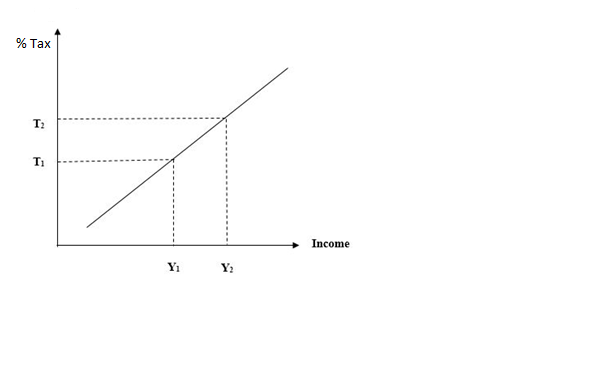
Progressive tax system: The tax rate increases with income. It aims to reduce income inequality. An example is PAYE (Pay As You Earn).

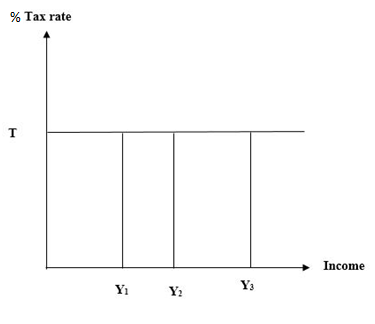
Proportional tax system: The tax rate is constant regardless of income changes. It aims to collect more money and maintains equal tax incidence regardless of ability to pay.
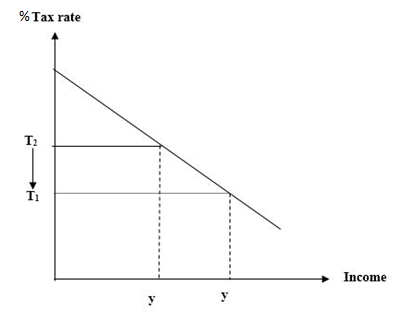
Graphical illustration:
Regressive tax system: The tax rate decreases as income increases. The higher the income, the lower the proportion of income paid as tax, and vice versa. It encourages investments.
Example: Social security tax in the USA (2007) is 6.2% on wages up to $97,500.
(i) A person earning $30,000 pays $1,860 (6.2%).
(ii) A person earning $200,000 pays $6,045 (3%).
(iii) A person earning $500,000 pays $6,045 (1.2%).
Since the richest pay the smallest percentage, it is regressive.
Requirement of a Good Tax Structure / System
The tax structure is part of the economic organization of society and must fit its overall economic environment. No tax system that does not satisfy these basic conditions can be termed good. The state should pursue the following principles:
- The primary aim of tax should be to raise revenue for public services.
- People should pay taxes according to their ability, assessed mainly on income and property.
- Tax should not discriminate between individuals or groups.
- The tax system should be flexible, and tax laws should be clear and simple.
- The system should be comprehensive, covering a wide tax base.
- It should be economical, reducing the cost of tax administration.
- It should avoid double taxation.
TYPES OF TAX
1: DIRECT TAX.
Taxes imposed on incomes and personal property whose burden is not shifted to another.
Includes: (a) Pay As You Earn (PAYE), (b) corporation tax, (c) capital gains tax, (d) agriculture revenue tax, (e) death/estate duty, (f) property tax, (g) inheritance duty, (h) surtax (imposed on very rich persons).
ADVANTAGES OF DIRECT TAX.
- Economical; cost of collection is minimal.
- Source of revenue to the government.
- Taxpayers know in advance the amount to be paid.
- Most direct taxes are progressive, reducing income gap.
- Direct taxes are simple to understand.
- Helps reduce demand-pull inflation by reducing consumers’ purchasing power.
- Easy to determine the incidence of taxation.
DISADVANTAGES OF DIRECT TAX.
- Discourages savings.
- Discourages people from working hard.
- Easy to evade.
- Discourages consumption due to decreased disposable income.
- Discourages investment when charged on profit.
- Not paid by all people, e.g., unemployed do not pay.
- The burden of tax is highly felt.
2. INDIRECT TAX.
Taxes usually imposed on commodities. This tax can be passed from one person to another through higher prices.
Includes:
- Excise duty – charged on locally produced goods.
- Sales tax on locally produced goods at selling.
- Custom duty – includes import and export duty.
- Value Added Tax (VAT).
ADVANTAGES OF INDIRECT TAX.
- Not easy to evade.
- Results in higher revenue.
- Convenient for taxpayers.
- The effect of the tax is felt by consumers.
- Used to control consumption of harmful products.
- Used to protect domestic industries.
- Used to stabilize the economy through changes in custom duty.
- Encourages people to work hard; higher prices motivate harder work.
- Useful in controlling allocation of resources.
DISADVANTAGES OF INDIRECT TAX.
- Indirect taxes are regressive or proportional; poor and rich pay the same amount, affecting the poor.
- Leads to cost-push inflation.
- Encourages black market when taxes are high.
- Not easy to determine who bears the incidence of the tax.
- Discourages industrialization due to high production costs.
- Leads to misallocation of resources as investors seek low-tax areas.
- Inconvenient for businessmen due to required follow-up.
Qn: Why do most LDCs depend more on indirect tax than direct tax? Discuss disadvantages of direct and advantages of indirect tax.
VALUE ADDED TAX (VAT)
- Tax imposed on the value added to commodities at different stages of production.
- Tax is valued at each stage of production.
- VAT is paid and accounted for by registered VAT taxpayers.
- VAT is remitted by taxpayers within one month from the day of purchase.
- VAT is imposed on sales at every stage of production; the final cost is borne by the consumer through higher prices.
VAT is a tax on expenditure; it taxes goods and services at each stage of production.
ADVANTAGES OF VAT.
- Widens the tax base, reaching many consumers.
- Easy to calculate when records are available.
- Non-discriminative to factors of production; all are taxed equally.
- Encourages traders to keep books of accounts.
- Shifts incidence directly to the consumer (easy to identify final payer).
- Allows taxpayers to use government revenue before remitting tax.
- Enables some goods to enjoy tax exemption.
- Minimizes tax evasion since traders pay based on demand or receipts.
DISADVANTAGES OF VAT.
- Tax is proportional, affecting small firms.
- Leads to price increases.
- Not economical.
- Not easy for taxpayers (consumers) to understand.
- Delays government revenue as taxpayers remit tax after a given time.
- Affects consumption levels due to higher prices.
IMPORTANT TERMS IN TAXATION.
- TAX EVASION. Situation where a taxpayer refuses to pay the assessed tax. It is illegal.
- TAX AVOIDANCE. Situation where a taxpayer legally avoids paying tax using loopholes in tax law. It is not illegal.
- SPECIFIC TAX. A fixed amount per unit purchased.
- AD VALOREM TAX. Tax based on the value of goods, e.g., sales tax, property tax.
- THE BURDEN OF A TAX. The feeling or impact on the taxpayer when paying tax.
- TAX BENEFIT PRINCIPLE. The amount of tax paid should relate directly to the benefit the taxpayer receives from government spending.
- ABILITY TO PAY PRINCIPLE. Tax should be imposed according to taxpayers’ capacity; higher income earners pay higher taxes.
INCIDENCE OF TAXATION.
Refers to who ultimately pays the tax. It can be formal incidence (initial burden) or effective incidence (final burden).
In direct tax, the incidence rests on the person who pays the tax first and cannot be shifted.
In indirect tax, incidence can be shifted in two ways:
- Forward shift: Tax burden is shifted to the final consumer through higher prices.
- Backward shift: Seller negotiates with the producer to lower the price.
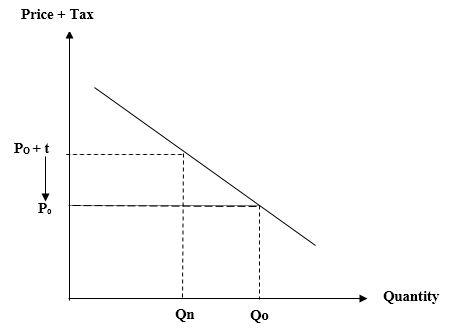
The incidence depends on the elasticity of demand:
When demand is elastic:
Elastic demand means a small price change leads to a large change in quantity demanded. The tax burden falls on the seller and cannot be shifted to the buyer.
When demand is perfectly inelastic:
Price changes do not affect quantity demanded. Tax burden is shifted to the buyer. This applies to necessary goods without substitutes.
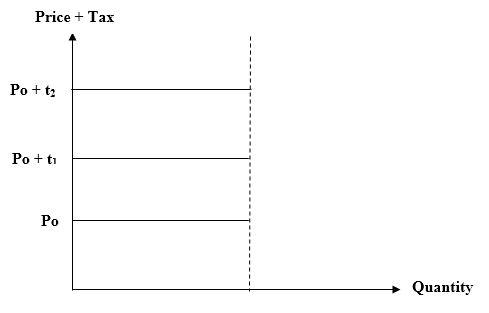
When demand is perfectly elastic:
Price remains constant with quantity changes. The whole tax burden is paid by the supplier.
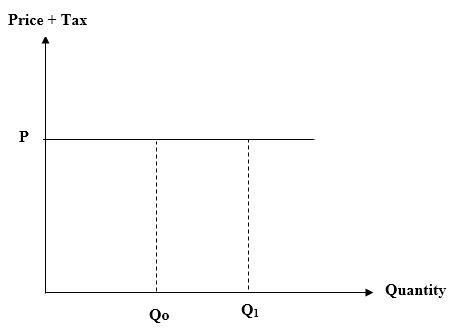
When demand is inelastic:
Big price changes lead to small quantity changes. Tax burden falls on the buyer (consumer).
FACTORS THAT MAY DETERMINE THE SHIFTING OF THE INCIDENCE.
- The market power of buyers and sellers: In monopoly, the burden shifts to the buyer via price discrimination; in perfect competition, it is taken by the supplier.
- The tax base: A narrow tax base makes it difficult to shift the tax burden as taxpayers substitute taxed commodities with untaxed ones.
WHY PAY TAX? (Positive effects)
- To increase government revenue.
- To control harmful goods.
- To reduce the gap between rich and poor.
- To enable government to provide public services.
- To control importation and correct balance of payments.
- To protect domestic and infant industries.
- To control allocation of resources.
- To stabilize the economy.
NEGATIVE EFFECTS OF TAXATION.
- Discourages savings.
- Discourages hard work.
- Discourages investment.
- May lead to illegal activities.
- May cause inflation.
- May cause political and social instability if revenue is not properly spent.
TAXABLE CAPACITY.
- Ability of a nation to obtain revenue from taxpayers necessary for its expenditure.
- Ability of the taxpayer to pay the taxes imposed.
- Limits of a country’s capacity to accept and absorb taxation.
FACTORS AFFECTING TAXABLE CAPACITY.
- The real wealth of a country (resources).
- The size of population; higher population means higher taxable capacity depending on the economically active fraction.
- The level of economic development.
- Possibility of tax evasion and corruption.
- The level of income; lower income means lower taxable capacity.
- The attitude of taxpayers towards paying taxes.
- Income distribution in the country.
- Level of inflation.
Qn: Discuss why taxable capacity is low in less developed countries.
Qn: Discuss measures a country can adopt to widen the tax base and increase taxable capacity.
II. PUBLIC EXPENDITURE.
Refers to government spending. It is categorized into two groups:
- Recurrent expenditure: Government spending on public consumption like education, salaries, health, etc.
- Development expenditure: Spending on development projects like roads, communication, etc.
Roles of government expenditure (why should government spend?)
- To regulate economic activities.
- Influence allocation of resources.
- Maintain government enterprises and property.
- Provide essential goods and services to the public.
- Stabilize the economy.
- Motivate government employees through rewards, seminars, etc.
- Balance national development.
III. NATIONAL BUDGET
- Estimate of government revenue and expenditure within a financial year.
- Statement showing anticipated receipts and payments.
TYPES OF NATIONAL BUDGET.
Two main types: Balanced and unbalanced (deficit or surplus) budgets.
- Surplus budget: Anticipated revenue is greater than expenditure. Implies:
- Reduction in price level.
- Reduction in money supply.
- Reduction in economic activities.
- Grants and gifts to other countries.
This kind of budget is rare in LDCs.
Qn: Why do countries plan for surplus budgets? What are the objectives?
- Reduce money supply.
- Finance future development projects.
- Provide grants and loans to other countries.
- Correct balance of payments.
- Discourage consumption of some goods.
- Control inflation by reducing aggregate demand.
- Help repay debts.
Problems of surplus budget:
- Unemployment.
- Depression.
- Decrease in money supply leading to reduced investment and saving.
- Decrease in aggregate demand leading to reduced production.
- Increase in tax rates to maximize revenue.
Deficit budget
Anticipated revenue is less than expenditure. Occurs when government expenditure exceeds revenue, common in developing countries like Tanzania.
Balanced budget
Anticipated revenue equals expenditure. Classical economists advocated balanced budgets based on the policy of “living within means”.
This implies:
- Government will borrow more within the financial year.
- Increase in money supply due to increased expenditure.
- Increase in price level.
- Increase in aggregate demand and unemployment.
- Government may sell assets.
Qn: Why do LDCs have deficit budgets?
- To increase aggregate demand.
- Increase supply levels.
- Control deflation.
- Reduce tax burden.
- Encourage borrowing.
- Shift economy from depression to recovery.
- Increase economic activities.
Qn: What are the causes of budgetary deficit in Tanzania?
Qn: Discuss the functions of the budget.
PUBLIC DEBTS.
Total borrowing by the government, including internal and external borrowing.
CLASSIFICATION OF DEBTS
- Internal debts: Money borrowed from individuals and institutions within the country.
- External debts: Borrowing from outside the country, e.g., World Bank, IMF, African Development Bank.
- Reproductive debts: Used for productive activities generating revenue to repay debts.
- Non-reproductive debts (dead weight): Used to finance activities that do not generate returns, e.g., weapons.
- Short-term debts: Debts paid within a short time.
- Long-term debts: Debts paid after a long period, e.g., 10 to 50 years.
- Funded debts: Debts without a fixed repayment time.
- Unfunded debts: Debts with a stated redemption date.
- Voluntary and compulsory debts.
REDEMPTION OF PUBLIC DEBTS
Payment of public debts.
WAYS USED IN REDEMPTION OF PUBLIC DEBT.
- Repudiation: Government refuses to pay debts.
- By conversion: Government takes a new loan with lower interest to pay previous higher-interest loan.
- Negotiations on debts: Cancellation of debt.
- Use of surplus budget: Extra money from surplus used to pay debts.
- Capital levy: Taxation on assets like buildings; revenue used to pay debts.
- Sink fund: Government invests money to earn interest used to pay debts.
- Privatization of public goods: Money from privatization used for debt repayment.
- Use of grants and gifts received.
- Selling securities to the government.
- Use of accumulated foreign reserves.
CAUSES AND JUSTIFICATION OF PUBLIC DEBTS.
Qn: Why do LDC governments depend on borrowings?
- To increase revenue since tax revenue is insufficient.
- To reduce tax burden on taxpayers.
- To correct balance of payment deficits.
- To avoid inflation by reducing money printing.
- To overcome natural calamities like drought.
- To attain economic growth through funding economic activities.
- To pursue development plans.
- To balance the budget and cover deficits.
- To repay loan conversions.
- To control economic depression by increasing aggregate demand and employment.
Qn: Discuss the roles played by public borrowing in LDCs.
- Leads to over-dependency.
- Reduces money available for consumption and investment.
- Worsens balance of payment position.
- If not used productively, becomes a burden.
- Most debts are tied aid with conditions.
- Long-term debts shift burden to future generations.
- Burden of paying interest and administration costs.
Qn: Discuss measures your country is using to reduce debt burden.
Qn: Discuss why external debts have been increasing in LDCs.
FISCAL POLICY.
Use of taxation, government expenditure, and public borrowing to influence economic activity.
How fiscal policy works (mechanism)
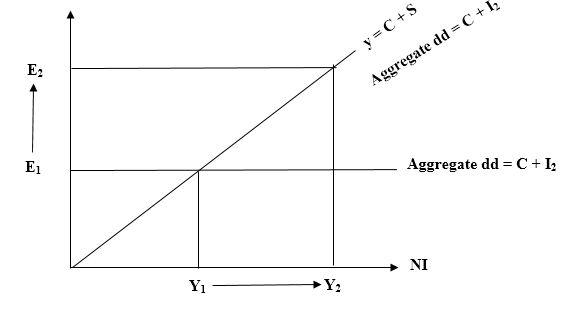
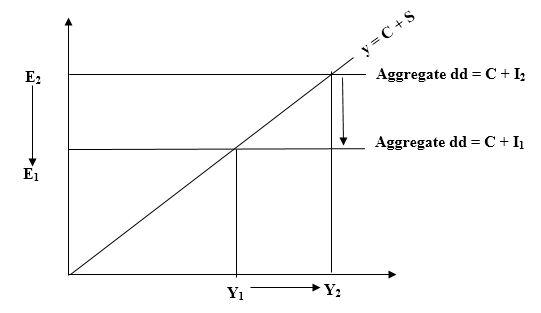
Works in two ways: to expand or contract the economy.
EXPANSION FISCAL POLICY
Increase government expenditure and decrease tax to increase aggregate demand.
CONTRACTION FISCAL POLICY
Increase tax and decrease expenditure to reduce aggregate demand.
Qn: Discuss how fiscal policy can be used to bring economic development (hint: use roles of tools of fiscal policy).



2 Comments