


REPRODUCTION
Reproduction is the ability of an organism to produce an individual of its type in order to increase the number of individuals of that species. This biological process ensures the continuation and survival of species over generations.
MEANS OR TYPES OF REPRODUCTION
- Asexual reproduction
- Sexual reproduction
ASEXUAL REPRODUCTION
Asexual reproduction is the type of reproduction that does not involve the fusion of gametes. It results in offspring that are genetically identical to the parent.
CHARACTERISTICS
- Occurs without fusion of gametes.
- A single parent is capable of reproducing asexually.
- It is a product of mitosis.
- It occurs rapidly, often preventing the occurrence of sexual reproduction.
- It involves few stages before offspring are produced.
ADVANTAGES
- It is a quick process yielding a substantial number of offspring, increasing the chances of survival during unfavorable environmental conditions.
- It eliminates the need for sexual reproduction.
- No changes in genetic makeup occur since the process is a product of mitosis, maintaining good qualities in a population.
- No mixing of genetic material from more than one parent; therefore, contamination and infections are minimized.
DISADVANTAGES
- Rapid production of offspring can lead to overcrowding and competition for resources such as light, food, mineral salts, and air.
- DNA replication does not introduce mutations; daughter cells are exact copies of the mother cell, limiting variation and adaptability.
- Defective genes may propagate through the population, potentially affecting the entire species.
- Lack of gene mixing eliminates diversity among individuals, limiting evolutionary advancement.
The lower species rely mainly on mutations for diversification and adaptation. For example, viruses and bacteria that reproduce asexually can survive in harsh environments, such as antibiotic-resistant bacteria and HIV viruses that mutate when patients do not take combination drug therapies. However, mutations may occur slowly, and organisms may fail to adapt quickly to environmental changes.
In contrast, sexually reproducing organisms combine variation through mutation, gene recombination, random alignment of chromosomes at metaphase I, and crossing over, ensuring diversity and survival value within their species.
TYPES OF ASEXUAL REPRODUCTION
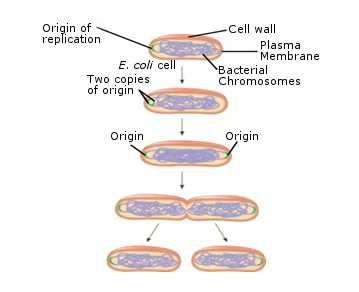
- Binary fission
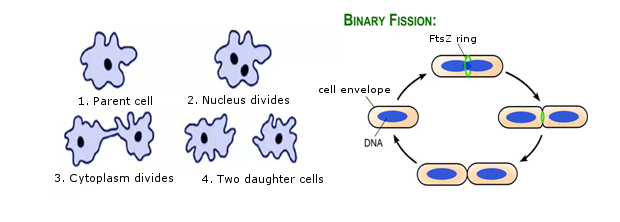
- Multiple fission
Multiple fission is the repeated division of cells to form more than two daughter cells, for example, Plasmodium which infects liver cells.
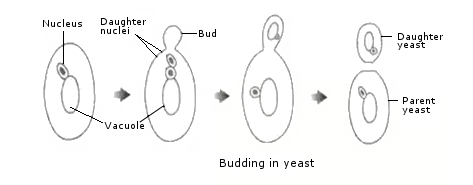
- Budding
Examples include yeast and Hydra.
Definition:
Budding is a form of asexual reproduction in which a new individual is produced as an outgrowth (bud) of the parent and later released as an independent, genetically identical copy of the parent.
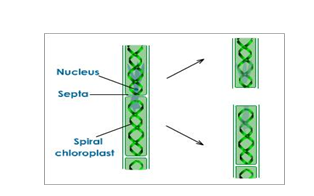
- Fragmentation
Examples include Spirogyra and ribbon worms.
Fragmentation is a form of asexual reproduction where an organism breaks into two or more parts, each of which grows into a new individual.
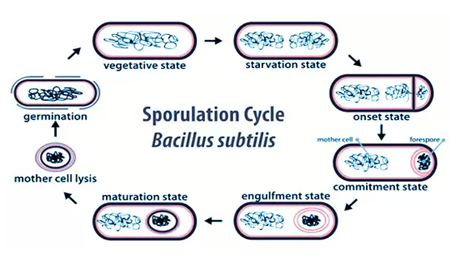
- Sporulation
Sporulation is a form of asexual reproduction involving the production of spores, which are dispersed and germinate to grow into new individuals, for example, fungi and plants.
- Vegetative propagation
Vegetative propagation is a form of asexual reproduction in which a bud grows and develops into a new plant.
For example, a stem of cassava develops into a cassava plant.
SEXUAL REPRODUCTION
Sexual reproduction is the production of a new organism by combining the genetic material of two sex cells (gametes) from either a single parent or two different parents. This process introduces genetic variation into the offspring.
The two main processes of sexual reproduction are:
- Meiosis, which involves halving the number of chromosomes.
- Fertilization, involving the fusion of two gametes and the restoration of the original number of chromosomes.
- During meiosis, chromosomes of each pair usually cross over to achieve homologous recombination, which increases genetic diversity during sexual fertilization.
PROPERTIES OF SEXUAL REPRODUCTION
- It involves gametes (sex cells), hence termed sexual reproduction. The two sex cells may come from two different parents (dioecious) or from a single parent (monoecious).
- The sex cells can be isogametes (gametes of the same morphology) in lower animals or heterogametes in higher animals.
- Organisms carrying out sexual reproduction may be monoecious or dioecious.
- The process involves many stages, which may delay offspring production.
- The process is associated with risks such as missing a mate or failed fertilization.
- It provides variation among offspring through:
- Meiosis involving crossing over, producing recombinant chromosomes.
- Random fertilization, where genes are randomly combined due to any sperm fertilizing a given egg.
- The process is affected by age; young and old individuals typically cannot reproduce, while adults can.
ADVANTAGES OF SEXUAL REPRODUCTION
- It allows extensive genetic shuffling, leading to the evolution of organisms.
- It produces variation in offspring through crossing over during prophase I and random assortment during metaphase I, increasing species survival and preventing extinction.
- The delayed production of offspring due to age factors naturally reduces overpopulation and competition among organisms.
DISADVANTAGES OF SEXUAL REPRODUCTION
- It is uncertain, especially in external fertilization where sperm must meet the ovum outside the body; fertilization may fail.
- Even in internal fertilization, risks such as missing a mate or sperm destruction by acidic fluids reduce the probability of successful reproduction.
- Offspring maturity is achieved slowly.
- Delayed offspring production may lead to species extinction in case of disasters.
Despite these setbacks, sexual reproduction is the primary method for most microscopic organisms, including almost all animals and plants. It is preferred because it allows populations to evolve rapidly in response to changing environments through recombination of alleles, increasing genetic variation.
MEIOSIS
Meiosis is a type of nuclear division resulting in four daughter nuclei, each having half the number of chromosomes of the parent cell. It is also called reduction division because it reduces the chromosome number from diploid (2n) to haploid (n). Meiosis is primarily involved in gamete formation.
Human gametes have 23 chromosomes: 22 autosomes and 1 sex chromosome. A sperm cell contains 22 autosomes plus either an X or Y sex chromosome.
An ovum contains 22 autosomes plus an X chromosome.
SOME TERMS USED:
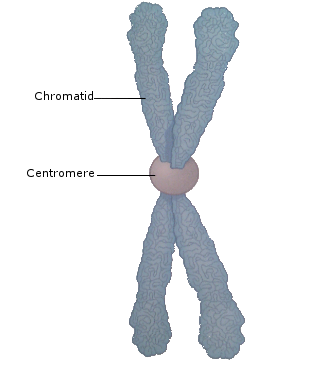
- Chromosome: A thread-like structure visible in the nucleus during nuclear division.
- Sex chromosome: Chromosomes responsible for determining the sex of an individual.
- Autosome: Chromosomes responsible for determining characters other than sex.
Fig. Structure of Chromosome
PHASES OF MEIOSIS
Meiosis is a lengthy process that passes through two cycles to complete:
(a) Meiosis I or first meiotic division
(b) Meiosis II or second meiotic division
MEIOSIS I
This division reduces the chromosome number by half.
Meiosis I includes the following phases:
- Interphase I
- Prophase I
- Metaphase I
- Anaphase I
- Telophase I
(i) INTERPHASE I
This preparatory phase involves the nucleus preparing to divide. Events include:
- Replication of organelles.
- Increase in cell size.
- Replication of most DNA and histones.
- Chromosomes replicate, existing as pairs of chromatids joined by centromeres.
- Chromosomal material is present but not clearly visible except for nucleoli.
(ii) PROPHASE I
The longest stage, divided into five consecutive sub-stages:
- Leptotene
- Zygotene
- Pachytene
- Diplotene
- Diakinesis
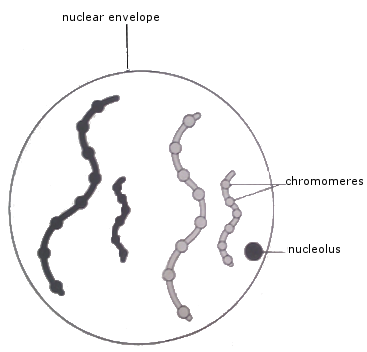
(a) LEPTOTENE (thin thread stage)
Leptotene initiates meiosis. During this stage:
- Chromosomes appear as uncoiled thread-like structures.
- Chromosomes appear longitudinally single.
- Chromosomes have dense granules called chromomeres at irregular intervals.
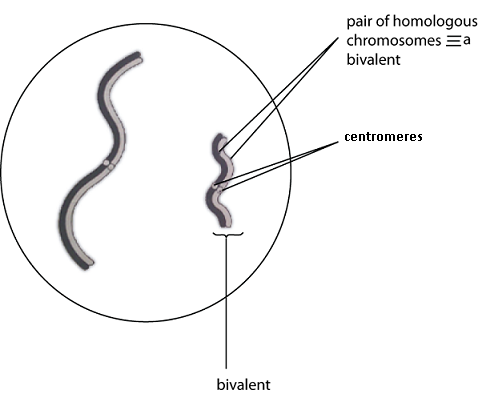
(b) ZYGOTENE (pairing stage)
During zygotene:
- Homologous chromosomes move close and lie side by side, chromomere by chromomere, under synaptic force.
- Synapsis begins at one or more points and unites along the entire chromosome length.
(c) PACHYTENE (thickening stage)
During pachytene:
- Chromosomes thicken and shorten by coiling, becoming visible.
- The nucleolus attaches to particular chromosomes.
- Synaptic force starts to lapse; homologous chromosomes begin to separate.
Each chromosome appears as a double structure.
(d) DIPLOTENE (duplication stage)
- Each chromosome duplicates completely to produce two chromatids; each bivalent has four chromatids.
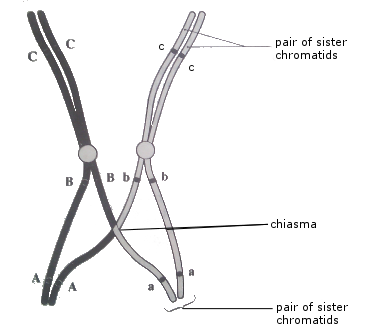
- Chromatids of homologous chromosomes cross over at chiasmata, where chromosomes break and rejoin, exchanging genetic material. This leads to new gene combinations and genetic variation.
(e) DIAKINESIS (moving apart stage)
During diakinesis:
- The nucleolus detaches and disappears.
- Chiasmata move toward chromosome ends.
- Bivalents contract further.
- Chromatids of homologous chromosomes repel each other.
- Centrioles, if present, migrate to poles.
- The nuclear membrane disintegrates and spindle fibers form.
Study problem:
- Describe the events of prophase of meiosis I and comment on the biological consequences of chiasmata formation.
METAPHASE I
During metaphase I:
- Bivalents align across the equatorial plate with centromeres equidistant from the plate.
- The nuclear membrane has completely broken down.
- Spindle fibers attach to centromeres at the equator.
ANAPHASE I
During anaphase I:
- The two centromeres of each bivalent do not divide; sister chromatids remain together.
- Centromere pairs move toward opposite poles.
- Chiasmata break down completely.
- Chromosomes separate into two haploid sets in daughter cells.
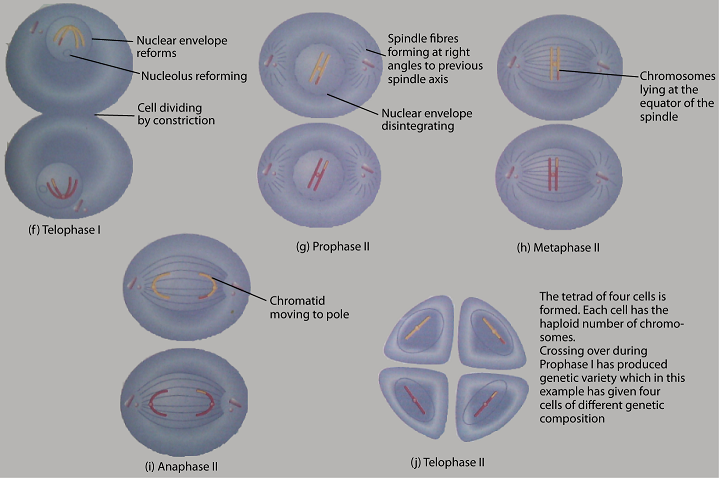
TELOPHASE I
This marks the end of meiosis I. During telophase I:
- Homologous chromosomes arrive at opposite poles.
- Spindle fibers disappear, chromatids uncoil, and nuclear membranes reform around each pole.
- Cytoplasm divides to form two daughter cells.
Note: In many plant cells, telophase or cell wall formation does not occur in interphase I; the cell proceeds directly from anaphase to prophase II.
INTERPHASE II
This phase occurs only in animal cells; there is no interphase II in plant cells. DNA replication does not occur, but the cell’s energy stores increase. This stage is followed by meiosis II, which behaves similarly to meiosis I.
PROPHASE II
During prophase II:
- Nucleoli and nuclear membrane start to disintegrate.
- Chromatids shorten and thicken.
- Centrioles, if present, move to opposite poles.
- Spindle fibers appear.
METAPHASE II
Centromeres align at the equator of the spindle.
ANAPHASE II
During anaphase II:
- Centromeres divide.
- Spindle fibers shorten, pulling chromatids to opposite poles.
- Cytoplasm begins to cleave.
TELOPHASE II
During telophase II:
- Chromosomes uncoil.
- Spindle fibers disappear.
- Nuclear membranes reform, followed by complete cytokinesis.
- Four daughter cells are formed, each with half the number of chromosomes of the parent cell.


5 Comments