


GENERAL INTRODUCTION TO AGRICULTURE SCIENCE
THEME 01: GENERAL INTRODUCTION TO AGRICULTURE SCIENCE
Definition of agriculture: Agriculture is the science and art of cultivating crops and raising livestock to produce food and goods for human beings.
The word art refers to the skill of the farmer in cultivating crops and raising livestock.
The word science is defined as knowledge of nature. Farmers use the knowledge gained by scientists to grow their crops and livestock.
IMPORTANCE OF SCIENCE IN SOCIETY
- Used in food processing
- Used in crop production
- Used in making pesticides
- Used in making fertilizer
- Helps in producing new breeds of animals
- Used in food preservation
- Helps to know what endangers animals and crops
THE SCOPE AND INTEGRATION OF AGRICULTURE WITH ARTS AND SCIENCE SUBJECTS
Biology: Involves breeding of crops and livestock.
Geography: Involves crop and animal distribution, soil, and water conservation.
Mathematics: Involves production economics and research, farm survey, mechanization, finance, and soil science.
Chemistry and Physics: Biochemistry, animal and crop science and protection, soil chemistry, farm mechanization.
Zoology: Animal production science and veterinary medicine.
Sociology: Agricultural extension and education.
Economics: Finance and marketing.
HOW FARMING BEGAN
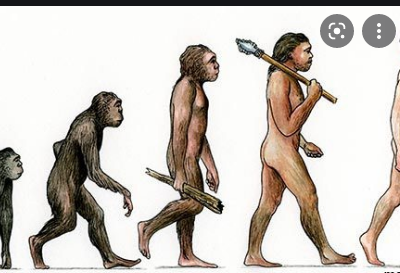
In prehistoric times, people lived by collecting fruits, seeds, leaves, and roots of trees they found in bushes and forests, and by hunting wild animals. Men started as food gatherers and hunters. They lived in very small groups, and the population was so small that there was no difficulty in obtaining enough food.
The first big discovery was the cultivation of land by scratching the ground with wooden sticks and growing some wild edible plants.
After many generations of selection and breeding, this gave rise to the cereal crop varieties we grow today. Various types of wild animals and birds were caught and tamed, later becoming domestic animals. Due to these developments, some form of settled agriculture started, but the use of poor tools remained common.
The arrival of Europeans in East Africa marked a further improvement in farming methods. Cash crops and exotic breeds of livestock were introduced, mainly intended to provide raw materials for industries such as the textile industry in Lancashire, England. The revenue from cash crops helped the colonies pay for their administrative costs, reducing dependence on the colonizers. However, more attention was paid to Europeans than to African farmers.
BRANCHES OF AGRICULTURE SCIENCE
The subject material of agriculture entails several subdivisions, namely:
- Crop husbandry: Also known as crop science, it deals with botany and examines plant life cycles, weeds, pests and diseases and their control, plant breeding, and genetics.
- Animal husbandry: Animal science that deals with the rearing of all types of livestock, e.g., cattle, poultry, sheep, goats, pigs, and rabbits. It also involves all factors that influence the production performance of livestock to obtain high yields of animal products of good quality for human consumption and industries.
- Soil Science: Involves the study of soil in general, how it is formed, how it sustains life, and how it can be maintained through many years of use.
- Agricultural machinery: Deals with tools and machinery used in farming activities. Modern farming requires the use of tools and machinery to save time and cope with large amounts of work while increasing yield. Farm modernization cannot be achieved without machines.
- Agricultural Economics: Provides information on basic economic principles, gross domestic product, and income per capita in relation to agricultural development and daily activities.
IMPORTANCE OF AGRICULTURE
Importance of agriculture to farmers
- Provides food: Food may be obtained from growing crops or from animal sources, such as meat, milk and milk products, eggs, and blood. It is the duty of every nation to feed its people because a well-fed nation is a healthy one.
- Provides employment: Workers in ranches, coffee, tea, and sisal estates, as well as smallholder farmers, are all employed through the agriculture sector.
- Clothing: Agriculture generates materials from which clothing is made. Fibre from cotton and other crops is processed in textile industries to produce cloth. Woolen clothing and leather materials like shoes, belts, jackets, and handbags are obtained from animals.
- Money: Crops, animals, and animal products are sold for cash.
- Consumer goods: Manufactured products used by farmers for domestic purposes, such as sugar, soap, cooking oil, and others, are processed from raw materials obtained from agriculture.
- Shelter: The agriculture sector generates materials used by farmers to build houses. Shelter is one of the basic requirements of humans.
- Provides raw materials for industries: Most agricultural products require processing.
- Labor: Some animals, such as oxen, donkeys, and camels, are used on farms for ploughing and simple transport.
- Fuel: Crop residues are used as firewood or charcoal.
- Social, cultural, and traditional value: Payment of dowry and fulfillment of traditional ceremonies and rituals often involve presenting one or more animals as the custom demands.
SCIENTIFIC PROCEDURES USED IN AGRICULTURE SCIENCE
Scientific process
Agriculture science requires scientific methods of research and investigation. One can study living things either by field observation (outdoors) or laboratory experimentation (indoors). The scientific process involves activities that deal with experimentation in chosen phenomena in science and finding solutions to problems.
Importance of scientific procedure
- To determine plants’ and animals’ requirements
- To determine pests and diseases which affect plants and animals
- To develop suitable new plant varieties and animal breeds
Procedural method
- Problem Identification
- Formulation of hypothesis
- Experimentation
- Observation and Data Recording
- Interpretation of Data
- Conclusion
Details of procedural steps
(i) Problem identification: The first step where the problem is recognized.
(ii) Formulation of Hypothesis: A hypothesis is an intelligent guess, a tentative theory, or tentative explanation.
(iii) Experimentation: An experiment is a series of investigations intended to discover certain facts. This may lead to acceptance, modification, or rejection of a hypothesis.
(iv) Observation and Data Recording: After setting up an experiment, a researcher makes careful observations and records all important events.
(v) Interpretation of Data: Once data is collected, the researcher explains what the data means in relation to the experiment’s purpose.
(vi) Conclusion: A researcher draws conclusions based on collected data. The conclusion either confirms or rejects the hypothesis. If rejected, another hypothesis is formulated and tested.
AGRICULTURE SCIENCE LABORATORY
Meaning of the concept:
The word laboratory originated from the Latin word laborer, which means to work hard. This suggests that the laboratory is a place meant for serious work, not for jokes.
Definition:
A laboratory is a room or building specially designed for agriculture experiments and where specimens and apparatus are kept.
Characteristics of a good laboratory:
- Supply of gas
- Electricity and water
- Large windows to allow enough light and air
The laboratory is meant to be a quiet and safe place to work. It can be dangerous if safety regulations are not followed.
Importance of Agriculture Lab
- Used for soil analysis
- Used to conduct experiments to examine plants’ and animals’ requirements
- Used for examining different plants’ and animals’ pests and diseases
- Can be used to store agricultural chemicals, fertilizers, seeds, and apparatus for future use
- Can be used to develop new crop varieties and animal breeds
Safety in Agriculture Laboratory
When conducting experiments, never assume they are completely harmless. All chemicals and apparatus should be handled with great care. For example, careless handling of glass apparatus might cause breakage and injury.
Safety laboratory rules
- Students should never handle chemicals, specimens, or apparatus without instructions from the teacher.
- Follow the teacher’s instructions carefully to avoid accidents.
- Report any accidents involving chemicals or apparatus immediately to the teacher for first aid.
- Put off flames when not in use.
- When heating substances, never point the open end of the tube towards yourself or others. Use test-tube holders.
- Keep inflammable substances away from flames.
- Do not play or run in the laboratory.
- Wear lab coats, gloves, and goggles when carrying out experiments.
- Always work on a clean bench. After experiments, clean all apparatus and specimens and return them to their correct places.
TYPES OF APPARATUS USED IN AGRICULTURE LABORATORY
- Beaker
- Brush
- Glass wool
- Bucket
- Beam balance
- Measuring cylinder
- Test tube
- Thermometers
FIRST AID
Definition:
First aid is the immediate and temporary care or help given when someone is injured or ill before being taken to the hospital or before the doctor arrives.
Importance of first aid
- Saves lives
- Brings hope and encouragement
- Prevents further bleeding or injuries
- Helps patients recover from shock
- Removes fear of death
- Reduces pain
Components of the First Aid Kit
- A pair of scissors
- Rolls of adhesive tape
- Assorted bandages
- Sterilized cotton wool
- New sterilized razor blade
- Jar of petroleum jelly
- Gentian violet solution
- Soap
- Antibiotic solution
- Painkillers (e.g., Panadol)
- Methylated spirit
- Clean water

THE CONTRIBUTION OF AGRICULTURE TO NATIONAL ECONOMY
- Food supply: All people require food, and the agricultural sector meets this basic need. A starving nation is a poor one, threatened by malnutrition, disease, and death. A country’s economy is strong when its people are well-fed, enjoy good health, and can steer their nation toward progress and prosperity.
- Supply of raw materials for industries: Raw materials come from crops or livestock without being altered or treated.
Examples of agricultural raw materials:
- Sisal for bag industries
- Groundnuts and sunflower for oil industries
- Leather goods for leather industries
- Cotton for textile industries
- Creates employment: In East Africa, over 80% of able-bodied men and women are engaged in agriculture.
- Agricultural chemicals (fertilizers, pesticides, fungicides), machinery, certified planting materials
- Marketing of agricultural products
- Agricultural extension and education
- Unskilled and semi-skilled workers cultivate, weed, and harvest plantation crops such as sisal, coffee, tea, and pyrethrum
- Earning foreign exchange: East African countries export products like coffee, tea, cotton, fruits, and vegetables.
- Source of market: Provides a market for industrial products, e.g., jembes, fertilizers, pesticides, herbicides, animal feeds, and veterinary drugs needed by farmers as inputs.
- Source of capital: High agricultural production generates wealth and accumulates savings in the form of foreign reserves.
- Improves the standard of living: Provides good health, shelter, clothing, and wealth.
AGRICULTURAL DEVELOPMENTS IN TANZANIA
Basic facts of agricultural development in Tanzania
- Suitable land for crop production and animal keeping: Tanzania has large suitable land for agriculture, but only a small part has been put into use.
- More than 80% of the population lives in rural areas where farming is the major activity.
- Agriculture in Tanzania is based on small-scale farming owned by poor peasants, while large-scale farming is owned by private companies or the government.
- Peasant farming produces little for family use as well as cash crops.
- Agricultural development is a major source of economic and social development in Tanzania.
SOCIAL, ECONOMIC, AND TECHNOLOGICAL PROBLEMS FACING AGRICULTURAL DEVELOPMENT IN TANZANIA
Poor crop and animal husbandry
Due to low levels of education, farmers fail to practice recommended practices, e.g., proper and timely fertilization, resulting in low harvests.
Poor marketing system
Poor transport infrastructure from the field to storage and from storage to market causes spoilage and destruction.
Psychological and sociological factors
Perception that farming is for the old, poor, and less educated, while white-collar jobs are for the young and educated.
Religious beliefs hinder raising some animals or crops, e.g., pig production, tobacco production.
Poor farming tools
Use of traditional hand tools is common in most areas, lowering production.
Pests and diseases
Capital (money) is needed to purchase chemical treatments, which most farmers cannot afford.
Price fluctuation
Changes in supply and demand of farm products may discourage farmers from producing certain commodities.
Poor storage
Poor storage facilities in rural farming communities may cause spoilage of harvests by pests and weather, accounting for at least 20% loss.
Climatic factors
Unreliable and insufficient rainfall per annum greatly affects farming operations, e.g., drying of crops, less pasture for animals, heavy outbreaks of pests.
Remedial steps
- Farmer’s education: Improve extension services to convey proper skills to farmers.
- Research centers: Develop proper animal breeds and crop varieties suitable for various areas and make them available to farmers.
- Improvement of transport system: Establish and construct good roads and railways to facilitate easy movement of raw materials from the field to the market.
- Improvement of land tenure system: Establish land title deeds as incentives to farmers so they can secure loans and make large investments.
- Provision of storage facilities: Facilitate storage of agricultural products for reasonable periods for future use.



1 Comment