


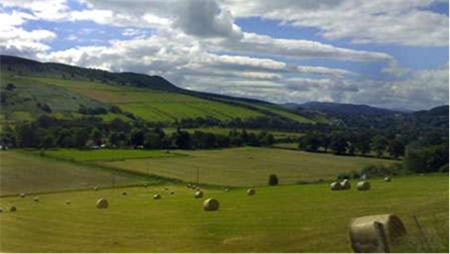
Danish pig farm
Inputs

Fertiliser, seeds and animals for breeding.
Outputs

Cereals, sugar beet, dairy products and bacon.
Danish bacon is imported to the UK and is often cheaper than UK bacon, pricing UK farmers
out of the market.
Factors

Large fields with no hedgerows.
Climate conducive to cereal growing.
Farming is gradually becoming less labour intensive with increased mechanisation.
Issues
Farmers are vulnerable to price fluctuations as there is a surplus of milk produced in the EU.
 These ‘milk lakes’ lower the price a farmer receives for every litre of milk produced.
Intensive subsistence farming
Rice growing in South East Asia
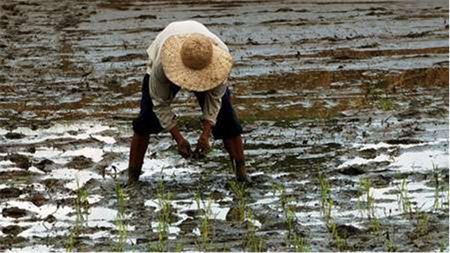
Rice being grown in SE Asia
Inputs

Many workers.
Flat land (or sometimes steep terraced hillsides).
Hot and wet monsoon climate.
Limited amounts of fertiliser and pesticide.
Output

Rice (and possibly other crops such as maize).
Some farmers keep animals such as chickens to supplement their diet.
Very little, if any, will be left over to sell and most will feed the farmer and his family.
Factors

Rice growing is labour intensive and heavily dependent on high rainfall and hot temperatures.
The growing population means there is a high demand for food which puts pressure on the
farmer to produce two or even three crops a year.
Issues

Crops can be affected by disease, which can reduce yields.
Children are often denied basic education because they are required to work on the farms.
This has a long-term impact on the development of the country.

Without enough rain the rice crop fails and there is a lack of food. This can lead to starvation in remote communities.



1 Comment