
Physical factors will determine which type of farming takes place in a particular area. Climate and relief are the dominant factors in determining which crops will grow and which animals are suited to the landscape.
Arable farming
Arable farming is common in the south-east where the summers are warm and the land is low, flat and fertile. The south-east also has good transport links and farms are close to markets in towns and cities such as London.
Market gardening
Human factors such as finance and proximity to markets are important to market gardening. It is common in East Anglia where fruit, vegetables and flowers are grown.
Hill sheep farming
Hill sheep farming takes place in the north and west of Britain in highland areas such as Snowdonia and the Lake District. There are cool summers and high rainfall. The climate and steep land make these areas unsuitable for growing crops.
Dairy farming
Dairy farming is common in the south-west and the west of England where the climate is warm and wet. There are also good transport links and good access routes to markets in these areas. The land may be flat or hilly, but not too steep.
Mixed farming
Mixed farming is found in areas where the climate and relief suit both crops and animals. It needs to be warm, but not too wet, and the soils need to be fertile and flat. Mixed farms need good transport links and accessibility to markets.
Farming is an industrial process which requires inputs (such as labour, machinery, climate and soil)
in order to produce outputs (crops and animal products).
The factors affecting farms can vary because different types of farm need different inputs and produce different outputs. Here we analyse three methods of farming.
Extensive commercial farming in the UK
Arable farming in East Anglia
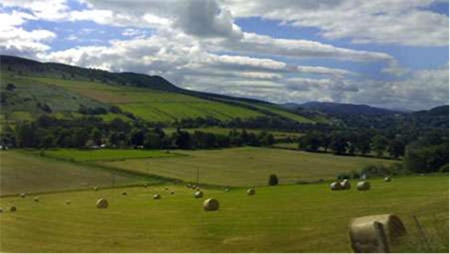
An arable farm
Inputs

Warm climate with low rainfall, which mainly falls during the summer
Warm summers help to ripen grain
Outputs

Cereals such as wheat and barley, potatoes and sugar beet
Factors

Flat land which allows the use of machinery
Well-drained fertile soils
Good transport links with large markets nearby
Issues

Soil erosion, due to hedgerow removal, means that the soil needs careful management.
Competition from cheap imports of cereals means that profits are declining – farmers need to
diversify in order to survive.
Intensive farming