Theme: Our School
Learning Area: Literacy I and II
Lesson one
1. How I come to school.
I come to school by
Other children go to school
a. by a car b. by a bus c. by a van d. on foot e. by a motor cycle.
Activity.
Mention any three ways children go to school.
Lesson two
2. People in my class.
a. teachers b. children/ pupils.
Activity
- Mention the names of your teachers in class.
- Write three names of children in your class.
Lesson three
3. Things on the way to and from school.
Cars, plants, roads, shops, sign posts markets, schools, hospitals, banks, rivers, hotels, petrol stations, post office, flowers, houses, churches, mosque, hills, lakes etc.
Activity
- List any six things you see on your ways to and from school.
- Name these things you see on your way to and from school.

Lesson four.
People in my school and the work they do
Teachers teach children.
Cooks cook school food. Maids/ cleaners | clean the school. |
Nurse | treat sick children/ pupils. |
Headteacher | heads the school. |
Burse | collects school fees. |
Librarian | keep school books. |
Gate keepers | open and shut the gate. |
Secretaries | type homework and exams |
Pupils | come to school to learn. |
Activity
Name any four groups of people found in your school Match correctly.
Teachers | collects school fees. |
Nurse | cook food. |
Bursar | heads the school. |
Cooks | keeps school books |
Head teacher | cares for sick children |
Librarian | teach children. |
Lesson five
Work, places of people in a school.
Teachers classroom
Cooks kitchen
Librarian Library
Headteacher office
Gate keeper/ guard the gate
Nurse sick bay
Cleaners/ maid the school compound.
Activity.
1. Name the work places of the following people.
- Librarian
-
 Nurse
Nurse - teachers
- cooks
 Nurse
Nurse2. Which people do we find in these places of work?
Office

Sick bay 
The school compound
At the gate
Lesson six
Things found in the school and their uses.
Chairs | for sitting on |
Books | for reading and writing |
Pans | for cooking food. |
Chalk | for writing on the blackboard |
Brooms | for sweeping the school. |
Dusters | for cleaning the black board. |
Tables | for writing on. |
Pencils | for writing our work |
Rags | for mopping the classroom |
Books shelves | for keeping in books |
Water | for cooking, drinking etc. |
Activity
- How are these things useful in a school?
Chalk
Pencils
Rags Pans
Water
- Draw and name any five things found in a school.
Lesson seven
Symbols of a school.
These are the things that make a school different from other schools e.g
School name school flag school badge school motto School anthem school address/ location school mission
My school profile.
School name Kabojja Junior School
Location Plot 17 Acacia Avenue
It was founded in | 1999. |
Uniform | cream shirt, grey short. Scot shirts. |
Motto Badge Flag | We strive to achieve |
Anthem | Kabojja the custodian. |
Activity.
- List any four symbols of a school.
- What is the name of the our school?
- What is the name of our headteacher?
Lesson eight
School/ class rules and regulations What we can and cannot do.
a. Class rules.
– do class work – get permission to get out. – sit properly in class
b. School rules.
- coming to school early. – Wearing school uniform when coming to school – Keep the school clean.
Importance of class or school rules
- Keep order in a school – To keep discipline in a school.
Activity.
What can children do to keep order at school? Give four ways.
Lesson nine
Different school activities.
Swimming, reading, dancing, singing, writing work, painting, drawing, playing games, colouring, slashing, digging, sweeping, mopping etc.
Activity
Mention any four school activities.
Lesson Ten
Keeping the school clean.
Ways of keeping the school clean.
a. by sweeping b. By slashing c. By mopping d. by painting
Activity.
How can we keep the school clean? Give four ways.
Lesson even
Things used to keep the school clean these are:
Broom, brush, rag, mop, slasher, water, soap, dustbin, rake, hoe Activity.
Draw and name seven things/ items used to keep the school clean.
Tropical Revision Exercises. (Lesson twelve)
Teachers should give revision exercises about the topic.
Lesson thirteen
Theme: Our Home
A home is a place where people or animals live.
Things that make up a home.
People buildings (mention them) animals plants roads compound
Activity.
- A is a place where people or animals live.
- Draw a good home.
 is a place where people or animals live.
Lesson fourteen.
Family : A family is a group of people living together related by blood or marriage.
Types of families
a. Nuclear family b. An extended family c. Single parent family.
Activity.
What do we call a group of people living, together related by blood or marriage?
Name the three types of families.
Lesson fifteen.
Nuclear family: A nuclear family is a family where we find father, mother and their own children.
An extended family: This is a family where we find father, mother, children and other relatives.
Examples of other relatives are: uncle, aunt, grandfather, grandmother, nephew, niece, cousin etc.
Single parent family: This is a family where we find one parent and his / her children.
Activity
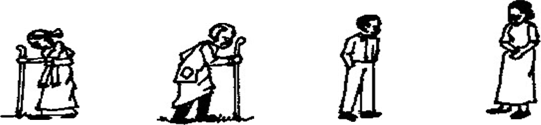
- Draw and name people we find in a nuclear family.
- Name these people we find in an extended family.
Lesson sixteen.
Family and family relationships.
- My mother’s father is my grand father. – My father’s wife is my mother
- My father’s sister is my aunt – My mother’s mother is my grandmother – The son of my father is my brother. – The brother of mother is my uncle.
- My aunt’s daughter is my niece.
Activity
- My mother’s sister is my – My father’s father is my – My fathers brother is my – My mother’s mother is my
 –
–Lesson seventeen.
Needs of a family
Basic needs of a family Food water shelter clothes.
Other needs of a family are:
Security, land, money, love, medical care, education
Activity
- Draw and name the four basic needs of a family.
- Mention any four other needs of a family.
Lesson eighteen
Meeting family needs
Ways of meeting family needs.
- By farming – By building houses – By taking children to school – By caring for sick – By buying clothes. – By buying food.
Activity
How do people meet their family needs? Give six ways.
Lesson nineteen.
Parent’s roles and responsibilities in a family.
Duties or roles of a father in a family.
– A father buys food. | – A father buys clothes |
– A father pays school fees. | – A father pays medical care. |
– A father takes children to school. | – A father grows crops. |
– A father builds a house. | – A father heads a family. |
Activity.
List six roles or duties of a father in a family.
Lesson twenty
Duties or roles of a mother in a family.
- A mother cooks food – A mother takes care of the children.
- A mother washes clothes – A mother buys food – A mother pays school fees. – A mother cleans the home.
- A mother takes children to school – A mother grows crops.
Activity
How is a mother useful in a family? Give six reasons. Lesson twenty one
Roles or duties of children in a family.
- Children collect fire wood. – Children fetch water.
- Children look after the animals. – Children clean the house and compound
- Children take care of the little ones. Roles or responsibilities of other family memberslhhljk
i. uncle ii. grand mother iii. aunt.
Lesson twenty two.
A house: is a building where people live.
Uses of a house.
- For sleeping in. – For keeping in property. – For resting in
- For staying or living in – It protect us from bad weather like rain, sunshine.
- It protects us from wild animals like snakes, lions, fox etc.
- It protects us from bad people like thieves, kidnappers etc.
Activity
- A building where people live is called a
- How is a house useful to man? Give five ways.
Lesson twenty three
Parts of a house
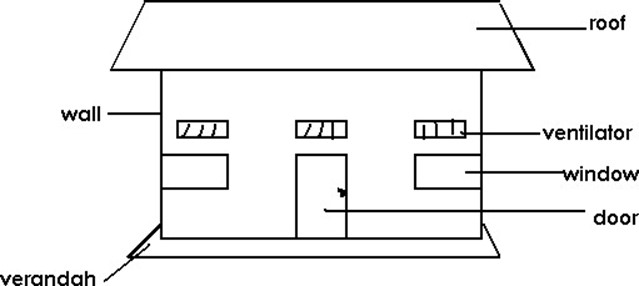
Activity
Draw and name the parts of a good house.
Lesson twenty four.
Rooms in a house and their uses.
- Bed room – for sleeping in – Sitting room – for resting in and entertainment.
- Kitchen – for cooking in food – store – for keeping in things.
- garage – For keeping in cars – Toilet – for easing in.
- Bathroom – for bathing in – Dinning room – for eating in food.
- Study room – for reading in books.
Activity.
What is the importance of the following rooms found in a house.
a. kitchen b. Bathroom c. bedroom d. garage
e. sitting room f. Dinning room g. Study room h. toilet
i. store
Lesson twenty five.
Things found in different rooms of a house.
- Bedroom – beds, clothes, wardrobes, blanket, bed sheets, mirrors, pillows etc.
- Kitchen – cups, plates, glasses, saucepans, cookers, fridge, forks, spoons etc.
- sitting room – chairs, tables, mats, television, radio, carpets etc.
- Garage – cars.
- Dining room – chairs , tables, tablemat etc.
- Study room – books, pens, pencils, bookshelves, chairs, table etc.
- Bath room – basin, water, towel, sponge, soap, tabs, slippers etc.
- Toilet – toilet paper, soap, water etc.
- store – food, charcoal, garden tools etc.
Activity
- Draw and name five things found in a house.
- List four things found in the following rooms of a house.
a. kitchen b. sitting room c. bedroom d. bathroom
e. Toilet f. Toilet g. store h. garage i. study room
Lesson twenty six Types of houses.
a. Permanent houses b. Temporary houses
Permanent houses : are the houses which last for a long time e.g bungalow and flat.
Temporary houses: are the houses which last for a short time e.g hut, Kiosk, tent, unipot, caravan, mud house etc.
Activity .
- List the two types of houses.
- Draw the following examples of houses.
i. bungalow ii. flat iii. hut iv. tent
Lesson twenty seven
Building materials
Building materials for permanent houses.
cement, bricks, stones, sand, tiles, timber, iron bars, Iron sheets, blocks, nails, metals, glasses.
Activity
- Name any eight materials used for building permanent houses.
- Draw the following building materials.
i. bricks ii. sand iii. nails iv. cement v. stones vi. iron sheet.
Lesson twenty eight.
Building materials for temporary houses.
Grass, mud, reeds, sticks, strings, poles, banana fibres, papyrus, cowdung, banana leaves, canvas etc.
Activity
- Write five building materials for temporary houses.
- Draw the following building materials
i. grass ii. reeds Lesson twenty nine. Sources of building materials. | iii. sticks | iv. | strings. |
Material | source | ||
Bricks | clay/ mud | ||
Stones | rock | ||
Timber/ poles | trees | ||
Steel bars | metal | ||
Blocks | cement/ sand | ||
Grass, reeds, papyrus | plants |
Iron sheets | metal |
Sand | soil |
Mud soil
Activity
Match the building materials to their sources
Iron sheets clay
Timber/ poles plants
Bricks rocks
Stones metals
Grass, reeds trees
Lesson thirty
Domestic animals
Domestic animals and their uses.
Animals uses.
A cow kept for milk, meat, skin. A goat kept for milk, meat, skin.
A sheep kept for mutton , wool
A pig kept for pork
A rabbit kept for meat
A donkey kept for transport
A camel kept for transport and meat
A dog kept for security and hunting
A cat kept for chasing rats A horse kept for transport.
Oxen kept for ploughing
A hen kept for meat and eggs.
Activity
a. How are the following animals useful in a home?
i. a dog ii. a sheep iii. a hen iv. a pig
Lesson thirty one
Animals homes
- A cow lives in a kraal – A dog lives in a kennel
- A pig lives in a sty – A horse lives in a stable
- A sheep lives in a fold – A person lives in a house
- A rabbit lives in a hutch – A cat lives in a basket.
- A hen lives in a pen – A goat lives in a goat pen.
Activity
Fill in the gaps correctly.
a. A pig lives in a . b. lives in a stable.
c. A rabbit lives in a .
Lesson thirty two.
Animals young ones.
i. cow – calf ii. goat – kid iii. sheep – lamb iv. Donkey – foal v. pig – piglet vi. Dog – puppy vii. cat – kitten viii. rabbit – bunny ix. Horse – foal
Animals and their sound.
i. a dog barks ii. A cow mows iii. A horse neighs. iv. A pig grunts v. A sheep bleats vi. A goat bleats. vii. A donkey brays. Viii. A cat mews ix. A hen clucks
Activity
a. Match these correctly.
sheep bunny pig calf cat kid dog kitten rabbit foal cow lamb goat piglet donkey puppy b. Fill the gaps correctly.
i. A horse  . ii. A mews iii. A pig
. iv. A
mows. V. A  barks. Vi. A donkey
.
Lesson thirty three
Topical revisional Exercises.
Teachers should give revision exercises about the previous topics
THEME: Our community
Lesson thirty four.
A community is a group of people living and working together.
A trip to communities around the school.
Lesson thirty five.
People we find in a community.
Teachers doctors | farmers | butcher | cobbler |
Nurse tailors | carpenter | shopkeeper | barber |
Bankers gardener | pilot | baker | police |
Builder mechanic | hair dresser | cattle keeper | secretaries |
Fishermen priest Activity a. listen and write | sheik | soldier | |
carpenter shopkeeper butcher | pilot | gardener | |
cobbler secretaries doctor | farmer | ||
b. List any fifteen people we find in a community.
Lesson thirty six
Activities done by different people in our community.
– | – Doctor – treating sick people. |
– | – carpenter – makes furniture. |
– | – shopkeeper – sells things in a shop |
– | – cobbler – mends shoes. |
– | – police – keeps law and order. |
– | – driver – drives cars |
– | – Dentist – treats our teeth. |
| – priest – leads prayers in a church. |
Lesson thirty seven People in our community and their places of work. | iii. Shopkeeper vi. butcher |
– teacher – school – doctor – hospital / clinic | – barber – salon |
| |
 i. doctor ii. teacher
 Activity
a. Mention the people who work in these places.
i. Hospital  ii. school iii. farm
iv. shop  v. carpentery vi. butcher
b. Give the work places of the following people.
i. iv. |
| ii. v. | mechanic | iii. | tailor |
 barber baker
Lesson thirty eight
People and what they use to do their work.
- teacher – chalk, pen, rulers, markers – Gardener – hoe, axe, panga, knife etc
- Carpenter – hammer, nails, wood – butcher – panga, knife etc – Police/ soldier – gun
Activity
List the things the following people use to do their work.
a. Gardener | b. | butcher c. teacher |
d. carpenter Lesson thirty nine Garden tool and their uses. | e. | Police/ soldier |
– Hoe – for digging/ ploughing | – | Garden fork – for ploughing. |
– Spade – for scooping | – | Wheelbarrow – for carrying crops, manure, tools |
– rake – for collecting rubbish | – | Watering can – for watering plants/ crops. |
– knife – for harvesting/ peeling | – | Axe – for cutting big trees |
– panga – for cutting Activity a. Match correctly. | – | slasher – for slashing grass. |
Watering can | for digging. | |
Slasher | for scooping | |
Hoe | for collecting rubbish | |
Rake | for watering plants | |
Knife | for slashing | |
Spade | for harvesting |
b. Draw and name five garden tools
Lesson forty
Needs of people in our community
Shelter, food, water, clothes, education, medical care, land, transport etc.
Activity
- Mention any five needs of people in our community.
- Draw these needs of people in a community
i. food ii. water iii. shelter iv. clothes
Lesson forty one
Important places/ features in a community (physical and man made)
Hospital | school | churches | mosques markets |
Hills | valleys | rivers | lakes banks petrol stations |
Activity
Mention any five features found in your community.
THEME: The human body and health
Lesson forty two
External parts of the body and their uses parts of the head.
Eyes, ears, mouth, chin, cheeks, neck, nose, teeth, eyebrows, eyelashes, forehead, face Activity
Naming the labelled parts of the head. Lesson forty three parts of the arm.
Shoulder, Elbow, hand, finger, thumb, fingernails, wrist, armpit etc.
Activity
Name the labelled parts of the arm.
Lesson forty four Parts of leg.
Thigh, knee, calf, foot, heel, toes, ankle, shin, sole etc. Activity
Name the labelled parts of the leg.
Lesson forty five
Others parts of the body.
Belly, chest, buttocks, breasts, back, navel, waist
Activity
Name the body parts below. (A picture of a human body) Lesson forty six
The sense organs and their senses
Eyes – for seeing – nose – for smelling –
ears – for hearing – tongue – for tasting
skin – for feeling
Activity
Match the organs to their senses.
Pictures

Lesson forty seven Use of other parts of the body. | |||
– Finger – catching | – hand – holding/ writing | – | legs – walking |
– knees – kneeling Activity Match correctly. | – bums – sitting | – | foot – kicking |
Legs | sitting | ||
Knees | catching | ||
Hands | walking | ||
Fingers | kneeling | ||
Buttocks | holding |
Lessons forty eight
Personal hygiene (keeping the body clean)
Personal hygiene helps to: – avoid bad smell. (odour)
- prevent common diseases – keep away germs
keep smart. – promote good health.
What is the importance of personal hygiene. Give (5) five importance.
Lesson forty nine
Ways of caring for the body.
- Brushing the teeth – combing hair/ cutting hair short
- Bathing the body – cutting finger/ toe nails short
- Washing hands after visiting the toilets/ latrines – wearing clean clothes.
- Washing hands before and after eating.
Activity
Give six ways you can keep your body clean
Lesson fifty
Things we nee to keep our body clean.
Water, razorblade, soap, toothpaste, towel, toilet papers, sponge, comb, pair of scissors, twigs, toothbrush, nail cutters.
Activity
- Draw and name any six things people use to clean their body
- Which body parts do we clean using the following items?
i. sponge ii. razorblade iii. toothbrush iv. water
v. comb
Lesson fifty one
Caring for the teeth. (ways of caring for the teeth)
- proper brushing – brushing every after meal
- not eating too hot / cold food – Avoid eating much sweets.
- Not eating too hard things.
Activity
How do you care for your teeth. (Give four ways)
Lesson fifty two
Things we use to clean the toilet/ latrines.
Broom, rag, water, soap, brush, vim.
Ways of keeping the toilet / latrines clean.
- By sweeping using a broom – by smoking using dry banana leaves
- By mopping using a rag. – By scrubbing using a brush
- By washing using water – by flushing.
a. Draw these things we use to clean our toilets.
i. broom ii. rag iii. water iv. soap v. brush
b. Give five ways how people can keep their latrine/ toilets.
Lesson fifty three
Proper use of the toilet/ latrine
- squatting properly – urinate or defecate in the – using toilet papers – flushing after using.
- Washing hands with soap after using the toilet.
Lesson fifty four
Rubbish disposal
Proper ways of disposing rubbish.
- picking rubbish – sweeping dust (dusting)
- raking rubbish – burying rubbish
- Putting rubbish in the rubbish pit – burning rubbish
- Putting dust / rubbish in the dustbin
Things we use to dispose rubbish
- hands for picking – broom for sweeping
- rake for collecting rubbish – dustbin for putting in rubbish/ dust.
- Rubbish pit – for putting in rubbish / dust.
Activity
- Mention any three ways how people can dispose rubbish at home.
- Match these correctly.
Broom for picking rubbish
Rake for putting in rubbish
Hand for putting in dust/ rubbish
Dustbin for collecting/ raking rubbish Rubbish pit for sweeping rubbish / dust.
Lesson fifty five
Common diseases (curable and non – curable)
Malaria cough influenza dystentery cholera Diarrhoae HIV and AIDS
Tuberculosis mumps Trachoma scabies chicken pox Polio Ringworms measles ebola typhoid
a. Mention any twelve examples of common disease.
Lesson Fifty six
Causes of common diseases.
Common diseases are caused by germs like virus, bacteria.
How common diseases are spread.
- Malaria – spread by female anopheles mosquitoes.
- Dysentery – eating dirty food/ house flies.
- cough – through air or sharing cups.
- Cholera – spread by houseflies and drinking dirty water
- eating dirty food
- Trachoma – spread by houseflies
- HIV and AIDs – sharing sharp objects
- Typhoid – drinking dirty water
- Scabies/ chicken pox – sharing clothes
- Ring worm – sharing combs, sponge or failure to bathe. Activity
How are the following diseases spread?
i. Cholera ii. cough | iii. | Diarrhoea iv. trachoma | |
v. HIV and AIDS vi. scabies | vii. | ring worms viii. Malaria | |
ix. Dysentery x. typhoid Lesson fifty seven Ways of preventing common diseases. |
|
| |
– Washing hands before and after eating. | – | Sleeping under a mosquito net | |
– Washing hands after visiting the toilets | – | Drinking boiled water | |
– Washing cups and plates with soap after use | – | Using the toilet or latrines properly | |
– Washing fruits and vegetables before eating them. | |||
– Avoid sharing sharp objects e.g razorblade – | immunizing children | ||
– Cooking and covering the food properly – | proper bathing. | ||
Activity
- How can we prevent malaria?
- Give eight ways of preventing common diseases.
Lesson fifty eight
Immunisation: Immunisation is a way of giving a vaccine to a person to prevent certain diseases.
What is a vaccine? A vaccine is a fluid used to immunize.
The childhood immunisable diseases.
Polio tetanus influenza B whooping cough Hepatitis
Tuberculosis (TB) Measles Diphtheria
Activity
- is a way of giving a vaccine to a person to prevent certain diseases.
- Write the right childhood immunisable diseases.
 is a way of giving a vaccine to a person to prevent certain diseases.
Lesson fifty nine
Signs of immunisable diseases
a. Sign of measles.
- The child has skin rash – The child has sores in the mouth.
- The child has fever – The child has dry cough.
b. sign of polio.
- Having weak muscles – Having high fever
- Lame arms/ legs
Activity
- Which immunisable disease causes lameness in infants?
- What are the common signs of measles. (Give three)
- How can we prevent childhood immunisable diseases?
Lesson Sixty
c. Signs of T. B (Tuberculosis)
- Coughing for a long time – Becoming thin
- Sweating at night
d. Signs of Tetanus.
- Stiff muscles/ tight muscles – Difficult in breathing.
e. Signs of Diphtheria
– Swollen neck – sore throat
f. Signs of Whooping cough
- Coughing that ends in vimiting – fast breathing
- Loss of weight.
Activity
a. Give one sign for each of the following diseases.
i. Diphtheria ii. Whooping cough iii. Tetanus iv. Measles v. Tuberculosis
b. What is the importance of immunisation in children ? (Give two) Lesson Sixty one.
Different revision exercises for the covered Themes.