Agriculture, or farming, is a primary industry. Farmers cultivate crops and rear animals to produce food and other products. Agriculture is affected by many of the same factors and concerns as other types of industry.
There are a range of agricultural operations from large commercial farms to small subsistence farms. All of these farms work to supply the constant demand for agricultural produce.
Primary industry
Primary industries are those that make use of the Earth’s natural resources – farming, fishing, forestry and mining.
Farming systems
Like any other industry, farming is a system of inputs, processes and outputs.
Inputs will be physical (land, sun, rain), human (labour) and capital (money for livestock and feed, seeds, equipment, wages).

Processes are the activities on the farm that turn inputs into outputs. For example, feeding and caring for the animals or planting and tending to the crops.

Outputs are products farmers sell at market or use to feed and clothe their families. Barley, hops, wheat, hay and straw are products from crops and meat, wool, leather and cheese are products from animals.
 In an sheep farm, for example, the inputs will include the sun and water required by the grass, the purchase of breeding stock and the farmer’s labour. The processes will include herding and caring for the sheep and lambs. Finally, the outputs will include wool and meat.
If a farm is to make a profit, the revenue from selling outputs must be greater than the cost of the inputs.
Farming
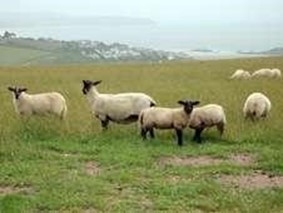
Sheep graze on a farm in Devon
Farms can be categorised according to what is being grown or reared, the size of the operation and the agricultural techniques being used.
Farming can be:

sedentary or nomadic
subsistence or commercial
arable, pastoral or mixed
extensive or intensive
Sedentary or nomadic?

Sedentary farming is when a farm is based in the same location all the time.
Nomadic farming is when a farmer moves from one place to another.
Subsistence or commercial?

Subsistence farming is when crops and animals are produced by a farmer to feed their family, rather than to take to market.

Commercial farming is when crops and animals are produced to sell at market for a profit.
Arable, pastoral or mixed?

Arable farms grow crops. Crops are plants that are harvested from the ground to be eaten or sold.

Pastoral farms rear animals – either for animal by-products such as milk, eggs or wool, or for meat.

Mixed farms grow crops and rear animals.
Extensive or intensive?

Extensive farming is where a relatively small amount of produce is generated from a large area of farmland. Inputs will be low with either poor quality land or few workers.

Intensive farming is where a large amount of produce is generated from a relatively small area of land. Inputs will be high to achieve a high yield per hectare. Inputs could be either fertilisers, machines or labour.
Factors affecting farming
Physical factors
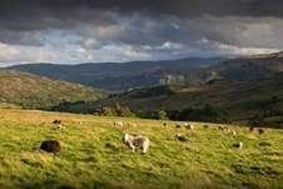
A hill farm
Like other primary industries, farming is highly dependent on physical inputs such as:

Weather and climate
Soil fertility