


2021 WAEC BIOLOGY PRACTICAL PREPARATION
CERVICAL VERTEBRA
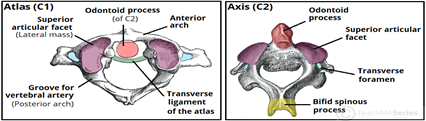
Number of cervical vertebra in most vertebrates: 7
Location of cervical vertebra: Neck region
Features of cervical vertebra
- It has a pair of opening in the neural arch (i.e. vertebraterial canal) through which blood vessels to the neck pass.
- It has reduced neural spine
- Transverse process are flattened to form cervical ribs.
Functions of cervical vertebra
It allows nodding and turning of the head.
THORACIC VERTEBRA
Location in the body: Chest region
Function of thoracic vertebra
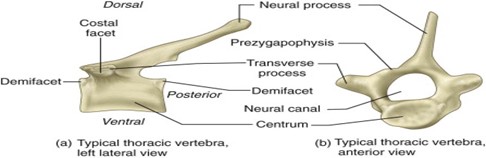
- It aids the attachment of the ribs.
- The neural spine of the thoracic vertebra is attached to the muscle of the back and shoulder.
- It assists in breathing alongside the ribs.
Characteristic features of thoracic vertebra
- It has a long neural spine that projects upwards and forwards.
- Possession of a pair of short transverse process.
- Presence of articular surface for attachment of ribs.
- It has a large neural canal and neural arch.
- Presence of large cylindrical centrum.

DIFFERNCES BETWEEN A CERVICAL AND THORACIC VERTEBRA
CERVICAL VERTEBRA | THORACIC VERTEBRA |
Possession of a short neural spine | Possession of a long neural spine |
Vertebraterial canal present | Vertebraterial canal absent |
Tubercular facet absent | Tubercular facet present |
Transverse process is branched | Transverse process not branched |
Presence of small centrum | Presence of a large centrum |
LUMBAR VERTEBRA
Characteristic features of lumber vertebra
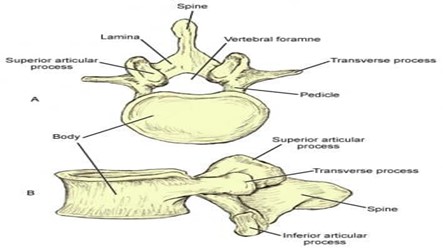
- Possession of large flattened transverse process.
- It has broad and flat neural spine
- Large and thick centrum present.
- Possession of well-developed pre and post-zygapophyses.
Function of lumber vertebra
It provides attachment for muscles of the abdomen and bears considerable weight of the body.
Mineral content of thoracic, lumber and cervical vertebra: calcium and phosphorus.
ADULT MOSQUITO
Kingdom: Animalia
Phylum: Arthropoda. Reason; segmented body, exoskeleton, jointed legs or appendages, 3 body divisions, bilateral symmetry, etc.
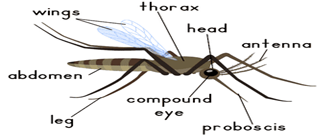
Class: Insecta. Reason; 3 pairs of legs, 2 pairs of wings, 3 body divisions, a pair of antenna
Life cycle of mosquito: complete
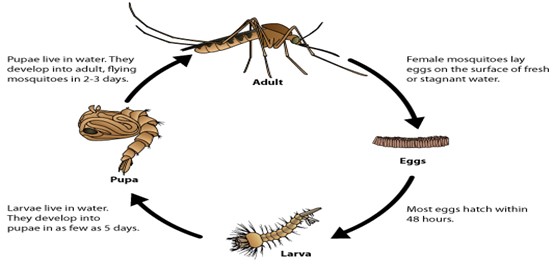
Habitat of mosquito: stagnant water, empty cans or container and forest vegetation.
Feed of mosquito: plant juice (male), blood (female anopheles and culex).
Mode of feeding: fluid feeding.
Mouthpart of mosquito: piercing and sucking
Sickness or diseases associated with mosquito: malaria (female anopheles), elephantiasis and yellow fever (female culex).
Parasite of mosquito: plasmodium (anopheles), filarial worm (culex)
Economic importance of mosquito
- It is a vector of disease
- Its bite causes irritation
- It is a source of food to many predators in water and on land.
- Mosquitoes that feed on plant juice helps in pollination.
Control of mosquito
- Use of mosquito nets.
- Use of chemicals such as kerosene to kill its larva in stagnant water.
- Use aquatic organisms like fishes to feed on its larva
- Clearing of vegetation around our homes.
Adaptation of mosquito to movement
- Possession of wings for flight.
- Presence of jointed appendages for walking.
Adaptation of mosquito to feeding
Possession of long sharp proboscis for sucking fluid (blood and plant juice).
Adaptive feature for sensitivity
Possession of antenna for detecting stimulus
BUTTERFLY
Kingdom: Animalia
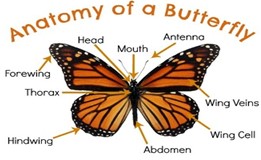
Phylum: Arthropoda, reason/ features; segmented body, exoskeleton, jointed legs or appendages, 3 body divisions, bilateral symmetry, etc
Class: Insecta. Reason; 3 pairs of legs, 2 pairs of wings, 3 body divisions, a pair of antenna.
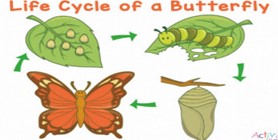
Life cycle of butterfly: complete
Feed of butterfly: nectar or plant juice.
SUGAR ANT
Kingdom: Animalia
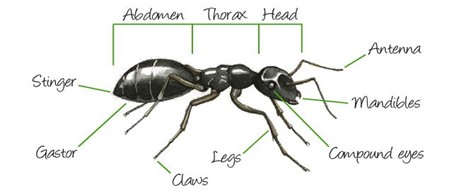
Phylum: Arthropoda. Reason; segmented body, exoskeleton, jointed legs or appendages, 3 body divisions, bilateral symmetry, etc.
Class: Insecta. Reason; 3 pairs of legs, 2 pairs of wings, 3 body divisions, a pair of antenna
Habitat of sugar ants
Their habitat varies depending on the species, as many ants live underground, while some build mounds at ground level, and a few live in trees or wood structures.
Feeds of ants: vegetation, decaying fruits
Adaptations of ant to survival
- The elbowed antennae or feelers are sensory organs in ants that help them not just to detect vibrations, air currents, and chemicals but also to communicate through touch.
- They live in a nest which protects them from environmental effect.
Adaptation of ant to feed
Ants have a pair of mandibles that are strong enough to manipulate objects, carry food, and build nests.
Feeding habit
Ants are omnivorous insects and have a diverse diet that includes meats, seeds, fruits, fungus, and sugary liquids such as nectar. Prey of sugar ants are insects like some termite and ant species.
Mode of feeding
Chewing. Reason: possession of mandibles
Life cycle of ant: Complete metamorphosis
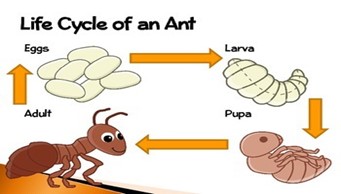
Adaptive features of ant to feeding to its environment
Large groups of ants travel together, communicate with each other, and swarm their prey together.
Germination Experiment
Aim: To determine the conditions necessary for germination
Materials needed: Soil, water, kerosene, beakers, bean seeds
Procedure: For specimens D, E,
F and G, you are requested to get four 250ml beakers and label them D, E, F and G.
Put dry garden soil into each beaker, up to 100 ml level.
Add 10 ml of water to the soil in each of beakers D, E and F.
Oven dry the garden soil in beaker G and leave dry throughout
the period of the experiment.
For specimen D, put five viable bean seeds into the soil in the
beaker labelled D.
For specimen E, soak five viable bean seeds in water for 2 -3
hours, then remove the testa of the soaked bean seeds. Split
open the cotyledons and remove the embryo of each bean seed.
Place the split cotyledons into the soil in the beaker labelled E.
For specimen F, place five viable bean seeds into the soil in the
beaker labelled F and add some quantity of kerosene enough
to cover the surface of the soil in the beaker.
For specimen G, add five dry and viable bean seeds into the
soil in the beaker labelled G.
Place all the beakers in a place with adequate sunlight for seven
days.
Moisten the soils in each of the beakers labelled D and E with
10ml of water daily for seven days before the date of the examination
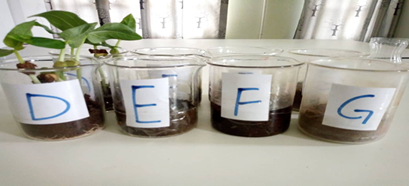
Result: There was germination in specimen D because it contains all the conditions necessary for germination such as moisture, air(oxygen) viable seeds and suitable temperature
E. No germination in Specimen E because it lacks embryo which shows the seeds were not viable
F. No germination in Specimen F because it lacks air/ oxygen for respiration. The kerosene present in the soil hinders the seeds from receiving oxygen
G. No germination in Specimen G Because it lacks water or moisture
Conclusion: In conclusion we have seen that for germination to occur in seeds all the conditions (water/moisture, air/oxygen, suitable temperature and viable seeds) necessary for germination must be present.
Note: the type of germination in this experiment is epigeal germination
Germination is the growth and development of mature seeds into independent seedlings.

