


Primary five mathematics topical breakdown of lesson notes
Theme | Topic | Sub topic (content) | Duration | Learning outcomes |
Sets |
|
|
| The learner is able to demonstrate the knowledge of the sets to show problems in real life situations. |
Numeracy |
|
| 2weeks | The learner is able to appreciate the need to counting everyday life and work with whole numbers up to 999,999 |
Numeracy |
|
| 3 weeks | The learner is able to use the four basic operations to solve problems. |
| ||||
Numeracy |
|
| 2 weeks | The learner is able to relate and apply simple comprehension, skills involving patterns and sequences to real life situations. |
Numeracy |
|
| 1½ weeks | The learner is able to solve problems involving fractions and relating them to real life situations. |
TERM ONE: TOPIC ONE
Topic: sets
Sub topic: types of sets
Content: definition of terms
- A set is a well-defined collection of elements or members.
- Union of sets is a collection of elements in 2 or more sets without representing common members.
- Intersection of sets are common elements in 2 or more sets
Types of sets
Equal and equivalent sets e.g. {1, 2, 3,} B {2, 1, 3}
Set A = B
Set K = {a, b, c} set L = {m, n, o}
Set K equivalent to L
Equal and unequal sets
P = {5, 4, 6} set N = {a, b, c}
Definition of terms
Equal sets (same numbers of elements of same kind)
Equivalent sets (same number of elements of different kinds)
No equivalent sets (different number of elements of different elements)
Examples
- A = {a, e, I, o, u} B = {1, 2, 3, 4, 5}
- C = {T, O, P} D = {P, O, T} then C = D
Ref:
Mk New edition Bk5 page one exercise 1:1
Mk Old pg 1
Lesson two
Sub topic: Joint and disjoint sets
Content: definition of terms
Joint sets have some common elements
Disjoint sets have no common elements
Examples
- Set M = {1, 2, 3, 4, 5} N = {4, 5, 6, 7,}
MnN = {4, 5}
Set M and N are joint sets

- P = {man, boy, girl} Q = {tree, leaf, cow}
PnQ = { }
P and Q are disjoint sets i.e.


 P Q
P Q
Empty set/Null set
Definitions of terms
Empty set is a set with no member
Symbol for empty set is { } or
Example
A = {a car which can fly like a helicopter} A = Ø or { }
K = {animals which lay eggs} K = not empty set
Union and intersection of sets
Intersection of sets. The symbol used to represent intersection set is Ո
Example A = {a, b, c, e, f, g}, B = {b, d, e, f, g}
AnB = {b, e, f, g}
Note: common elements must be identified i.e. by circling, ticking or crossing them. This is the main subject competence.
Union of sets the symbol used to represent Union set is U


 Examples P = { } Q = a, b, , }


 PuQ = { , a, b }
Ref:
Old mk edition bk5 page 3-4
Understanding mtcbk 5 pg 5
Remarks
Lesson three
Sub topic: use of Venn diagrams to represent intersection and union sets
Content: naming parts of a Venn diagram
 Elements found in set A B elements found in set
A only B only (B-A) or A1


(A-B)
Or B1
Intersection
Example : Show the information below on the venn diagram
A = {a, b, c, d} B = {e, b, f, g, h} AnB = {b}
 A B
A B
A = {1, 2, 3, 4} B = 2, 3, 5, 7}
 A B
A B

AuB = {1, 2, 3, 4, 5, 7}
n(AuB) = 6members
2. Use thevenn diagram to answer the questions
X Y


1 2 7 0
3 4 5
List the members of set Y
X = {2,4,7,0,5}
Find
- X∩Y
- (X∪Y)
- n(X∪Y) = 7 elements /members
ref:
Mk new edition bk5 page 5
Mk old edition bk5 page 5
Understanding mtcbk 5 pg 5-6
Remarks
Lesson 4


 Sub topic: difference of sets (complements)
Content: A = {a, b, i, c, d, e} B = {e, d, g, f, i, h, j}
 A B
A B
- A – B = {a, b, c} of (B)’
- B – A = {g, I, f, h} or (A)’
- N(A – B) = 3members
- N(B – A) = 4members
Note: A – B means members in set A only but not in set B (B complement) B1
B – A means members in set B only but not in set A (A complements) A1
B1 = {a, b, c}
A1 = {g, j, h}
Ref
Mk new edition 2000 bk5 page 13-14
Mk old bkpg 14-17
Lesson 5
Sub topic: sub sets
Content: definition of terms
A sub set is small set found in a big set
Universal set is a set that contain other smaller sets
Universal set is a subset itself though not a proper subset.
 Symbols used
 Sub set
Not sub set ¢
Universal set Є
Examples
P = {1, 2, 3, 4, 5, 6} K = {2, 4, 6} E = {1, 3, 5} Q = {9, 10}
Then
- ECP( E is a sub set of P)
- Q¢P (Q is not a sub set of P0
- P = Є( P is a universal set of K and E)
- Represent the given sets on the Venn diagram
 P = ε
P = ε


 E P
E P
Ref:
Mk old edition exercise 1m book 5 page 19
Lesson 6
Sub topic: finding the number of sub sets
- By listing
- By use of a formula
Content: examples
Set K = {a, b, c}
Sub sets of K = {a, b, c}, {a, b}, {b, c} {a, c}, {a}, {b}, {c}, { }
 N(C)K = 8 sub sets
Using the formula to find the number of elements in set K

 n( ) K = 2n where n stand for number of element is K
23
2 x 2 x 2
8 sub sets
Note:
- Any set is a sub set of itself
- An empty set is a subset of every set
Shading and describing
Shaded regions
Examples
- Describe the shaded parts
M N P R


Shade
A B X Y
(A-B) (X∩Y)’
Evaluation activity
New MK bk 5 pg 16
Lesson 8
Sub topic: probability in sets
Content: idea of probability
Probability of zero e.g. sun setting in the north
Probability of 1 e.g. sun setting in the west
Probability of ½ e.g. tossing a coin to get either head or tail
Tossing a coin
Examples: when you toss a coin, what is the probability of a head showing up
 Sample space = {head, tail}
N(S) = 2
Number of events = (head)
= n(E) – 1
Toss 2 coins probability of getting two head appearing
Samples = (H.H) (H.T), (T, T), (T, H)
Number of event = n (E) two heads 1
Ref
Mk old edition bk5 page 22-23
Mk new edition pg 118
Remarks
Lesson 9
Sub topic: tossing a die
Content: examples
What is the chance of 2 appearing when a dice is tossed once?
Sample space = { 1, 2, 3, 4, 5, 6} n(S) = 6
No of events = {2} n(E) = 1
Probability of different items e.g there are 10 pencils in a tin, 3 of them are red and the rest are black, what is the probability of picking a black pencil randomly?
Ref
Mk old edition bk5 exercise 10 page 23
Remarks
Topic two
Topic: Numeration and place value
Sub topic: types of number systems
Lesson one
Content: (a) Hindu and Roman numerals
Hindu Roman


 1 I
1 I
5 V
10 X
50 L
100 C
500 D
1000 M
Example
- Write 19 inRoman numerals
19 = 10 + 9
= X + IX
= XIX
- Practice changing 4, 9, 6, 11, 40, 60, 90, 99 etc to Roman numerals and vice vasa
Ref:
Mk New edition Bk 5 page 24
Understanding mtcpg 31
Old MK pg 50
Lesson 2
Content: change the given Roman numerals to Hindu Arabic numerals
Example
- Write XLIX into Hindu Arabic
XLIX = XL + IX
XLIX = 40 + 9
XLIX = 49
- Practice changing iv, vi, ix, lx, xc, xcix etc to Hindu Arabic numerals and vice versa
Ref
Mk New edition Bk 5 pg 38
Understanding mtchpg 31
MK Old bk 5 pg 50
Remarks: ………………
Lesson 3
Sub topic: addition and subtraction of Roman numerals
Content:
Example
- Add XXIV + XIX
XXV = XX + IV XIX = X + IX 24 43 = 40 + 3
XXIV = 20 + 4 XIX = 10 + 9 43 = XL + III
XXIV = 24 XIX = 19 43 = XLIII
- Subtract CV – LV
CV = C + V LV = L + V 105
CV = 100 + 5 LV = 50 + 5 -55
CV =105 LV = 55 50 = L
Ref
Mk old edition bk 5 pg 53
MK new pg 38
Understanding mtcpf 32
Remarks: ………………….
Lesson 4
Sub topic: place value of whole numbers
Content: Writing place value and finding values
Example
H/th | T/th | Th | H | T | O |
1 | 3 | 4 | 6 | 7 | 8 |
Hundred thousands | Ten thousands | Thousands | Hundreds | Tens | Ones |
The place value of 6 is hundreds
Values of digits in whole numbers
Example
Write the value of each digit in the number 123768
 1 2 3 7 6 8
Ones = 8 x 1 = 8
Tens = 6 x 10 = 60
Hundreds = 7 x 100 = 700
Thousands = 3 x 1000 = 3000
Ten thousands = 2 x 10,000 = 20000
Hundred thousands = 1 x 100,000 = 100,000
- Find sum of the place value of 6 and value of 3 in the number 3726
- Workout the difference between the place value and value of 8 and 2.
Ref
Old edition pg 30-32
New Mk pg 26-27
Understanding math bk 5 pg 15
Remarks: ………………
Lesson 6
Sub topic: writing figures in words
Content:
Note: we use three zeros ‘000’ to write a thousand
Examples
Write the following figures in words
- 62 = sixty two
- 108 = one hundred eight
- 9405 = nine thousands four hundred five
Ref
New Mk pg 28
Mk Old Edition Pg 33-34
Understanding mtcbk 5 pg 15
Remarks: ……………
Lesson 6
Sub topic: writing numbers in figures
Content: writing number in figures
Examples
Write in figures
- Four hundred twenty five thousand three hundred seventeen
Four hundred twenty thousand = 425,000
Three hundred seventeen = + 317
425,317
Ref
Mk New edition Bk 5 page 29 and Mk old edition page 34
Understandingmtcbkl 5 pg 7
Lesson 7
Sub topic: forming numerals from digits
Content: example
Write down the numbers formed by the digits 3, 7, 5
375, 357, 537,573, 735, 753
Biggest number formed = 753
Smallest number formed = 357
Note: The biggest number is formed using descending order (big to small)
The smallest number is formed using ascending order (small to big)
Note: use examples with zero as a digit also.
Ref
Mk New editionBk5 pg 25 and Mk old edition pg 29
Understanding mtcbk 5 pg 19
Remarks:……………..
Lesson 8
Sub topic: expanding whole numbers
- Using values
- Using place values
- Using exponents (powers)
- Expand 7394 using values = 7000 + 300 + 90 + 4
- Expand 3780 using place values: 3780 = (3 x 1000) + (7 x 100) + (8 x 10) + (0 x 1)
Sub topic: expanding numbers
- Using power of 10 (exponents)
Expand 7914 using powers of ten (10)
7914 = (7 x 10³) + (9 x 10²) + (1 x 101) + (4 x 100)
Ref
Mk old edition bk5 pg 39
New mkbk 5 pg 31
Remarks: …………
Lesson 9
Sub topic: changing form expanded form to single numbers
Content: writing expanded numbers as single numerals
Examples
Write (4 x 1000) + (5 x 100) + (7 x 10) + (3 x 1)
4000 + 500 + 70 + 3
4000
500
70
+ 3
4573
Ref
Mk new edition bk5 pg 32
Mk Old [g 39-41
Understanding mtcbkpg 33
Lesson 10
Sub topic: ROUNDING OFF WHOLE NUMBERS
Content:
Examples
- Round off 53 to the tens
53
+00
50
- Round off 55 to the tens
55
+10
60
Note: 0, 2, 3, 4, you add 0
5, 6, 7, 8, 9 add the value of the required place value
Ref
Mk new edition bk 5 page 39-44
Mk old 54-55
Understanding mtcpg 20-22
Remarks: ……………………………….
TOPIC THREE
Topic: OPERATION ON WHOLE NUMBERS
Lesson one
Sub topic: Addition of large numbers
Content: addition
Example
Add: 473442
+369215
842657
Masinde went to the market and bought 5books at 3500/= and 12 pens at 109000/=. How much did he spend altogether?
109000/=
+ 3500/=
112,500/=
Ref
Mk New edition Bk5 page 48 -49
MK old edition pg 58-60
Understanding mtcbk 5 pg 36-38
Lesson 2
Sub topic: subtraction of large numbers
Content: subtraction
Example
Subtract: 123643
– 14262
109,381
By how much is 367015 greater than 346729?
367015
-346729
20286
Ref
Mk New edition Bk5 page 50-57
Understanding mtcpg 40-44
Remarks
Lesson 3
Sub topic: multiplication
Content: multiplication of numbers by one digit
Example
450 x 6
450
X 6
2700
The cost of a book is shs.750/=. Find the cost of 9 similar books at the same rate
750/=
x 9
6750/=
Evaluation activity
Mk New edition Bk5 page 52
Mk old pg 53
Understanding mtcbk 5 pg 45-48
Remarks
Lesson 4
Sub topic: multiplication by two digit figures
Content: example
Multiply : 35
x 12
70
+350
420
How many pupils are in 33 classrooms if each classroom has 109 pupils?
109
X 33
327
+3270
3597 pupils
Ref
Mk Old edition Bk5 page 64 – 67
Mk new edition bkpg 53-56
Understanding mtcbk 5 pg 46-50
Lesson 5
Sub topic: division of numbers
Content: without remainders
Example
Divide 864 by 6
144
= 144
26
– 24
24
– 24
A school has 480 pupils. Each classroom can take 40 pupils. How many classrooms are there in the school?
Divide 4824 by 12

 402
402
12 4824
-48
002
– 0
24
–24
00
25 bottles hold 1725litres of water, how much does each bottle hold?
Evaluation activity
Mk Old edition Bk5 page 73 and 74 exercise 3N and 30
Remarks
Lesson 6
Subtopic : Division of numbers
Content: Division with remainder
Examples
i. Divide 12÷5

 02 rem 2
5 12
5×2 10
2
12÷5 = 2 2/5
ii) 126 ÷ 2

 031rem 2
 4 126
4 126
 4×0 0
4×0 0
12
4×3 12
— 6
4×1 4
2
126 ÷ 4 = 312/4
Ref: New Mk bk 5 pg 58
Old MK bkpg 72-74
Understanding mtcbk 5 pg 57-63
Lesson 7
Sub topic: combined operation of numbers
Content: BODMAS
Example
Workout ½ of 10 + 15 ÷5
(½ of 10) + 15 ÷ 5
(½ x 10) + 15÷5
5 + (15 ÷ 5)
5 + 3 = 8
Ref
Mk New Edition bk 5 page 63
MK old edition pg 75
Lesson8
Sub topic: statistics
Content: definition of terms
- Mode
- Range
- Median
Example
Given 2, 3, 0, 6, 3 and 4
Find
- Mode No Frequency
0 1
2 1
3 2
4 1
6 1
Mode = 3
Modal frequency is 2
- Range = biggest – smallest
6 – 0 = 6
- Median = 0, 2, 3, 3, 4, 6
3 + 3= 6
2 2
= 3


Ref
New Mk pg 64-65
Old MK pg 76
Lesson 9
Sub topic: mean/ average
Content: average =
Example
Find the average (mean) of 0, 2, and 4
Average =
= 6
3
= 2
Comparing averages and total
The average age of 12pupils is 9years. What is their total age?
Average age of 12 is 9
Total age = (12 x 9) years
Total age = 108years
Ref
Mk Old edition bk5 page 76-79
New MK bk 5 pg 64-65
Remarks
Lesson 10
Sub topic: comparing numbers using symbols
Content: use >, < , =
375 _________752
5 + 6 _________6 + 5
¼ ______ 2/8
Ref
Teacher’s collection
New Mk pg 66
Remarks
Lesson 11
Sub topic: ordering the numbers on a number line
Content: ascending and descending order
Example
Given 24, 38, 64, 83 and 44 use a number line to arrange the numbers in ascending order
1st 2nd 3rd 4th 5th
 24 38 44 64 83
Ref
Mk new edition bk5 page 67
Remarks:
Lesson 12
Sub topic: bases
Content: grouping items in base five and ten
Example
In base tenIIIIIII means 7 ones
In base five IIIIIII means IIIII and II
= 1 group of fives 2ones
= 12five
Ref
Mk old Edition bk 5 page 81
New MK pg 69
Remarks:
Lesson 13
Sub topic: place values of non decimals bases (2, 5, 8)/ reading bases in words
Content:
Example


 423five = 4 2 3
Ones = 1
Fives = 5
Five fives (twenty fives) = 25
Reading bases in words
Ref
New MK pg 71
Old Mk 84
Remarks
Lesson 14
Sub topic: expanding in base five
Content: example
Expand 13five

 13
13
Ones
Fives
= (1 x fives) + (3 x ones) = (1 x 51) + (3 x 50)
Ref
Old Mk pg 85
New MK pg 71
Remarks
Lesson 15
Sub topic: changing to base ten/ decimal base
Content: example
Change 14five to base ten
14five = (1 x fives) + (4 x ones)
= (1 x 51) + (4 x 50)= 5 + 4 = 9ten
Ref
Old MK pg 85
New Mk pg 71
Remarks
Lesson 16
Sub topic: converting base ten to non-decimal bases
Content: example


 Change 56ten to base five
 ÷ No Rem
 5 56 1
5 11 1
 2
2
= 56ten = 211five
Ref
OlfMkpg 86
New MK pg 73
Remarks
Lesson 17
Sub topic: addition of numbers in bases (2, 4, and 5)
Content: example
Add 3five + 4five
3five 7÷ 5 = 2 rem1
+4five
12five
Ref
Old MK pg 87
New Mk pg 73
Remarks
Lesson 18
Sub topic: subtraction in bases
Content: example
Subtract 123five – 24five
123five
-24five
44five
Ref:
Teacher’s collection
Remarks
Lesson 19
Sub topic: multiplication of bases
Content: example
Multiply: 421five x 3
421five SDW/side work
x 3five 6 ÷ 5 = 1 rem 1
2313five 13 ÷ 5 = 2 rem 3
Note: emphasize should be put on side work.
Ref
Old MK pg 88
New MK pg 74
Remarks:
Lesson 20
Sub topic: finite system
Content: counting in finite five and seven
Example
1(finite5) = 6, 11, 16, 21, ………………
3 (finite 5) = 8, 13, 18, 23, …………………
Table of finite 5 and 7
Ref:
Old Mk pg 89-91
Lesson 21
Sub topic: addition in finite system (2, 5, 7)
Content: example
2 + 3 = ___ (finite 5)
5 ÷ 5 = 1 rem 0 (finite 5)
= 0 (finite 5)
Dial method in addition of finite
Ref:
Old MK pg 92-94
Remarks
Lesson 22
Sub topic: subtraction in finite system (2, 5, 7)
Content: example
Subtract 3 – 4 = ____(finite 5)
(3 + 5) – 4 = ____(finite 5)
8 – 4 = 4(finite 5)
Dial method 3 – 4 = ___(finite 5)
Ref
Teacher’s collection
Topic: NUMBER FACTS AND SEQUENCE
Lesson 1
Sub topic: divisibility tests of 2 and 3
Content: any number which ends with an even, digit i.e. 0, 2, 4, 6, 8 is divisible by 2
A number is divisible by 3 if the sum of its digits is divisible by 3
Example
144 = 1 + 4 + 4 = 9
144 is divisible by 3
Ref
Old Mk pg 68-69
Remarks
Lesson 2
Sub topic: divisibility test of 4, 5 and 10
Content: any number ending with 00 or when the last two digits are divisible by 4 is divisible by 4
Example
320, 100, 1540
Any number ending with 0 or 5 is divisible by 5
Example
220,540,725
A number ending with 0 is divisible by 10 e.g. 100, 120, 20
Activity
Teacher’s collection
Old MK pg 70
Lesson 3
Sub topic: multiples of numbers
Content: definition of terms
- A multiple is a product of two numbers
Example
- M5 = {5, 10, 15, 20, 25, …………..}
- M4 = {4, 8, 12, 16, ……………….}
Ref
Old Mk pg 99
New MK pg 79
Remarks
Lesson 4
Sub topic: Lowest Common Multiples(LCM/ LCD)
Content: listing method
Ladder method
Example


 Find LCM of 4 and 6


 M4 = {4, 8, 12, 16, 20, 24, 28, 32, 36, ………..}
M6 = {6, 12, 18, 24, 30, 36, ……………..}
Common multiples = {12, 24, 36, ……}
LCM = 12
Note: Common members must be identified.
Ladder method
÷ | 4 | 6 |
2 | 2 | 3 |
2 | 1 | 3 |
3 | 1 | 1 |
2 x 2 x 3
4 x 3 = 12
Ref
New Mk pg 80
Old MK pg 100
Remarks
Lesson 5
Sub topic: Factors of Numbers
Content: definition
A factor is a number which is multiplied by another number to get a multiple
Example
 Multiplication division
F12 1 x 12 = 12 12 ÷ 1 = 12
2 x 6 = 12 12 ÷ 2 = 6
3 x 4 = 12 12 ÷ 3 = 4
F12 = {1, 2, 3, 4, 6, 12} F12 = {1, 2, 3, 4, 6, 12}
Ref
New Mk pg 82
Old Mk pg 102
Lesson six
Sub topic: Greatest Common Factor (GCF/HCF/HCD)
Content: GCF and HCF refers to the biggest common factor / divisor
Example: Find the GCF of 12 and 18

 F12 F18
1 x 12 = 12 1 x 18 = 18
2 x 6 = 12 2 x 9 = 18
3 x 4 = 12 3 x 6 = 18


 Identify the common factors Ref


 F12 = {1, 2, 3, 4, 6, 12} New Mk pg 82
 F18 = {1, 2, 3, 6, 9, 18} Old Mk pg 102
CF = {1, 2, 3, 6} Remarks
GCF = 6
Lesson seven
Sub topic: Prime and Composite numbers
Content: definition
Prime number is a number with only two different factors i.e. 1 and a number itself
Composite number is a number with more than two different factors
Examples
13 = 1 x 13 4 = 1 x 4
F13 = {1, 13} 4 = 2 x 2
13 is a prime number F4 = {1, 2, 4}
4 is a composite number
Activity
New MK pg 83
Remarks
Lesson eight
Sub topic: prime factorization
Content: we use any prime numbers when prime factorizing
Example Ladder method
 Prime factorize
 12
12
 1 6
1 6
 2 3
2 3
3 1
In multiplication form 12 = 2 x 2 x 2 x 3
In set notation form 12 = 21, 22, 31.
Note: in set notation form we write small numbers (subscripts) below prime factors when listing them to show the number of times a prime factor has appeared.
In powers form 12 = 23 x 31
Ref
New MK pg 84-85
Old MK pg 103-105
Remarks
Lesson nine
Sub topic: find GCF using prime factorization method
 Find the GCF of 12 and 18 using prime factor and LCM
÷ | 12 | 18 |
2 | 6 | 9 |
3 | 2 | 3 |
LCM = product of union of factors
LCM = 2 x 2 x 3 x 3
LCM = 4 x 9
LCM = 36
Ref
New MK pg 86-87
Old MK pg 106-107
Lesson ten
Application of LCM
Content: examples


 Find the least number of pens which can be shared among 3 or 4 pupils and the remainder is 1
 2 3 4 = (2 x 2 x 3) + 1
 2 3 2 = (4 x 3) + 1
3 3 1 = 12 + 1
 1 1 = 13pens
Ref:
Teacher’s collection
Lesson eleven
Sub topic: square numbers
Content: example
Find the square of 4
Find the area of the square
 42 = 4 x 4 = 16
A = 6 x 6
= 36sq units
6
Ref
New MK pg 88
Old Mk pg 108
Remarks
Lesson twelve
Sub topic: square roots
Content: definition of terms
A square root is a number that is multiplied by itself to get a square number
Example
 Find the square root of 36

 36
36

 2 18
2 18

 2 6
2 6

 3 3
3 3
3 1
(2 x 2) x 93 x 3)
2 x 3 = 6
Ref
New Mk pg 89
Old Mk pg 108-109
Remarks
Lesson thirteen
Sub topic: application of square roots
Content: example
 If X2 = 9 Find X 9
 3 3
3 3
3 1
X = 3
The area of a square is 16cm2. Find the length of one side of the square

 S x S = Area
S2 = 16cm2 2 16

 2 8
2 8
 S = 2 x 2 2 4
 S = 4cm 2 2
1
Lesson 14
Sub topic: set of numbers
Content:
Triangular numbers form triangular patterns when properly arranged
Square numbers are got by multiplying a number by itself
Even numbers are numbers exactly divisible by 2 e.g. 0, 2, 4, 6, 8, ………
Odd numbers are numbers not exactly divisible by 2 e.g. 1, 3, 5, 7, 9…..
Natural (counting numbers) are numbers used in counting e.g. 1, 2, 3, 4, 5, …….
 Triangular numbers are numbers that form a triangle when arranged

 Examples


1 3 6 10 15
Square numbers
 e.g. = 1 x 1
 = 4 = 2 x 2
 = 9 = 3 x 3
Lesson 15
Sub topic: number patterns
Content: example
Fill in the missing numbers
- 25, 24, 21, 16, ___, ___ 25 24 21 16 9 0
-1 -3 -5 -7 -9
- 1, 3, 6, 10, 15, ___1 3 6 10 15 21 28
+2 +3 +4 +5 +6 +7


2.Example: find the sum of the missing numbers
1, 4, 9, ___, 25, 36, ___, 64


 1 4 9 16 25 36 49 64
+3 +5 +7 +9 +11 +13 +15
Sum = 16 + 49 = 65
Ref
Old MK pg 113-114
New Mk pg 91-92
Remarks
Lesson 16
Sub topic: completing puzzles
Content: magic square
Example
Complete the magic square below
8 | a | B |
d | 5 | C |
4 | e | 2 |
Magic sum = 8 + 5 + 2 = 15
Ref
Understanding mtcpg 89-91
Remarks
Topic: Fractions
Lesson one
Sub topic: types of fractions
Content:
- Proper fractions (numerator is less than the denominator ½ )
- Improper fractions (denominator is less than the numerator 4/3 )
- Mixed fraction (vulgar fractions) includes a whole number and a proper fraction)
- Decimal fractions (numbers with a point)
- Expressing improper fraction as mixed fraction
- Expressing mixed fraction as improper fraction
Example
Express as a mixed number
Express as a mixed number
Ref
Old Mk pg 116-117
New Mk pgpg 115-116
Remarks:
Lesson two
Sub topic: equivalent fractions
Content: examples
½ ,2/4, 3/6 , 4/8
Ref:
New MK pg 117
Old MK pg 120
Remarks
 Lesson three


 Sub topic: reducing fractions
Content: example
 Reduce to its lowest terms


 GCF = 12
Ref
New Mk pg 118
Old Mk pg 121
Remarks:……..
Lesson four
Sub topic: ordering fractions
Content: using ascending and descending order
Examples : arrange in ascending order
LCM = 12
In ascending order ¼ ,1/3 , ½
In descending order ½ ,1/3 , ¼
Ref
New MK pg 119
Old Mk pg 125
Remark:………..
Lesson five
Sub topic: comparing fraction using symbols
Content: >, <, or =
Examples which is greater 1/3 or ¼
LCM of 3 and 4 = 12
= 4(greater) = 3 (less)
Ref
New MK pg 120
Old Mk pg 126
Remarks:………..
Lesson six
Sub topic: Addition of fractions
Content: different denominations
Examples: Add
Ref
New Mk pg 121
Old MK pg 127
Remarks:………………
Lesson seven
Sub topic: Addition of whole numbers and fractions
Content: Examples:
 LCD = 4 5
= 5 ¾
5 rem 3
Ref:
New Mk pg 122
Old MK pg 128
Remarks
Lesson eight
Sub topic: Addition of mixed numbers
Content: examples
½ + 3 ¼
 3 + (½ + ¼)
Ref
New MK pg 123
OlfMk p 129-131
Remarks:…..
Lesson 9
Sub topic: Word problems involving addition of fractions
Content: example
John filled ½ of a tank in the morning and 2/5 in the afternoon. What fraction of the tank was filled with water?
of the tank
Ref
New MK pg125
Old MK pg 131-132
Remarks
Lesson 10
Sub topic: Subtraction of fractions
Content: different denominators
Examples: Subtract LCM is 6
Ref
New MK pg 126-127
Old MK pg 133
Remarks:………….
Lesson 11
Sub topic: Subtraction of fraction from whole numbers
Content: Examples
Subtract 5 – ¾
Ref:
New Mk pg 126
Old MK pg 117-118
Remarks:……………
Lesson 12
Sub topic: Subtraction of mixed fractions
Content: Examples
Ref
New MK pg 126
Old MK pg 133
Lesson 13
Sub topic: Word problems in subtraction of fractions
Content: examples
A baby was given 5/6litres of milk and drunk only 7/12litres. How much milk remained?
Ref
New Mk pg 127
Old MK pg 134
Remarks:……….
Lesson 14
Sub topic: Combined addition and subtraction
Content: example
Workout:
Ref
New Mk pg 128
Old Mk pg 135 – 136
Remarks
Lesson 15
Sub topic: Multiplication of whole and fractions
Content: using repeated addition (number line)
Using factor
Example multiply 4 x ½ = 2
4/1 x ½
 2x 1 ½ ½ ½ ½
1 x 2 = 2
0 ½ 1 1 ½ 2 2 ½ 3 3 ½ 4
Ref
New Mk pg 129
Old Mk pg 137
Understanding mtcpg 119
Lesson 16
Sub topic: Multiplication of fractions by a whole
Using “of”
Example simplify: ½ of 16
½ x 16 = 8
Ref
Understanding mtcpg 119-120
New MK pg 129-130
Old Mk pg 137-138
Remarks:…………
Lesson 18
Sub topic: multiplication of unit fraction
Content: example
½ x ¾
1 x 3 = 3
2 x 4 8
Application of fractions
What is ¼ of 1hour?
1hr = 60min
1hr =1 x 60min
4 4
= 15 min.
Ref
New MK pg 131
Old MK pg 138
Lesson 18
Sub topic: multiplication of mixed fraction by mixed fraction
Examples
1 ½ x 1 ¼
Ref
Old Mk pg 138
Remarks
Lesson 19
Sub topic: division of fractions
Content: reciprocals of whole numbers
Example
Find the reciprocal of
- 2 Let the reciprocal be k
2 x k = 1
- ¼ Let the reciprocal be y
- Let the reciprocal be x
Note: reciprocal is used instead of upside down
Ref
New Mk pg 131
Old MK pg 141
Remarks:
Lesson 20
Sub topic: Division of wholes by fraction
Content: examples
Workout using reciprocal
Using the LCM
Ref
New Mk pg 135
Old Mk pg 142
Remark:…..
Lesson 21
Subtopic: Word problems
Content: examples
- How many ¼ loaves of bread can be got from 3 loaves of bread?
- Using LCM and LCM = 4
Ref
New MK pg 136
Old MK pg 144
Remark……..
Lesson 32
Sub topic: Division of fractions by whole numbers and vice versa
Content: example
- Divide
- Divide
Ref
New Mk pg 137-139
Note: give examples on division of mixed fraction and whole number and vice versa
Remarks
Lesson 23
Sub topic: division of a fraction by fraction
Content: example
Divide
Old MK pg 144
Teacher’s collection
Remarks
Lesson 24
Sub topic: Division of mixed numbers
Content: example
Workout:
Ref
Teacher’s collection (see bk6)
TERM II
Topical breakdown
Theme | Topic | Sub-topic | Duration | Learning outcome |
Numeracy | Fractions |
| 2 week | The learner is able to solve problems involving decimals related to real life situations. |
Geometry | Lines, angles, and geometrical figures |
| 2 weeks | The learner is able to recognize and construct various geometric figures and relate them to other fields such as architectural drawings. |
Integration of graphs and data handling | Data handling |
| 2weeks | The learner is able to interpret and solve problems related to graphs |
Time |
| 2weeks | The learner is able to apply the knowledge of time in real life situations. |
TOPIC: FRACTIONS
Lesson 1
Sub topic: decimals
Content: place values in figures and words
Examples: what is the place value of each digit in 0.75?


 0.75 = 0 . 7 5 6
Thousandths
Hundredths
Tenths
Ones (1)
REF
Mk New edition Bk5 page 67
Lesson 2
Sub topic: values of digits in decimals
Content: find the value of each digit in 67.253


 67.253
Thousandths
Hundredths
Tenths
Ones (1) = (7 x 1) = 7
Tens (10) = (6 x 10) = 60
Ref
Mk New Edition Bk5 page 68
Old Mk Bk5 page 46
Remarks:……..
Lesson 3
Sub topic: writing decimal fractions in words
Content:
Examples
- Write 0.75 in words
0.75 =
Seventy five hundredths
- Write 23.137 in words
23 and
Twenty three and one hundred thirty seven thousandths
Ref
Old MK pg 46
New MK pg69
Remarks
Lesson 4
Sub topic: writing decimal fraction in figures
Content: Write sixty three and twenty five hundredths in figures
36 and
63+ 0.25
63.00
+0.25
63.25
Activity
New Mk Bk5 page 70
Old mk Bk5 page 47
Remarks
Lesson 5
Sub topic: Expanding decimals
Content: using values
- Using values
Examples
Expand 6.25
6.25 = 6 + 0.2 + 0.05
ii) Using powers
6.25 = (6 x 1) + (2 x 10⁻¹) + (5 x 10⁻²)
Ref
Old MK pg 48-49
New MK pg 36
Remarks:
Lesson 6
Sub topic: Rounding off decimals
Content: round off
0.625 to the nearest tenth
0.625
+ .0
0.6
Round off to the nearest hundredths
10.269
+ 10
10. 27
Ref
Old Mk Maths Bk5 pg 56
Remarks
Lesson 7
Sub topic: decimal fractions
Content: Expressing common fractions as decimals
Example (i) (ii) (iii)
Note: Zero before a decimal point is used to keep the place for the whole number
Ref
Exercise 6:29 and also exercise 5z page 145/ 146 old edition bk5
Remarks
Lesson 8
Sub topic: expressing mixed fractions as decimals
Content: examples
Ref
Exercise 6:30 page 142 New Mk Bk5
Exercise 5z page 147 Old Mk Bk5
Remarks
Lesson 9
Sub topic: converting decimals to common fractions
Content: examples
Convert 0.5 to a common fraction
Ref
Exercise 6:31 page 143 New Mk Bk5
Lesson 10
Sub topic: comparing decimals using symbols
Content: using symbols >, < and =
Compare 0.3_________0.5


 0.0 0.1 0.2 0.3 0.4 0.5 0.6 0.7 0.8 0.9
0.3 > 0.5
Ref
Exercise 3:32 page 145 New Mk Bk5
Exercise from teacher’s collection
Remarks
Lesson 11
Sub topic: Ordering decimals
Content: example
Arrange 0.1, 1.1, 0.11 from smallest to greatest and vice versa
0.1, 0.11, 1.1 ascending order
1.1, 0.11, 0.1 descending order
Ref
Exercise 6:33 page 145-146 New Mk Bk5
Exercise 5z page 149 Old Mk Bk5
Remarks
Lesson 12
Sub topic: addition of decimal fractions
Content: example
Add: 0.45 + 13.2 + 5.2
0.45
13.2
+5.2
18.85
Ref
Exercise 6:34
New Mk pg 77
Remarks
Lesson 13
Sub topic: subtraction of decimal fractions
Content: example
Subtract 13.69 from 97.4
97.4 – 13.69
97.40
-13.69
83.71
Ref
Exercise 6:34
New Mk Bk5pg 79
Remarks
Lesson 14
Sub topic: Addition and subtraction of decimals
Content: example
13.75 – 27 + 91.25
BODMAS
13.75 + 91.25 – 27
13.75
+91.25
105.00
-27.00
78.00
Activity
New MK pg81 / old Mk pg 150
Lesson 15
Sub topic: multiplication of decimals by 10, 100 and 1000
Content: examples
6.25 x 10 6.25 x 100
Ref
Exercise 5z page 151 Old Mk Bk5
Remarks
Lesson 16
Sub topic: multiplication of decimals by decimals
Example: multiply 0.06 x 0.6=
Ref
Exercise 5z page 152 Old Mk Bk5
Remarks
Lesson 17
Sub topic: application of decimals in multiplication
Example: One rope measures 4.75metres. How long in metres will 2.5 ropes be if they are joined together?
1 rope measures 4.75m. 2.5ropes measures?
4.75m x 2.5 =
475
+25
2375
+9500
11875
Ref
Exercise 5z page 153 to 154 old edition bk5
Remarks
Lesson 18
Sub topic: Division of decimals
Content: examples
Divide: 0.12 ÷0.6 =
Division of decimals by whole number and vice versa
Ref:
Old Mk pg 155
Lesson 19
Sub topic: Application of division of decimals
A tailor uses 1.8m to make a pair of shorts. How many pairs of shorts will he make from 12.6m?
Let the number of pairs be y
Ref :
Exercise 5z page 156 Old Edition Mk Bk5
GEOMETRY
Lesson one
Sub topic: parallel lines
Content: definition
These are lines that are equal distance apart and don’t meet when extended in both directions
Drawing parallel lines

 Using a ruler
 Using ruler and set squares


Ref
Old MK pg 228
New Mk pg94
Remarks: ………..
Lesson two
Sub topic: intersecting and transversal lines
 Content: naming points of intersection lines EF and GH are transversal lines
Ref
New MK pg95
Old Mk pg 231
Remarks:
Lesson three
Sub topic: perpendicular lines
Content: definition of perpendicular lines
Naming perpendicular lines from given figures
 Drawing or construction of bar lines using pairs of compasses and ruler with pencil only.

KL and ND are perpendicular lines to MN and AB respectively.
Ref
New Mk pg95-96
Lesson four
Sub topic: polygons
Content: naming polygons
Types of triangles
- Equivalent triangles
- Isosceles triangle
- Right angled triangle
Types of quadrilaterals
- Rectangle
- Square
- Trapezium
- Rhombus
- Kite
Other regular polygons up to 12 sided polygons
Drawing polygons using ruler and pencils (sketches)
Types of polygons
Name | No of sides |
Pentagon | 5 |
Hexagon | 6 |
Septagon / heptagon | 7 |
Octagon | 8 |
Nonagon | 9 |
Decagon | 10 |
Nuodecagon | 11 |
Duodecagon | 12 |
Ref:
Old mkbk 5 page 202 exercise 8d
Remarks: ……………….
Lesson five
Subtopic: lines of symmetry
Content: defining
Lines of symmetry divide figure into two equal or congruent parts
Drawing and counting the lines of symmetry of i.e. triangles, quadrilaterals e.g.
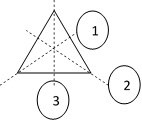
Nb: child draw and labels
Ref
Old MK pg 231
New mk math bk 5 page 184-185
Remarks: ………..
Lesson six
Sub topic: construction of circles
Content: parts of a circle of different radii and diameter
Drawing circles of radius 3cm
Sub topic: constructing and equilateral triangle in a circle
Content: pupils will use a pair of compasses and a pencil to construct circles equilateral triangles and inscribe
Ref
New Mk pg 186-187
Old Mk pg 250
Lesson seven
Sub topic: Constructing an equilateral triangle without a circle
Example:
Construct an equilateral triangle of side 4cm
Lesson eight
Sub topic: constructing a regular hexagon
Content: pupil will use a pair of compasses and a pencil to construct a regular hexagon in a circle.
Ref
Old Mk pg 251
New MK pg 188
Lesson nine
Sub topic: constructing square in a circlewith and without a circle
Content: pupils will construct squares using different radii
Ref
Old MK mtc book 5 pg 252
Lesson ten
Subtopic constructing a rectangle
Content: construction of a rectangle using a pair of compasses
Ref:
Trs’ collection
Lesson 11
Sub topic: angles and rotation
Content: definition
Angles is the amount of turning, rotation or opening
Rotation (clockwise or anticlockwise turn through 3600)
Turn clockwise / anticlockwise more through a given angle
Pupils will find the angles that make up turns, half a turn, and a quarter of a turn.
Revolution (a complete turn throughout 3600)
Ref
New MK pg 180-190
Old Mk pg 245-246
Remarks: …………
Lesson 12
Sub topic: angles on a compass
Content: pupils will find the different angles between the compass directions

 Pupils draw a compass direction


Ref
New MK pg 191
Old MK pg 247
Lesson 13
Sub topic: the clockwise and anticlockwise turns
Content: pupils will find the angles made when one turn clockwise and anticlockwise from the given direction


Clockwise turn anticlockwise turn
Examples: Through what angle does Sara turn from North to North East direction in a clockwise direction. Ref
New MK pg 192
Lesson 14
Sub topic: types of angles
Content: pupils will be guided to name the different types of angles and give examples of such angles
Acute angle, right angle, obtuse angle, straight angle, reflex angle

 Acute angle obtuse angles right angle reflex angle


00 A 900 900 c 1800 900 1800d3600
Straight angles


1800
Example
Name the types of angles written below
- 450 b) 2000
Acute angle reflex angle
Ref
New Mk bk 5 pg97
Remarks:
Lesson 15
Sub topic: measuring angles using a protractor
Content: pupils will measure different angles using outer scale and inner scale on a protractor with the guidance of the teacher.
Ref
New Mk pg 195
Old MK pg 237
Remarks: …..
Lesson 16
Sub topic: constructing angles using pair of compasses.
Content: pupils will different angles using paid of compasses, pencil e.g. construct angles of 900, 1200 , 600

Ref:
New mk math bk 5 pg98
Old MK pg 237
Lesson 17
Sub topic: supplementary angles and complementary angles
 Example: what is the supplement of 450
Let the supbe m
M + 450 = 1800
M + 450 – 450 = 1800 – 450
M + 0 = 1350
M = 1350
Complementary angles
Examples: find the complement of 400
 Let the comp < be Y
Y + 40 = 90
Y + 40 – 40 = 90 – 40
Y + 0 = 50
Y = 500
Ref
New MK pg102
Old Mk pg 240
Remarks: …………….
Lesson 18
Sub topic: application of complementary and supplementary angles
Content: find complement of 300
Let the complement be N
N + 300 = 900
N + 300 – 300 = 900 – 300
N + 0 = 600
N = 600
The complement of x is 500. Find the value of x
X + 500= 900
X + 500 – 500 = 900 – 500
X + 0 = 400
X = 400
The supplement of an angle is 720. What is the angle
let the angle be x
X + 720 = 1800
X + 720 – 720 = 1800 – 720
X + 0 = 1080
X = 1080
Ref
New Mk pg100
Remarks:
Lesson 19
Sub topic: finding angles marked with letters on a triangle
Content: examples find the value of a
 a + 300 + 900 = 1800
a + 1200 = 1800
a + 1200 – 1200 = 1800 – 1200
a + 0 = 600
a = 600
Ref
New mkmathsbk 5 pg 240
Topic: DATA HANDLING
Lesion one
Sub topic: pictograph interpretation
Content: Pupils will study the given pictograph and workout numbers about the graphs
Musa |
|
Mark | |
Jack |


Key represents 20 oranges
- How many oranges did Musa get?
1 picture represents 20 oranges
3 pictures represent 20 x 3 = 60 oranges
- How many more oranges did Jack get than Mark?
Jackgot 4 x 20 = 80 oranges
80 oranges – 40 oranges = 40 oranges
Jack got 40 more oranges than Mark
Ref
New Mk: Maths book 5 pg113-114
Curriculum pg 97-98
Lesson 2:
Sub topic: drawing pictographs
Content: drawing pictographs using the given information and scale
Example
 If represents 10 balls. Draw similar pictures to represent 30 balls
Ref
New MK bk 5 pg 115
Lesson 3:
Sub topic: reading and interpretation of tables
Content: pupils will read and interpret given information then answer questions that follow
Example: Draw the table)
- How many eggs were collected on Tuesday?
10 eggs
- How many eggs were collected in a week?
40 + 10 + 25 + 17 + 53 = 78 + 67 = 145 eggs
- Find the average number of collected eggs.
- Range
Range = highest – lowest
Range = 53 – 10 = 43 eggs
- Median10 17 25 40 53
25

Ref
New Mk MathsBk 5 pg115
Remarks: ………..
Lesson 5
Sub topic: bar graphs – interpretation
Content: pupils will study given bar graphs and answer the questions that follow
Evaluation activity
New mkmathsbk 5 page 116
Curriculum pg 97-98
Lesson 6:
Sub topic: drawing bar graphs from tables
Content: pupils will use given tables and scale to draw bar graphs and answer questions that follow
Number of pupils | 10 | 15 | 5 | 20 | 25 | 10 |
Types of food | Irish | Millet | Posho | Cassava | Matooke | Yams |

Ref
New MK mathsbk 5 pg116-120
Remarks: ………….
Lesson 7
Sub topic: recording information from a bar graph to a table
Content: pupils will study given bar graphs and record given information on a table
Class | P.1 | P.2 | P.3 | P.4 | P.5 | P.6 | P.7 |
Number of pupils | 15 | 20 | 10 | 25 | 20 | 15 | 5 |

Ref
New Mk MathsBk 5 Pg 116-120
Teacher guides pupils through example on page 230 and evaluate them
Remarks:
Lesson 8
Sub topic: bar line graphs (interpretation)
Content: pupils will study given bar line graphs and answer the questions that follow
Evaluation activity
New Mk Bk 5 Pg124-127
Remarks: …………………….
Lesson 9
Sub topic: drawing bar line graphs
Content: pupils will study given tables and use information to draw bar line graphs
Evaluation activity
Teacher’s guidance (do as in bar graph) as in lesson 6 and 7
New Mk Mathsbk 5pg 121-123 exercise 8:16
Remarks
TOPIC: TIME
Lesson 1
Sub topic: telling time using am and pm (12hour clock system)
Content:
Example

 What is the time in
- The morning 3.00am
- The afternoon 3.00pm
Ref
New MK maths bk5 pg129-133
Curriculum pg 98-99
Remarks:…………..
Lesson 2
Sub topic: Addition and subtraction of time
Content:
Examples
Add hrs min side work
6 25 25 65 = 1.05
+2 40 40 60
9 05 65
Subtract hr min
34 10 60 + 10 = 70
– 22 55 – 55
11 15 15
11hours and 15mins
Ref
Tr’s collection
Understanding mtcpg 228-229
Lesson 3
Sub topic: finding duration of time
Content
Mugole started walking from home at 7.15am and reached town at 9:15am. How long did it take him?
Reached 9 15am
Started -7 15am
He took 2 00
Namata started crying at 7.15am and stopped at 8.00am. How long did it take her?
8 00am 60
-7 15am -15
:45 45 She took 45 minutes
Ref
New mkmaths bk5 pg136
Old mkmaths bk5 pg 219
Remarks:……………
Lesson 4
Sub topic: finding distance
Content:
Example
Find the distance a driver covers in 2hours at a speed of 90km/hr
Distance = speed x time
Distance = 90km/hr x 2hrs
Distance = 180km
Ref
New MK maths bk5 pg138-139
Remarks:………………
Lesson 5
Sub topic: finding time
Content: time = distance
Speed
Example
Calculate the time taken by a car travelling at 60km/hr to cover a distance of 480km
Ref
New MK maths bk5 pg140
Remarks:…………..
Lesson 6
Sub topic: finding speed
Content
Example
What is the average speed of a cyclist travelling a distance of 150km in 3hours?
Ref
New MK maths bk5 pg141
Remarks:
MATHEMATICS P.5 LESSON NOTES TERM III
Topical breakdown
Theme | Topic | Sub-topic | Duration | Learning outcome |
Measurements | Money |
| 1 ½ | The learner is able to solve practical problems related to utilization of Ugandan currency in everyday life. |
Length, Mass, Capacity |
| 2 ½ weeks | The learner is able to recognize and use standard instruments and units for measuring length, mass and capacity. | |
Numeracy | Integers |
| 2 weeks | The learner is able to solve mathematical problems and puzzles using the knowledge of integers. |
Algebra |
| 2 weeks | The learner is able to solve mathematical problems and puzzles using the knowledge of algebra. |
TOPIC: MONEY
Lesson 1
Sub topic: money
Content: denominations
Types of money
Coins, e.g. 50, 100, 200, 500
Notes e.g. 1000, 2000, 5000, 10000, 20000, 50000
Examples
Peter had 3notes of 1000/= each. How much money did he have?
1 note = 1000/=
3 notes = (3 x 1000)/=
3notes = 3000/=
NB: do also calculations on a number of coins and notes of different denominations
REF
Teacher’s collections
Lesson 2
Sub topic: buying and selling
Content: using price list
Example
1 book costs 200/= what is the cost of 5 similar books?
1book = 200/=
5books = (5 x 200)/=
5books = 1000/=
Ref
New MK mathsbk 5 pg143
Old Mk pp 222
Lesson 3
Sub topic: buying and selling
Content: more simple rates
Examples
Find the cost of 12 similar books
5books cost 1000/=
1bk costs
1bk = 200/=
12bks costs (200 x 12)
12bks costs 2400/=
Ref
New MK pg 239
Old MK pg 222
Lesson 4
Sub topic: shopping bills and change
Content:
Examples
Kiyaga had 10,000/= he bought 2kg of sugar at shs.1600 per kg, 3bars of sopa at 1000/= each bar, ½ kg of salt at 400/= @ kg
- How much did he spend altogether?
- How much did he spend altogether?
- What was his balance
10,000
- 6400

3600/=
Item | Method | Amount |
2kg of sugar at 1600/= @ | 2 x 1600/= | 3200/= |
3bars of soap at 1000/=@ | 3 x 1000/= | 3000/= |
½ kg of salt at 400/=@ | ½ x 400/= | 200/= |
Total | 6400/= | |
Ref
New mkmaths bk5 pg145-146
Old MK pg 223
Lesson 5
Sub topic: completing bill tables
Content:
Examples
A father gave the shopping list below to his children
Item | Quantity | Unit cost | Total |
Blue band | ½ kg | Shs. 4600 each kg | Shs.2300 |
Bread | …….loaves | Shs. 800 each loaf | Shs.2400 |
Tea leaves | ¼ kg | Shs………@kg | Shs.1500 |
Sugar | 4kg | Shs.1800 @ kg | Shs………… |
Total | Shs…………. |
Complete the shopping bill
Show all the calculations and fill in later and add
Bread tea leaves sugar
800/= can buy 1 loaf ¼ kg cost 1500/= 1kg cost 1800/=
1/= buys 1/800 x 2400/= 1kg costs 1500 ÷ ¼ 4kg = 1800/=
2400/= buy 3 loaves 1kg cost 1500 x 4 x 4
= 6000/= 7200/=
Ref
New mkmathsbk 5 pg145-146
Old MK pg 224
Remarks: …….
Lesson 6
Sub topic: transport fare
Content:
Example
A taxi driver charges shs5000 for a trip from Kampala to Jinja per person
How much will 7 people pay for the trip?
1person pays shs.5000/=
7 people pay = 5000 x 7
= 35000/=
Ref
New MK pg 243
Old Mk pg 225-226
Lesson 7
Content: profit and loss
Examples
Andrew bought a goat at 20,000/= and sold it at shs.25000/=. What profit did he make?
Profit = selling price – cost price
Profit = 25000 – 20000
Profit = 5000/=
Matovu bought a goat at 30,000/= and sold it at shs20000/= how much was his loss?
Loss = buying price – selling price
Loss = 30000 – 20000
Loss = 10000/=
Ref
New mkmaths bk5 pg147-149
Curriculum pg 100
Lesson 8
Sub topic: finding cost price using profit and selling price
Content:
Examples
Nambi sold a radio set at 50000/= she made a profit of 10000/=. What was his cost price?
Selling price = 50000/=
Profit = 10000
Cost price = selling price – profit
Cost price = 50000 – 10000
Cost price = 40000/=
Ref
New MK mathsbk 5 pg152
Lesson 9
Sub topic: finding cost price using loss
Content:
Examples
Oketch sold a goat at 15,000 and made a loss of 3000. How much did he buy the goat?
Selling price = 15000
Loss = 3000
Buying price = selling price + loss
Buying price = 15000 + 3000
Buying price = 18000/=
Ref
New mkmathsbk 5 pg151
Remarks:……………
Lesson 10
Sub topic: finding selling using profit and cost price
Content
Examples
A trader bought a shirt at 7500/= and sold it making a profit of shs.3500. what was his selling price?
Buying price shs.7500
Profit = 3500
Selling price = buying price + profit
Selling = 7500 + 3500
Selling price = 11000/=
Ref
New MK maths bk5 pg150-152
Remarks: …………….
Lesson 11
Sub topic: finding selling price using loss
Content:
Examples
A pupil bought a ball at 15000/= and sold it at a loss of 3000/=. What was the selling price of the ball?
Buying price = 15000/=
Loss = 3000/=
Selling price = buying price – loss
Selling price = 15000 – 3000
Selling price = 12000/=
Ref
New MK mathsbk 5 pg150-152
Remarks:………….
Theme : MEASUREMENT
Topic: Length, Mass, Capacity
Sub topic: length (distance from one point to another

Content
Estimate in cm and mm
Pupils will measure objects / lines in centimetres and milimetres and record the answers (group activity)
Ref
New MK mathsbk 5 151 and 152
Old MK pg 198
Remarks:
Lesson 2
Subtopic: conversion of metric units
Content: expressing cm to mm and vice versa
Examples
How many mm are 8cm
1cm = 10mm
8cm = (8 x 10)mm
8cm = 80mm
Convert 120mm to cm
10mm = 1cm
Ref
New MK mathsbkpg 157
Remarks: ………..
Lesson 3
Sub topic: conversion of metres to cm and vice versa
Content
Examples 1
Change 5m to cm
5m = 100cm
5m = (5 x 100)cm
5m = 500cm
Example 2: Express 1.5m to cm
1m = 100cm
Example 3:
Change 200cm to m
100cm = 1m
1 cm=(1 ) m
100
200cm = 2m
Ref
New MK mathsbk 5 pg 157
Old Mk pp 198
Remarks:
Lesson 4
Sub topic: Addition of m and cm
Content
Examples
Add
a) m cm b) M cm
8 45 2 73


 + 1 55 + 3 13
Ref:
Understanding MTC bk 5 pg 144-145
Trs’ collection
Lesson 5
Subtopic: Subtraction of m and cm
Content :
Examples: subtract
a) M cm b) M cm
4 93 9 45


 – 2 22 – 3 65
Ref:
Understanding mtcbk 5 pg 142-146
Lesson 6
Sub topic: expressing km to m
Content
Example
Express 2km as metres
1km = 1000m
2km = (2 x 1000)m
2km = 2000m
Change 15km to m
1km = 1000m
15km = (15 x 1000)m
15km = 15000m
Convert 0.5km to m
1km = 1000m
= 5 x 100m
= 500m
Ref
New mkmathsbk 5 pg158 / Old Mk pp 199
Lesson 7
Sub topic: converting metres to km
Content:
Examples
Change 5000m to km
1000m = 1km
Change 16500m to km
Ref
New mkmathsbk 5 pg 156
Old MK pp 199
Remarks:
Lesson 8
Sub topic: comparing units of measures
Content: using>, < or =
Examples
60mm____20cm
1cm = 10mm
20cm = (20 x 10)mm
20cm = 200mm
60mm < 200mm
60mm < 20cm
Do comparison examples with m and cm and vice vasa, km and m and vice vasa
Ref
New Mk MathsBk 5 Pg 156
Lesson 9
Sub topic: perimeter
Content: finding perimeter of polygons
Regular figures are polygons with all sides equal
Perimeter is the distance around the figure
Example
Find the perimeter of the equilateral triangle below
 P = s + s + s
P = 5 + 5 + 5
P = 15cm
Do examples of squares, pentagon, octagons, heptagons etc
Square
 P = s + s + s + s
P = 4 + 4 + 4 + 4
P = 8cm + 8cm
P = 16cm
Ref
New Mk mathsbk 5 pg159-161
Old edition Mk pp 203-204
Curriculum pg 101-102
Lesson 10:
Sub topic: finding sides using perimeter
Content:
The perimeter of a square is 12cm. what is the length of each side?
 A square has 4sides
Each side = 3cm
The perimeter of a square is 40cm find the length of each side
A square has four sides
P = s + s + s + s
P = 4s
S = 10cm
The perimeter of a regular pentagon is 20cm. how long is one of its sides?
A pentagon has 5 sides
P = s + s + s + s + s
4cm = s
One side = 4cm
Ref
Old MK pp 205-206
New MK pp 284
Lesson 11
Sub topic: finding one side of a rectangle using perimeter
Content:
Examples
The perimeter of a rectangle is 22cm and its length is 7cm find its width.
 P= 2(L + W) 22 – 14 = 14 – 14 + 2W
22=2(7 + W) 8 = 0 + 2W
22 = 14+2w
 The perimeter of a rectangle is 40m if its width is 9m find its length
P = L + W + L + W 40 – 18 = 2L + 18 – 18
40 = L + 9 + L + 9 22 = 2L + 0
40 = L + L + 9 + 9
40 = 2L + 18
Ref
New MK pg 284
Old Mk pg 205-206
Remarks: …………
Lesson 12
Sub topic: perimeter of irregular shapes
Content:
 Examples

Find the missing sides
Side A Side B
A = (9 – 7)cm B = 5cm + 3cm
A = 2cm B = 8cm
Find the perimeter of the figure
P = S + S + S +S + S + S
P = 7cm + 3cm + 2cm + 5cm + 9cm + 8cm
P = 34cm
Find the perimeter of the scalene triangle below
 P = S + S + S
P = 6cm + 3cm + 10cm
P = 19cm
Example 3
Consider
Trapezium
Pentagons
Hexagons
Ref
Teacher’s collections and refer to Bk 4
Lesson 13
Sub topic: area of a rectangle
Content
Example
 Find the area of the rectangle below
A = L x W
A = 6m x 4m
A = 24m2.
The area of a rectangle is 40dm2 and its width is 8dm. find the length
L x W = 40dm2
8 x L = 40dm2
Ref
Exercise 11:7 pg162-163 Mk new edition / Exercise 8h pg 208 old edition
Lesson 14
 Sub topic: area of a square
Find the area of a square
A = S x S
A = 6 x 6
A = 36cm2.
The area of a square is 36cm2 find its sides
S x S = A
S2 = A
Ref
New Mk mathsBk 5 pg 160 7.9 and pg 281 exercise 12.17
Old MK pg 207
Lesson 15
Sub topic: area of a triangle
Content:
Examples

 Find the area of the triangles below

Ref
New MK maths bk5 pg164
Old mk bk5 page 209-210
Lesson 16
Sub topic: word problems involving area of triangles
Content:
Examples
The base of a triangle is 4cm and its area is 28cm2. Find its height

Ref
New mk math bk5 pg 163
Lesson 17
Sub topic: area of combined figures
Content:

 Find the area of the figures below

A = L x W
A = 8cm x 6cm
A = 48cm2
Total area = 48cm2 + 12cm2
Total area = 60cm2
Ref
New mkmaths bk5 pg 164-165
Old Mk pp 210-211
Lesson 18
Sub topic: area of shaded and unshaded regions
Content
Examples
 Area of big rectangle – area of small rectangle
= (L x W) – (L x W)
 = (10x 6)cm2 – (8 x 5)cm2
 = 60cm2 – 40cm2
=20cm2
Ref
Old mkmaths bk5 pg 212 to 213 exercise 8k
New MK pp 166-167
Lesson 19
Sub topic: volume
Content: definition (volume) amount of space inside a container, cubes and cuboids
Examples
Find the volume of the cuboid
 Volume shaded area
V = L x W x H A = L x W
V = (5 x 4 x 3)cm3 A= (4 x 3)cm2
V = 60cm3 A = 12cm2
Find the volume of the cube below
 V = S x S x S
V = 2 x 2 x 2
V = 8cm3
Ref
New MK pp 168-171
Trs’ collection
Lesson 20
Sub topic: application of volume
Content:
Examples
Find the missing side of the cuboid given the volume = 50cm3.
 V = L x W x h
60cm3 = 5cm x 3cm x h
Ref
New mk bk5 pg 287 exercise 12.22
Lesson 21
Sub topic: total surface area
Content:
Example
A cuboid has faces
 TSA = 2(L x W) + 2(L x h) + 2(h x W)
TSA= 2(4 x 3) + 2(4 x 2) + 2(2 x 3)
TSA = 2 x 12cm2 + 2 x 8cm2 + 2 x 6cm2
TSA = 24cm2 + 16cm2 + 12cm2
TSA = 52cm2
Ref
Teacher’s collection
Lesson 22
Sub topic: capacity
Content: measuring in litres and millilitres
1L = 1000cm3 or 1000Ml
Examples
Express 5litres of water as
- Cubic centimetres (b) as millilitres
1L = 1000cm3 1L = 1000ML
5L = (5 x 1000)cm3 5L = (5 x 1000)ML
5L = 5000cm3 5L = 5000ML
Ref
New mkbk 5 page 168 exercise 11:12
Lesson 23
Sub topic: comparing metric units
Content: comparing length to weight to capacity
Example
Place value | Kilo | Hector | Deca | Basic | Deci | Centi | Milli |
Meaning | 1000m | 100m | 10m | Metre gram litre | 1/10of m | 1/100 x m | 1/1000 x m |
Change 3000ML to Litres change 3litres to ML
1000ML = 1L 1L = 1000ML
3L = (3 x 1000)ML
3000ML = 3Litres 3L = 3000ML
Ref
New mk math bk5 pg 263 exercise 11.25
New mk math bk 5 page 263 exercise 11:24
MASS
Lesson 24
Sub topic: expressing grams to kilograms vice versa
Content:
Examples
Change 4000gm to kg
1000g = 1kg
4000g = 4kg
Example 2
Change 3kg to g
1kg = 1000g
3kg = (3×1000)g
3kg = 3000g
Ref
New mkmaths bk5 pg 262 exercise 11.23
Lesson 25
Subtopic: Addition of kg and g
Content
Example 1
a) kg g b) kg g
5 456 4 596


 + 2 204 + 2 405
Ref:
New Mk pp 263
Tr’s collection
Subtopic: Subtraction of kg and g
Example
a) kg g b) kg g
8 765 9 576
+ 3 273 + 3 623
Ref:
Tr’s collection
Theme: INTEGERS
Lesson 1
Sub topic: Definition
Content:
Integers are numbers represented using a numberline.
- Integers – positive and negative numbers including a zero on a numberline.
- Identifying positive integers
Positive integers have an arrowhead pointing to the right.
Negative integers have an arrowhead pointing to the left.
Examples
i)
 +5
+5


-8 -7 -6 -5 -4 -3 -2 -1 0 +1 +2 +3 +4 +5 +6 +7 +8 +9
ii)
 -4
-4


-8 -7 -6 -5 -4 -3 -2 -1 0 +1 +2 +3 +4 +5 +6 +7 +8 +9
Example: show +3 on a number line
 +3
+3


-8 -7 -6 -5 -4 -3 -2 -1 0 +1 +2 +3 +4 +5 +6 +7 +8 +9
Ref
Exercise 5: New MK mtc bk5 pg 83-84
Lesson 2
Subtopic: Expressions using integers
Content
- A boy who got no marks in a test is represented by = 0.
- A profit of shs 300 – +300
- 3 metres below the ground = -3m
Ref
Exercise: Class discussion 3 page 96 New MK bk5
Exercise: Class discussion 2 page 158 old MK bk5
Teachers’ collection
Lesson 3
Subtopic: Writing integers represented on a number line
Content:
c


 b a
b a


-8 -7 -6 -5 -4 -3 -2 -1 0 +1 +2 +3 +4 +5 +6 +7 +8 +9
a = +5 b = -3 c = +4
Ref
New Mk bk5 pg 85
Lesson 4
Subtopic: Comparing integers
Content: comparing integers
Examples: i) Which is smaller -4 or +2?


-8 -7 -6 -5 -4 -3 -2 -1 0 +1 +2 +3 +4 +5 +6 +7 +8 +9
The one on the left side is always smaller.
\-4 is smaller than +2
ii) Use >, <, = to complete
+3 > -3
Ref
Exercise 6:2 pg86 New MK mtc bk5
Exercise 6e pg 169 old Mtc bk5
Lesson 5
Subtopic: ordering integers
Content: In ascending and descending order
Examples: Arrange -3, +1, -2, 0 and 3 in ascending/ descending orders


-8 -7 -6 -5 -4 -3 -2 -1 0 +1 +2 +3 +4 +5 +6 +7 +8 +9
{-3, -2, 0, +1, +3}: ascending order
{+3, +1, 0, -2, -3}: descending order
Ref:
Exercise 6:4pg85-86
Exercise 6e pg 169 old mtc bk5
Lesson 6
Subtopic: solution sets
Content: Using >, <, >,<
Y > 0 (means Y are integers greater than or equal to 0)


-8 -7 -6 -5 -4 -3 -2 -1 0 +1 +2 +3 +4 +5 +6 +7 +8 +9
Y = {0 +1, +2, +3, +4, +5, +6, ………..}
Ref
Exercise 5:3 pg99 New Mtc bk5
Lesson 7
Subtopic: Inverse of integers
Content: Pairs of inverse


 -3 -2 -1 0 +1 +2 +3


The inverse of -1 is +1
The inverse of +1 is -1
Additive inverse
 Example 1: +4 + -4 -4
+4


-8 -7 -6 -5 -4 -3 -2 -1 0 +1 +2 +3 +4 +5 +6 +7 +8 +9
Note: The additive inverse is a number which gives 0 when added to a number.
Example 2: Calculations
What is the additive inverse of +4:
Let the inverse be x
x + 4 = 0
x + 4 – 4 = 0 – 4
x + 0 = -4
x = -4
Ref
Exercise 5:4 and 5:5 pages 100 – 102 New MK mtc bk5
Teachers’ collection: Use calculations to find the inverses of 1, -3, 2, +5, 3, -6, 4, x
Lesson 8 (a)
Subtopic: Addition of integers
Content: Using a numberline
Example: Add +5 + +3
+3
 +5
+5


-8 -7 -6 -5 -4 -3 -2 -1 0 +1 +2 +3 +4 +5 +6 +7 +8 +9
 +8
+8
\+5 + +3 = +8
Example 2
 +4
+4
-2


-8 -7 -6 -5 -4 -3 -2 -1 0 +1 +2 +3 +4 +5 +6 +7 +8 +9
 +2
+2
\-2 + 4 = +2
Ref
Exercise 5:6 and 5:7 and 5:8 pg 102 – 104 New MK mtc bk5
Exercise pg 96 OxfordpriMtc bk5 pg96
Lesson 8 (b) Addition of +ve and –ve integers on a number line.
Example: Add +4 + -2
 -2
-2
+4


-8 -7 -6 -5 -4 -3 -2 -1 0 +1 +2 +3 +4 +5 +6 +7 +8 +9
 +2
+2
\+4 + -2 = +2
Exercise 5:7 New Mk edition pg104
NB: Addition of –ve and +ve integers on a numberline
Lesson 8 (c)
Example: -5 + -3
 -3
-3
-5


-8 -7 -6 -5 -4 -3 -2 -1 0 +1 +2 +3 +4 +5 +6 +7 +8 +9
 -8
-8
\-5 + -3 = 8
Ref
New Mk (New edition) pg 104
Lesson 8 (d) Multiplication of integers (repeated addition)
Example 3 x +2


 +2 +2 +2


-8 -7 -6 -5 -4 -3 -2 -1 0 +1 +2 +3 +4 +5 +6 +7 +8 +9
\3 x +2 = +6

 2 x -4
-4 -4


-8 -7 -6 -5 -4 -3 -2 -1 0 +1 +2 +3 +4 +5 +6 +7 +8 +9
\ 2 x -4 = -8
Ref
Exercise 8 pg102 Oxford primary Mtc bk5
Trs’ collection
Subtraction of integers on a numberline
Lesson 9a: Positive and positive
Example: Subtract +6 – +2
= +6 – 2
 -2
-2
+6


-8 -7 -6 -5 -4 -3 -2 -1 0 +1 +2 +3 +4 +5 +6 +7 +8 +9
 +4
+4
+6 – +2 = +4
Ref
Exercise 5:15 pg 105-108
Lesson 9b: Negative and positive

 Example 1: -4 – +3 = -4 – +3
-3
 -4
-4


-8 -7 -6 -5 -4 -3 -2 -1 0 +1 +2 +3 +4 +5 +6 +7 +8 +9
 -7
-7
-4 – +3 = -7
Ref
Exercise 5:9 and 5:10 pgs105 and 106 new Mtc bk5
Lesson 10a: More subtraction of integers
Content: Positive and negative
 +
+
Example +3 – – 2 = +3 – – 2
= 3 + 2 +2
 +3
+3


-8 -7 -6 -5 -4 -3 -2 -1 0 +1 +2 +3 +4 +5 +6 +7 +8 +9
 +5
+5
Lesson 10b: Negative and negative
 Example: Subtract -3 – – 2 = -3 – – 2
= -3 + 2
 +2
+2
-3


-8 -7 -6 -5 -4 -3 -2 -1 0 +1 +2 +3 +4 +5 +6 +7 +8 +9
 -1
-1
\-3 – – 2 = -1
Ref
Exercise 5:11 and 5:12 pg 107 – 108 New Mk bk5
Lesson 11
Subtopic: Forming mathematical statements
Numberlines
Content: Write the mathematical statement shown on the numberline
b
 a
a


-8 -7 -6 -5 -4 -3 -2 -1 0 +1 +2 +3 +4 +5 +6 +7 +8 +9
 c
c
a = +3, b = -5 and c -2
Statement: +3 + -5 = -2
Nb: Teach also situation when arrow starts from a –ve side and crosses zero to positive and vice versa
Ref
Exercise 5:13 pg109-110 New MK bk5
Exercise 6c pg106 old edition bk5
Lesson 12a
Subtopic: Addition of integers without using a numberline
Content: Addition
Note:
- (+) + (+) = (+)
- (-) + (-) = (-)
- (-) + (+) = (-) if –ve figure is greater
- (-) + (+) = (+) if +ve figure is greater
Example
Simplify: +7 + -3
= +7 -3
= +4
(b) -3 + -4 = -3 + -4
= -7
- -7 + + 3
= -7 + 3
= -4
- +3 + +4
+3 + 4
= +7
Ref: 5:15 pg111 New Mk bk5
Lesson 12b
Subtopic: Subtraction of integers without using a numberline
Content note
- (+) – (+) = (-) if the 2nd figure is greater
- (+) – (+) = (+) if the 2nd figure is greater
- (-) – (-) = (+) if the 2nd figure is greater
- (-) – (+) = (-)
Examples
- i) +3 – +7 = 3 – 7 = -4 ii) +7 – +3 = 7 – 3 = +4
- i) -3 – -7 = -3 + 7 = +4 ii) -7 – -3 = -7 + 3 = -4
- i) -3 – +7 = -3 – 7 = -10 ii) -7 – +3 = -7 – 3 = -10
- i) +7 – -3 = +7 +3 = +10 ii) +3 – -7 = +3 +7 = +10
Ref: Exercise 5:15 pg112 new MK bk5
ALGEBRA
Lesson 1
Sub topic: forming algebraic expressions
Content
Example
- 4 boys visited my home and later other 2 boys. Later 5 of them left. Form an algebraic equation and simplify it
2 boys + 4 boys – 5 boys
2b + 4b – 5b
6b – 5b
= b
- A number multiplied by 3 gives 15 let the number be represented by x
3x = 15
Ref
New MK pp 267-270
Lesson 2
Sub topic: simplifying algebraic expressions
Content
Examples
Write in short
q+ 7q + 4q = 12q 4b + 3b – t = 7b-t 10x – 3x + x
10x + x – 3x
11x – 3x = 8x
Ref: New MK pp 268
Lesson 3
Sub topic: collecting like terms and simplifying
Content:
Example : collect like terms and simplify
4b – 3b + 3t + t 7y – 8m + y + 10m – 6
4b – 3b + 3t + t 7y + y + 10m – 8m – 6
B + 4t 8y + 2m – 6
Ref
New mkbk 5 pg 269 exercise 12.4
Old Mk pp 174-175
Remarks: ………………….
Lesson 4
Sub topic: substitution
Example
If a = 1, b = 3 , c = 5
Find the value of 5c + 4b – 8a find the value of
(5 x 5) + (4 x 3) – (8 – 1)
25 + 12 – 8
37 – 8
29
abc = a x b x c
abc = 1 x 3 x 5
abc = 3 x 5
abc = 15
Ref
Exercise 12.6 pg 271 new mk bk5 new edition
MK old edition bk5 pp 177
Lesson 5
Sub topic: solving equations by subtracting
Content
Example
- Find the value of a
16 + a = 20
16 – 16 + a = 20 – 6
0 + a = 4
a= 4
- There are 50 pupils in a class 30 are boys. How many girls are there?
Let the number of girls be g
Boys + girls = 50
30 + g = 50
30 – 30 + g = 50 – 30
0 + g = 20
G = 20
Ref
New Mk Bk 5 Pg273 exercise 12.8
Old MK pp 179
Lesson 7
Sub topic: solving equations by adding
Content
Example
- Solve n – 5 = 3
N – 5 + 5 = 3 + 5
N – 0 = 8
N = 8
- A boy used 3 of his exercise books and remained with 4 books
How many books did he have at first?
B – 3 = 4
B – 3 + 3 = 4 + 3
B – 0 = 7
B = 7
He had 7 books
Ref
New mk bk5 pg 275 exercise 12.10
Old MK pp 180
Remarks: ……………………
Lesson 8
Sub topic: solving equations by dividing
Content
Example
- Solve 5a = 20
- The length of a rectangle is 9cm. the width is Ycm. If its area is 72cm2 find its width.
L x W = area
9cm x y = 72cm2
Y = 8cm
Ref
New Mk Bk5 Pg276 exercise 12.11, 12.12
Old Mk pp 181
Remarks: …………………….
Lesson 10
Sub topic: more equations involving dividing
Content
Solve x + x + x = 24 solve 2p + 5p = 14
3x = 24 7p = 14
X = 8 p = 2
Ref
New mk bk5 pg 277 exercise 12.13
Old MK pp 182-183
Remarks: ………………………
Lesson 11
Sub topic: solving equations involving mixed operations
Content
Example
Solve
- 4a + 2a + 5 = 23 (b) 2x + 5 = 17
6a + 5 – 5 = 23 – 5 2x + 0 = 17 – 5
6a + 0 = 18 2x + 0 = 12
6a = 18 2x = 12
6 6 2 2
a = 3 x = 6
Ref
Newmk bk5 pg 278 exercise 12.14
Lesson 12
Sub topic: equations involving squares
Content: Applying square roots
Example
Solve b2 = 4
=
=
B = 2
Ref
New mkbk 5 pg 280 exercise 12.16
Old MK pp 187
Remarks: ………………
Lesson 13:
Sub topic: equations with fractions
Content:
Example
- What number when divided by 4 gives 3?
Let the number be x
X = 4 x 3
X = 12
- A man divided his money among his three children and each got 450/=. How much money did he give out?
Let the amount of money be represented by m
Ref
New MK pp 282-283
Lesson 16
Sub topic: equations involving two fractions
Content:
Example (involving use of LCM)
Find the value of the unknown
Ref
Exercise 7q pg 185 old mk edition bk5
Remarks: ………
Lesson 17
Sub topic: application of square roots in algebra
Content
Example (Word problems)
The area of a square is 16cm2. Find its side


=


Ref
Exercise 12.17 pg 281 new edition mkbk 5
Exercise 7x pg 191 old edition mk bk65
Remarks: ………..
Lesson 18
Sub topic: application of algebra (perimeter)
Content
Find the unknown side of a figure when perimeter is given
Example
The perimeter of a square is 36cm find its side in cm
Let side be s
s + s + s + s = 36cm

 4s = 36cm
The perimeter of a rectangle is 4cm. if its length is 15cm. calculate its width
Let the width be represented by w
2(L x W) = P
 2(15cm + W) = 40cm
(2 x 15cm) + (2 + W) = 40cm
30cm + 2W = 40 W
30 – 30 + 2W = 40 – 30cm
0 + 2W = 10cm
2W = 10cm
2 2
W = 5
Ref
Exercise 12.20 page 284 / 285 New Edition Mk Bk 5
Exercise 7z (ii) page 195 old edition mk bk5
Lesson 19
Sub topic: finding unknown side when given area (rectangle) 5cm
 Content: rectangle
A long the length a + 2 7cm
3x = 15cm (opposite sides of rectangle are equal)
3x = 15cm 3x
3 3
X = 5cm
Along the width
A + 2 = 7cm (2 opposite sides of a rectangle are equal)
A + 2 – 2 = 7 – 5
A + 0 = 5
A = 5cm
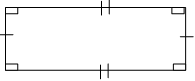 Find (i) x (ii) length (4x – 3) cm
2x
Ref 9cm
Teacher’s collections
Lesson 20
Sub topic: finding unknown sides when given area
Content
Example
The area of a rectangle is 32cm2 its length is 8cm. what is its width?
Let the width be represented by w
 L x w = area
8cm x w = 32cm2
8cmW = 32cm W
8cm 8cm
W = 4cm
Ref
Exercise 12.21 pg 286 new edition mk bk5
Lesson 21
Sub topic: finding unknown sides of cuboids when given volume
Content: example
The volume of a box is 60cm3. Its length is 5cm and width is 4cm. find its height
Let h be height
 L x W x h = volume
5cm x 4cm x h = 60cm3
20cm2h = 60cm3
20cm2 20cm2
H = 3cm
NB: do the same for unknown width and length
Ref
Exercise 12.22 pg 287 new edition MK bk 5
Exercise 7z (iii) pg 196 old edition MK bk 5


